Available 24/7 | 0800 088 4170

Residual soot and carbon staining remained after earlier remediation, so simply repeating the same treatment was unlikely to deliver the required improvement. Controlled test cleans helped establish how the different surfaces responded before the wider programme progressed.
That mattered in a contained car park. The team had to work around overhead access restrictions, M&E infrastructure and different surface finishes while also controlling dust and particulate generated during the more intensive cleaning stages.
The ceilings, soffits and pillars formed the most intensive treatment element. Specialist sand blasting was selected to tackle heavy, embedded soot and carbon contamination across these robust concrete surfaces. The mechanical action provided a more effective route where conventional cleaning had not produced the required finish.
The walls required a different approach. DOFF cleaning was used on the soot-affected wall surfaces rather than simply extending the abrasive blasting process across every substrate. M&E and pipework were decontaminated manually, with cables excluded at the customer's request.
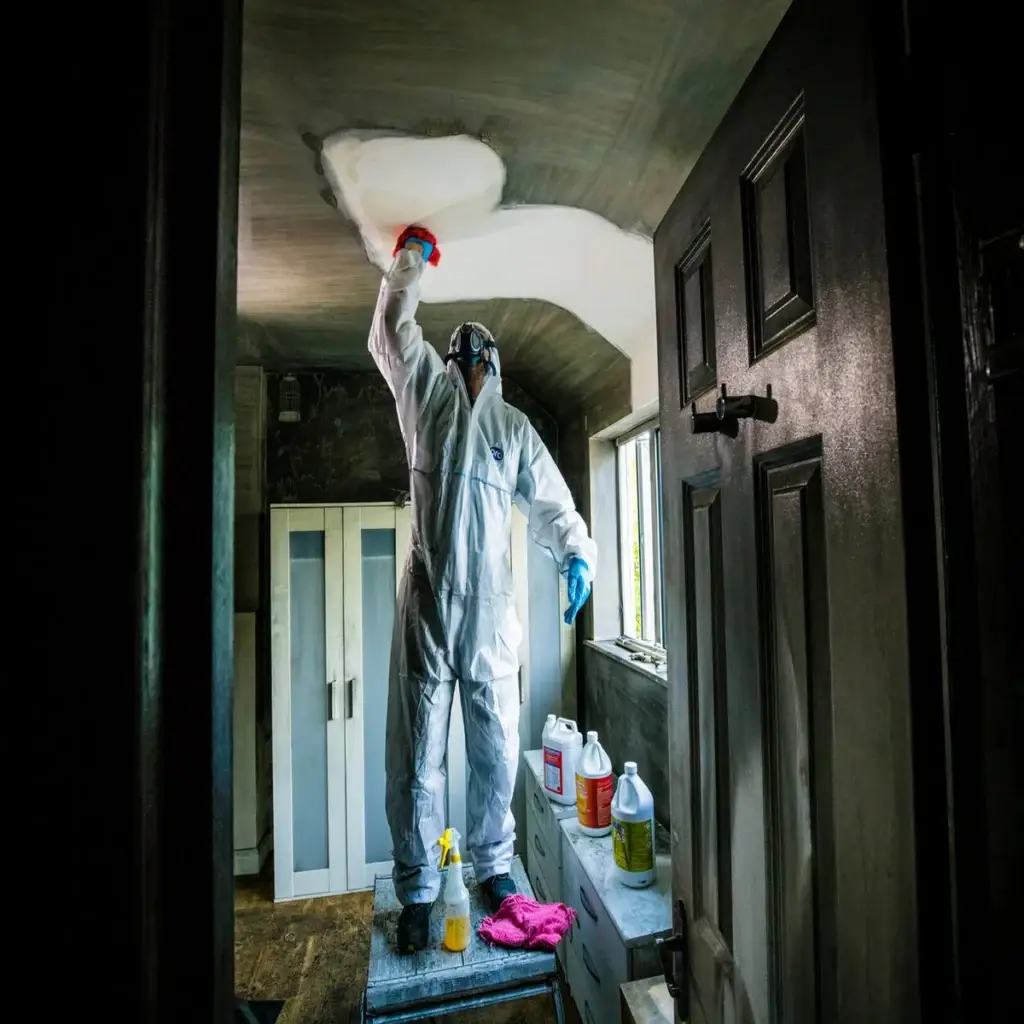
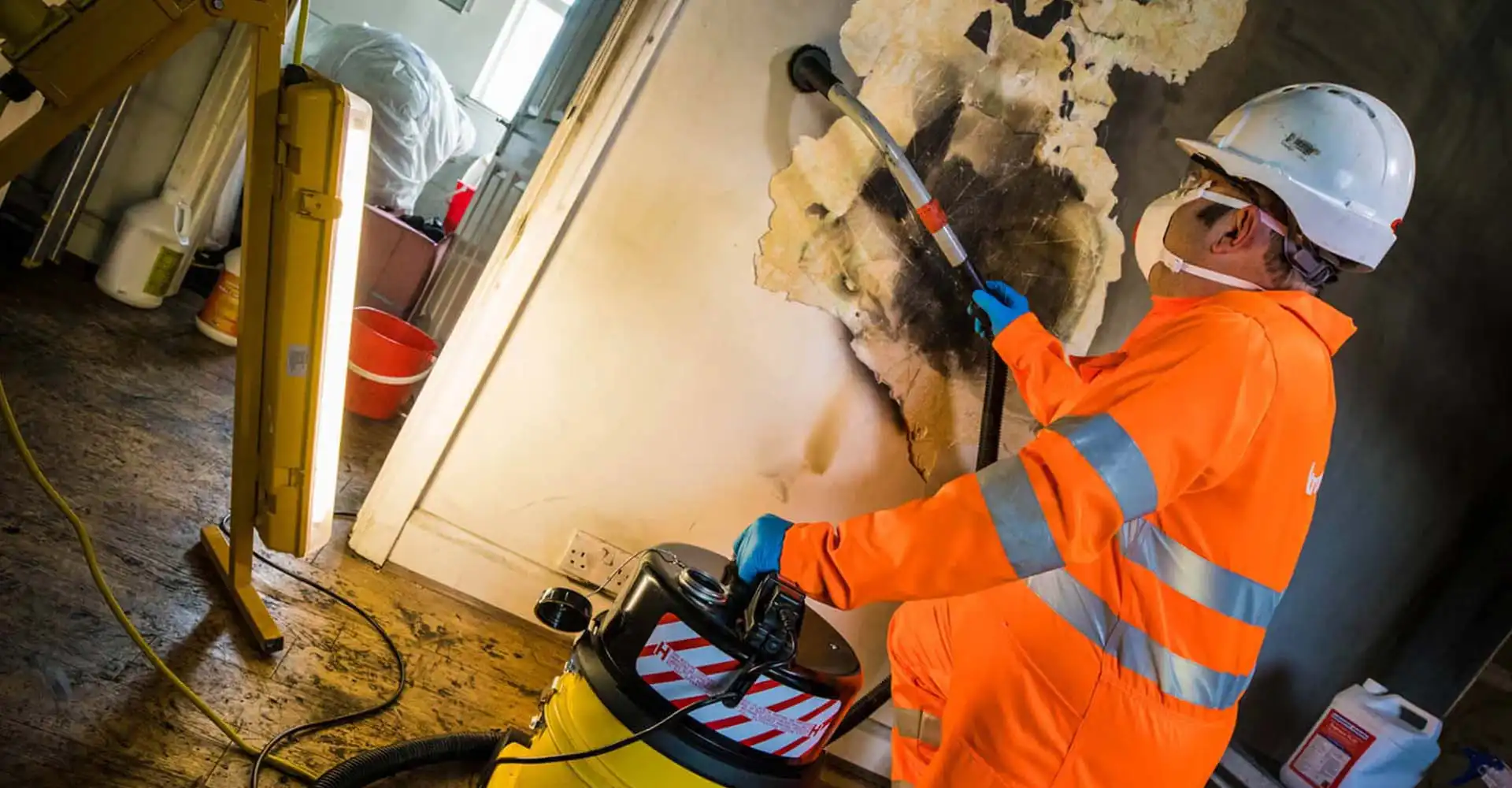
Around the office and immediately adjacent area, loose soot was first removed using HEPA-filtered vacuuming before manual chemical cleaning. This provided a more controlled treatment around different finishes and service elements.
The result was a deliberately mixed remediation programme: more intensive sand blasting where heavy carbon contamination was embedded into robust concrete, DOFF treatment on the walls, and progressively more controlled manual and HEPA-based methods around services and office finishes.
The strength of the response was not one particular machine or cleaning product, but the decision to use different methods for different parts of the car park.
Sand blasting provided the mechanical action needed on the heavily carbon-stained ceilings, soffits and pillars. DOFF offered a separate treatment route for the walls. Sensitive M&E and pipework were cleaned manually, while HEPA-filtered vacuuming removed loose particulate before chemical cleaning around the office and adjacent areas.
This staged approach also reduced the risk of using an unnecessarily aggressive process on surfaces or services that required more controlled treatment.
The completed remediation produced a substantial visual improvement across the soot-affected structural surfaces, particularly the ceilings, soffits, pillars and walls where the revised cleaning strategy was concentrated.
The outcome also demonstrates why fire restoration should not be judged by a single cleaning method. The strongest result came from matching the treatment to the material and level of contamination rather than applying the most aggressive process everywhere.
By setting the method and expected result according to each substrate, the project moved beyond the limitations of the earlier cleaning attempt and delivered a much more consistent restoration outcome across the wider car park.
Fire residues do not behave in the same way on every material. Robust concrete ceilings, soffits and pillars can tolerate a very different treatment from electrical services, pipework, office finishes or walls. In Bromley, controlled test cleaning helped establish where conventional methods were insufficient before the team progressed to specialist sand blasting, DOFF cleaning and more detailed surface-specific techniques. That ability to change method according to the substrate is central to achieving a strong result without applying unnecessary force to more sensitive areas.