Hydraulic Oil Spill Clean-up Hove | Ideal Response

Available 24/7 | 0800 088 4170

Emergency hydraulic oil spill clean-up at a Hove bus station

The sand showed where the spill had started. It didn't show where the oil had finished.

A hydraulic oil spill at a bus station undergoing refurbishment in Hove brought work in the affected area to a halt. Sand had been applied as an immediate containment measure, but once Ideal Response assessed the site it became clear that the contamination had travelled significantly further.

With an active refurbishment programme being disrupted, the priority was to control the spill quickly, treat the affected hard surfaces and return the area to use without overlooking less-visible contamination.

Ideal Response commercial fire damage restoration project
Location
Hove, East Sussex
RESPONSE
Same-Day Emergency
Service
Oil Spill Cleaning
Sector
Transport / Construction

A same-day response to a spill that had got out of control

Four technicians across two teams attended the Hove bus station as part of an emergency response.

The first challenge was establishing the true extent of the spill. The hydraulic oil had spread well beyond the area initially covered with sand, affecting a much wider section of hard flooring across the construction zone.

That changed the job from treating one obvious patch to tracing and cleaning contamination across the surrounding working area. With refurbishment activity already affected, the teams needed to move quickly while making sure the less-obvious edges of the spill were not missed.


Getting the refurbishment moving again

The affected hard surfaces were cleaned and decontaminated, allowing the bus station refurbishment to resume with minimal delay.

The combination of same-day mobilisation, two cleaning teams and the following-morning inspection meant the response addressed both priorities of the project: dealing with the immediate hydraulic-oil contamination and returning the working area to the refurbishment programme as quickly as practicable.

Customer feedback

“IDEAL by name, and by nature. IDEAL were ironically, IDEAL – really accommodating and helpful on very short notice. Very quick turnover time to assist with a hydraulic fluid spill where time was of the essence to get dealt with. Operatives attending site were methodical in their working and very personable…”
Freddie Anderson

Expert insight: stopping an oil spill from becoming a bigger problem

Steve Kiddell
Lead Technician, Ideal Response
“One of the biggest risks with an oil spill on an active site is focusing only on the most obvious contamination. Hydraulic oil can spread across hard surfaces and be transferred into other areas through foot traffic, equipment and ongoing site activity. Acting quickly helps limit that secondary spread and makes the clean-up much more controlled, particularly when other trades need to keep working around the affected area.”

Related information

Oil Spill CleaningEnvironmental Services

Need urgent help?

Call our team 24/7 on 0800 088 4170.

Send an Enquiry

Cleaning beyond the initial containment area

The sand had helped contain some of the hydraulic fluid, but absorbent material alone was not enough to remediate oil that had spread across the hard surfaces.

Contaminated sand and surface oil were removed before technicians progressed to active treatment. Specialist degreasing chemicals were used to break down the hydraulic oil, followed by high-pressure jet washing to clean the affected hard flooring.

The response combined physical removal, chemical degreasing and mechanical cleaning rather than treating the initial sand containment as the finished solution.

As the response continued into the evening, fading light made small residual traces of hydraulic oil more difficult to identify reliably.

Rather than treating speed as the only measure of success, the team returned the following morning and inspected the affected area again in full daylight. Any remaining traces could then be treated before the refurbishment workforce returned.

It was a simple but important decision: minimise disruption, but not by rushing the final stage of the clean.
Project insight

Sand can be an effective first step when an oil spill occurs, but the visible containment area does not necessarily show how far the oil has travelled. On an active construction or refurbishment site, the surrounding surfaces still need to be assessed and treated so contamination is not left behind or carried into other working areas.

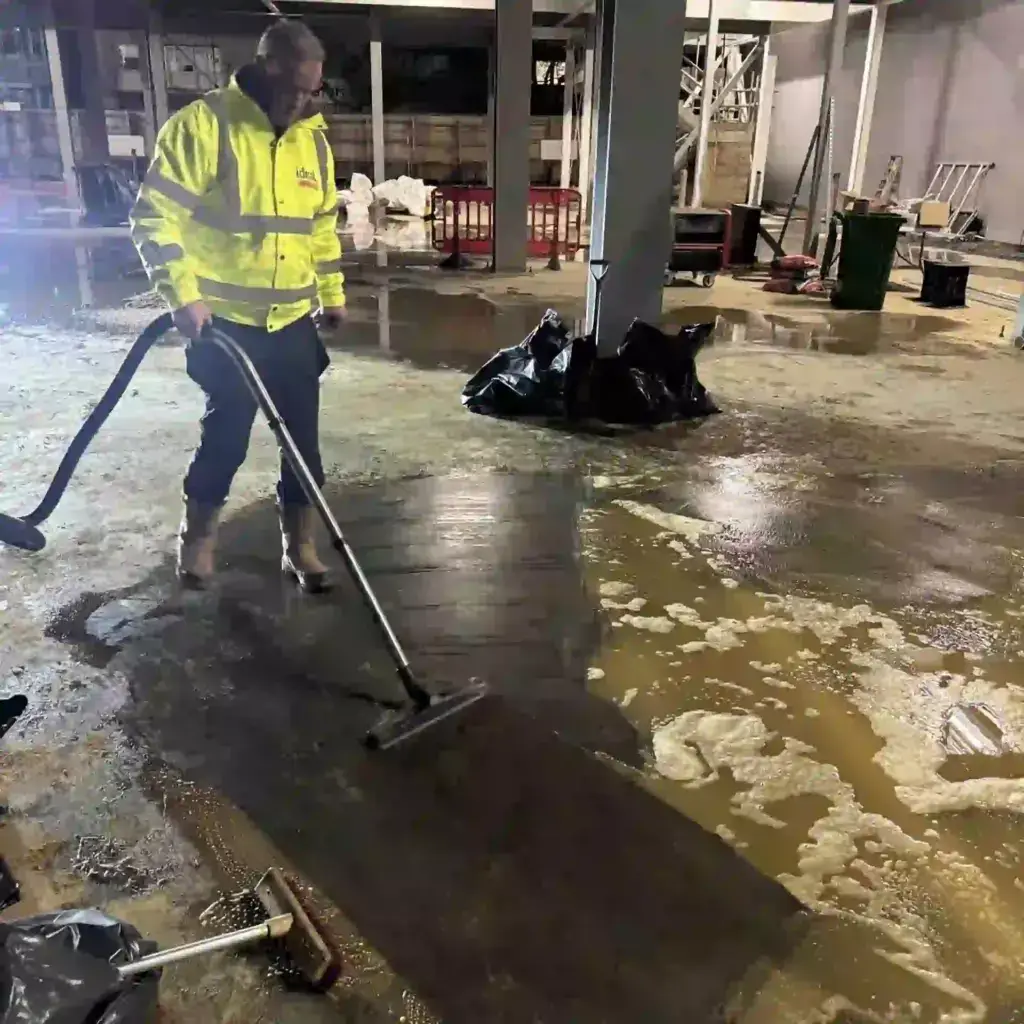
During oil spill remediation.
Ideal technician using an enzyme to break down the oil

The process during the oil spill remediation. The Ideal Response technician uses an enzyme to break down the oil.