Available 24/7 | 0800 088 4170

The sewage did not remain at the point where it first entered the house. It travelled down the internal stairs and into the basement, spreading across the carpeted lower-ground area and affecting two rooms.
That route shaped the clean-up. The stairs had to be treated as part of the same contaminated pathway as the basement rather than as a separate, unaffected access route. Below ground, porous finishes including carpet and skirting had been directly exposed and could not simply be wiped down and left in place.
The basement was also heavily saturated. Once the contaminated finishes were removed, moisture within the remaining building fabric became a separate restoration issue that needed to be assessed rather than hidden by a visually clean surface.
A two-person Ideal Response team began the initial attendance by stripping out the affected carpet and skirting. Removing those porous materials gave the technicians direct access to the surfaces beneath and prevented the clean from being limited to the visible face of contaminated finishes.
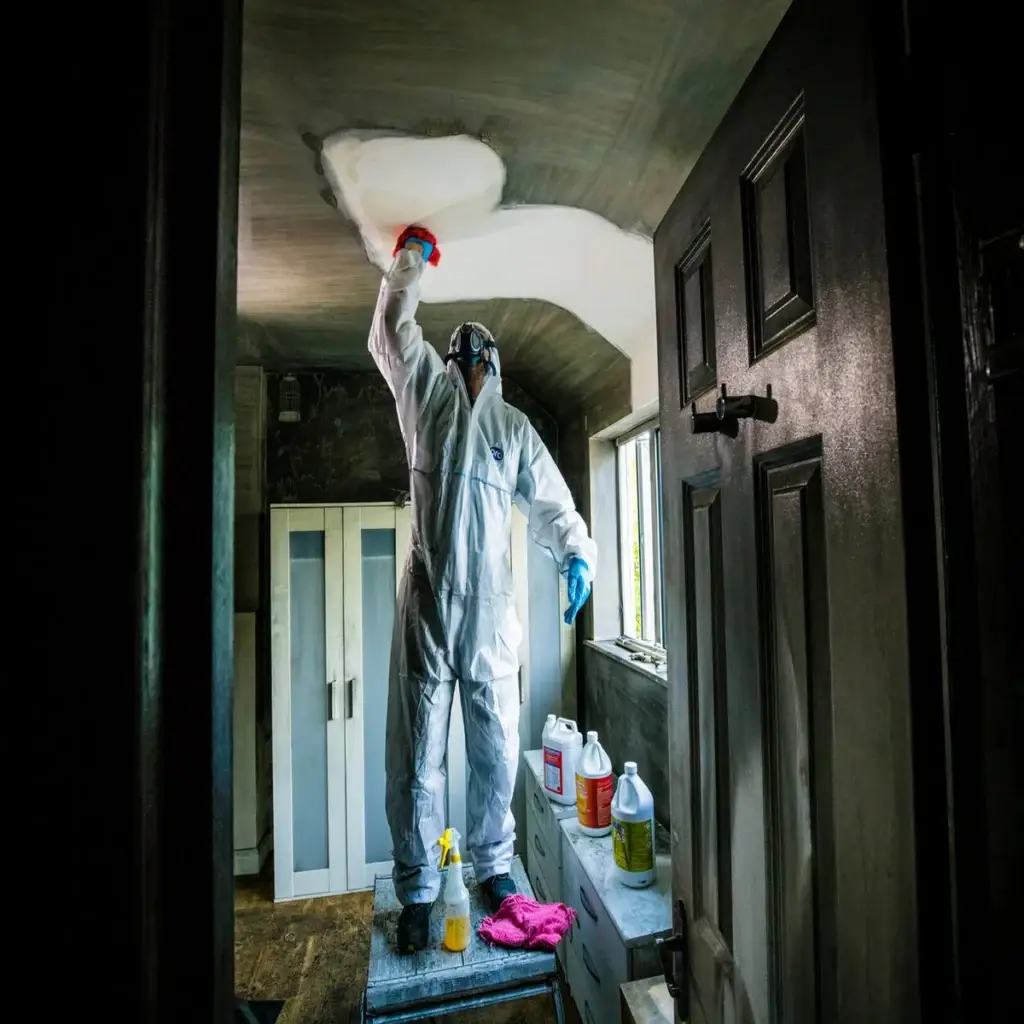
The team then worked through the sewage footprint, including the stairwell and both basement rooms. Physical cleaning and sanitising were carried out using specialist cleaning chemistry and detailed hand cleaning, with the aim of removing residues from the exposed hard surfaces rather than relying on a single treatment step.
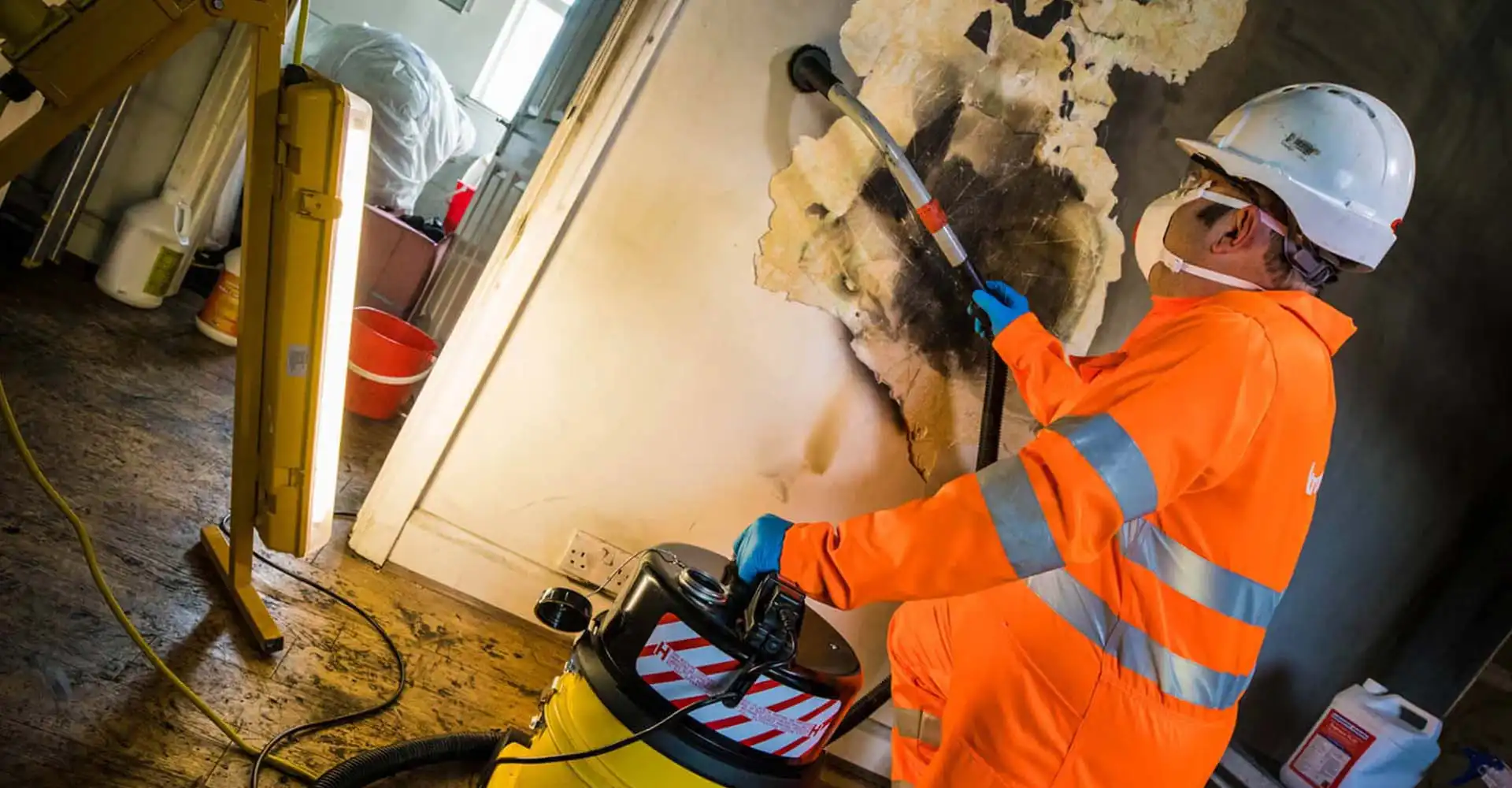
The wider project methodology also included enzyme treatment, HEPA-filtered vacuuming and ULV fogging. Each had a different role: physical removal and cleaning dealt with contamination on surfaces; HEPA filtration supported controlled removal of fine residual material; enzyme treatment formed part of the specialist decontamination process; and ULV fogging supplemented the detailed surface work across the affected space.
Sewage contamination and water damage overlap, but they are not the same problem. The first phase dealt with materials and surfaces directly affected by sewage. Once those were removed and treated, the team still needed to understand how much moisture remained within the basement construction.
Moisture affecting plasterboard and other building materials can persist after visible contamination has been removed. That is particularly important below ground, where limited natural ventilation and enclosed construction can slow drying. A follow-up survey was therefore arranged to assess the remaining building fabric, determine whether further strip-out was necessary and establish the specialist drying requirement.
Keeping those decisions separate prevented the appearance of the basement from becoming the measure of whether the recovery was complete. The next stage was based on the condition of the materials that remained, not simply on whether the visible sewage had gone.
The initial sewage clean and strip-out were completed during the first day on site. Across the wider response, the affected basement was decontaminated and the residual moisture problem was addressed so that the space could progress towards reinstatement rather than being left at the cleaning stage.
The result was a basement that had been stripped of directly affected porous finishes, cleaned and sanitised along the full contamination pathway, and taken through the additional assessment needed to deal with moisture in the remaining structure.
For the homeowner, the important distinction was that the response did not stop once the sewage was no longer visible. Cleaning, material removal and moisture management were treated as connected parts of the same recovery process.