Available 24/7 | 0800 088 4170

By the end of the programme, the needle-sweep and contents-clearance scope had been completed across the 14 cottages and their gardens. Hazardous items had been separated for controlled disposal and the properties had been cleared so that surveys and the next phase of site works could proceed.
For a multi-property site, that outcome depended as much on the structure of the response as the physical clearance itself: breaking the project into manageable plots, maintaining separation between sharps and general waste, and keeping a consistent working sequence from the first cottage to the last.
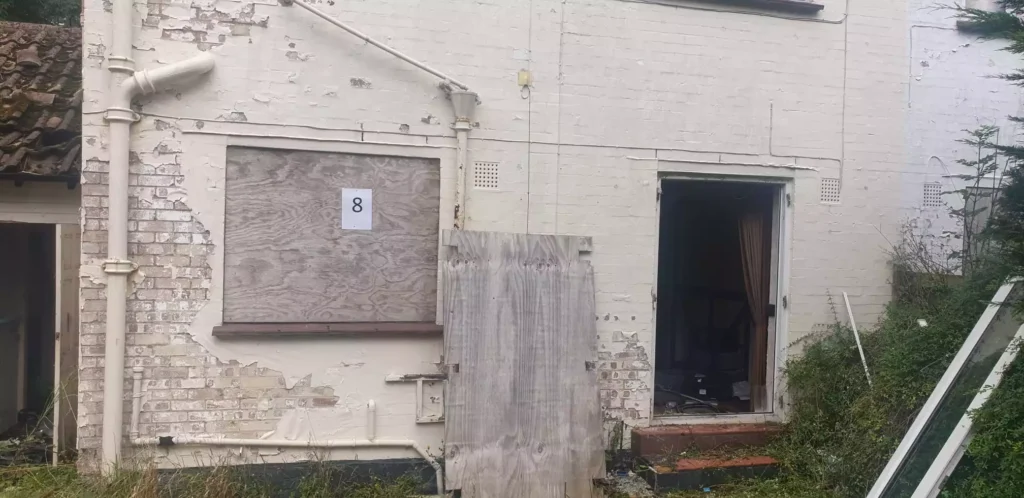
The site presented two connected challenges. Before the cottages and gardens could be cleared, the team needed to identify and remove needles, drug paraphernalia and other suspected hazardous items. Only then could the wider contents clearance progress without those hazards becoming mixed into the general waste stream.
The scale of the site made the working method particularly important. Rather than treating all 14 cottages as one large clearance, Ideal Response divided them into seven two-property plots. This gave the technicians a repeatable route through the project and helped maintain control over which areas had been swept and cleared.
Each pair of cottages was worked through systematically, covering both the buildings and their external areas. Technicians used dedicated collection tools, including litter pickers and a sharps container, so needles and other hazardous items could be picked up without becoming part of the ordinary clearance.
Sharps and suspected hazardous waste were contained separately in appropriate biohazard containers for controlled off-site disposal. This separation was maintained throughout the job, keeping the specialist hazardous-waste element distinct from the much larger volume of general contents being removed from the site.
Once areas had been checked for sharps, the team progressed the contents clearance across the cottages and gardens. Waste was sorted and moved towards the rear of the plots, where the site layout allowed bulk material to be collected mechanically.
A rear access route across the gardens connected the working areas with the car park, helping the team move waste through the site without undermining the controlled search pattern inside and around each cottage.
The clearance was delivered over six visits. The team composition changed as the project progressed, allowing resources to be matched to the work required across each pair of cottages.
Working in defined plots also gave the project a clear progression point from one area to the next. Instead of a single large-scale sweep with multiple activities happening indiscriminately, each section could move through the same search, segregation and clearance sequence.