Available 24/7 | 0800 088 4170

Available 24/7 | 0800 088 4170
When a traumatic incident occurs on a property, whether a residential home, commercial site, or public space, the impact extends beyond the immediate emergency. For homeowners, landlords, businesses, and local authorities, the next critical step is restoring the site safely, discreetly, and fully in compliance with UK regulations. Professional trauma cleaning is the best solution to restore the contaminated site.
Crime scene cleaning is not just ‘deep cleaning’. It is a specialist biohazard response requiring technical training, forensic awareness, clinical-grade decontamination, and a high level of emotional sensitivity. Mistakes can lead to infection risk, environmental contamination, reputational damage, and even legal consequences under UK health & safety law.
According to the Office for National Statistics, England and Wales record approximately 700,000 violent incidents involving injury each year, and thousands of emergency responses result in scenes that later require professional decontamination. For organisations and homeowners alike, trauma incidents are an unfortunate but real operational risk.
This article explains what crime scene cleaning involves, the regulations you must follow, the risks of taking shortcuts, and what a professional response looks like, with real-world examples and actionable guidance for all property types.
Skip to:
What exactly is crime scene clean up?
Why crime scene cleaning requires specialists
UK regulations you must comply with
When to call a professional crime scene cleaning team
What a professional crime scene clean looks like
Typical timescales and costs
Why choose Ideal Response for crime scene clean up
Crime scene clean up, also called trauma cleaning or biohazard remediation, involves the safe removal, cleaning, and disposal of biological and hazardous materials following:
The goal is not simply to ‘clean’ but to remove all harmful pathogens, disinfect surfaces thoroughly, neutralise odours, and restore the environment to a safe, habitable condition.
This work can only be carried out by trained technicians who understand biological hazards, PPE standards, cross-contamination control, and legal obligations surrounding hazardous waste.
Unlike general cleaning, biohazard remediation deals with blood-borne pathogens (including hepatitis B, hepatitis C, and other infectious agents). These pathogens can survive outside the body for days or weeks if not properly decontaminated.
Attempting DIY or using untrained cleaners can result in:
Police, councils, and insurers strongly recommend hiring specialist contractors.
Crime scene cleaning in the UK is governed by several regulations:
A professional contractor provides RAMS, waste transfer notes, and certificates of decontamination.
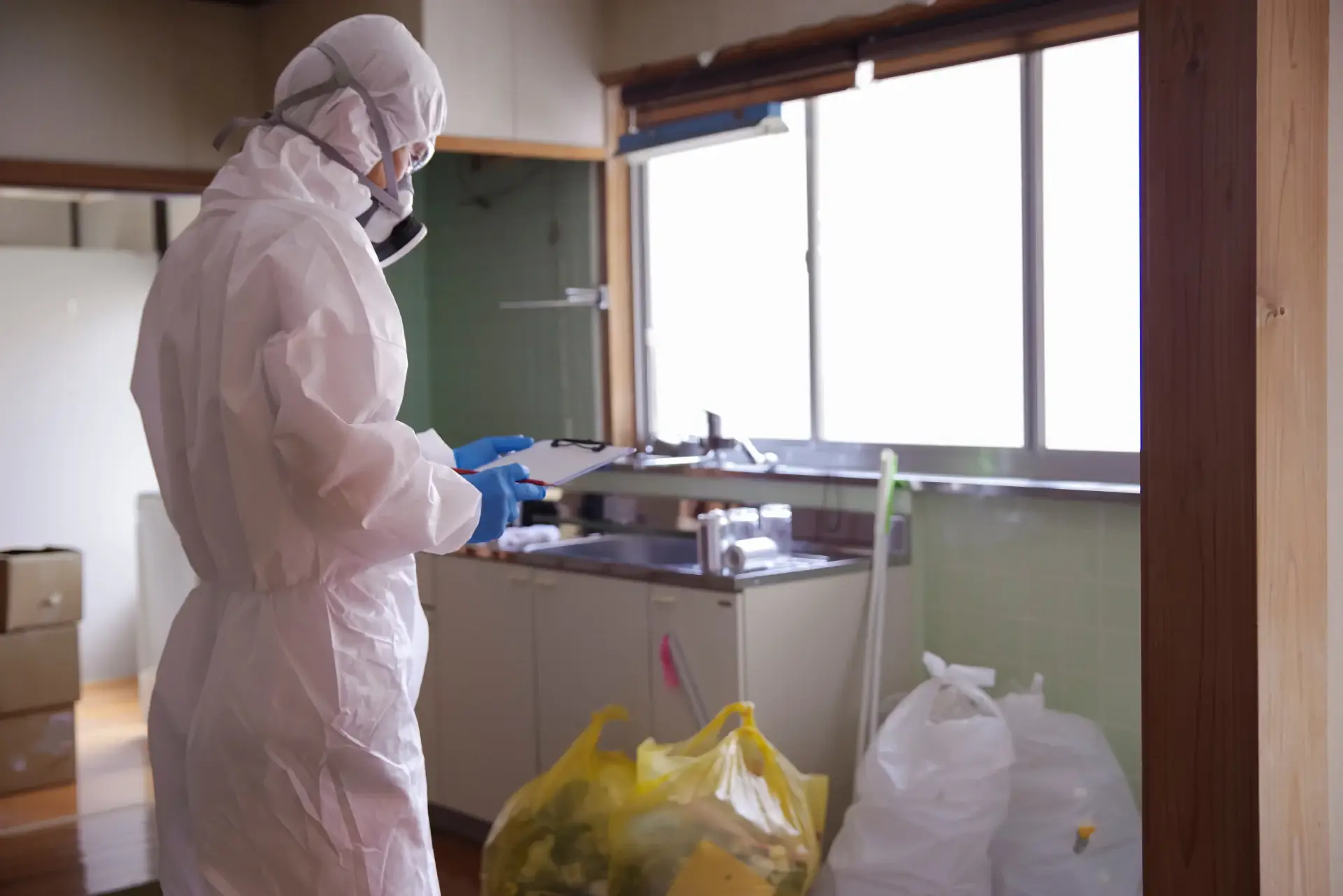
Contact a specialist cleaning company immediately once the police have released the scene. Do not enter or disturb it before clearance.
Immediate intervention is critical because:
Example Case:
A housing association in Kent contacted Ideal Response after an unattended death. Because the incident had gone unnoticed for days, contamination spread under laminate flooring and into the subfloor. Early professional intervention could have reduced removal and remediation work, saving time and cost.
Even small delays can multiply operational costs and safety risks.
To learn more about crime scene and trauma cleaning, visit our Trauma Cleanup for the Metropolitan Police case study.
Confirm police release and assess hazards.
Seal off affected areas to prevent cross-contamination.
Technicians wear full protective gear, including respirators, gloves, suits, and face protection.
Porous items such as bedding, carpets, or upholstery are disposed of as clinical waste.
Use enzymatic cleaners, hospital-grade disinfectants, and odour-neutralising systems.
All waste is handled via licensed clinical waste carriers with full transfer notes.
Post-clean testing and a certificate of decontamination are issued for insurance and compliance.
Timely intervention reduces costs, odour, and contamination spread.
Dealing with a crime scene is one of the most challenging situations a property owner, manager, or business can face. Fast, professional, and fully compliant intervention isn’t just a recommendation, it’s essential to protect people, property, and your organisation’s reputation.
Ideal Response stands out because we combine expertise, speed, and discretion across the UK:
We work closely with police, councils, housing providers, and commercial clients to restore safety efficiently, respectfully, and in full compliance.
The right response makes all the difference:
If a trauma, biohazard, or crime scene incident occurs on your property, acting quickly is crucial. With Ideal Response, you get a team that moves fast, works professionally, and leaves the property safe, secure, and fully restored.
Call our emergency response team 08083 031 257

Chris Hedges is Head of Marketing at Ideal Response and the author of every article published on this site. With over 25 years of senior marketing experience across property, legal, and professional services sectors, Chris brings a clear, evidence-led approach to writing about fire damage, flood restoration, and specialist property remediation. His philosophy is simple: cut through the noise, respect the reader's time, and give people the information they actually need.
Explore more articles about damage restoration, specialist cleaning and what we do


If you’re dealing with fire damage, flooding, or an environmental incident, our team is ready to respond. No matter if you have a question or have an emergency that you need help with, call:
If you’d prefer to drop us a message, use our main contact form and upload any pictures of the incident. Would you like us to call you? Fill out the short ‘Request a call back’ form.


