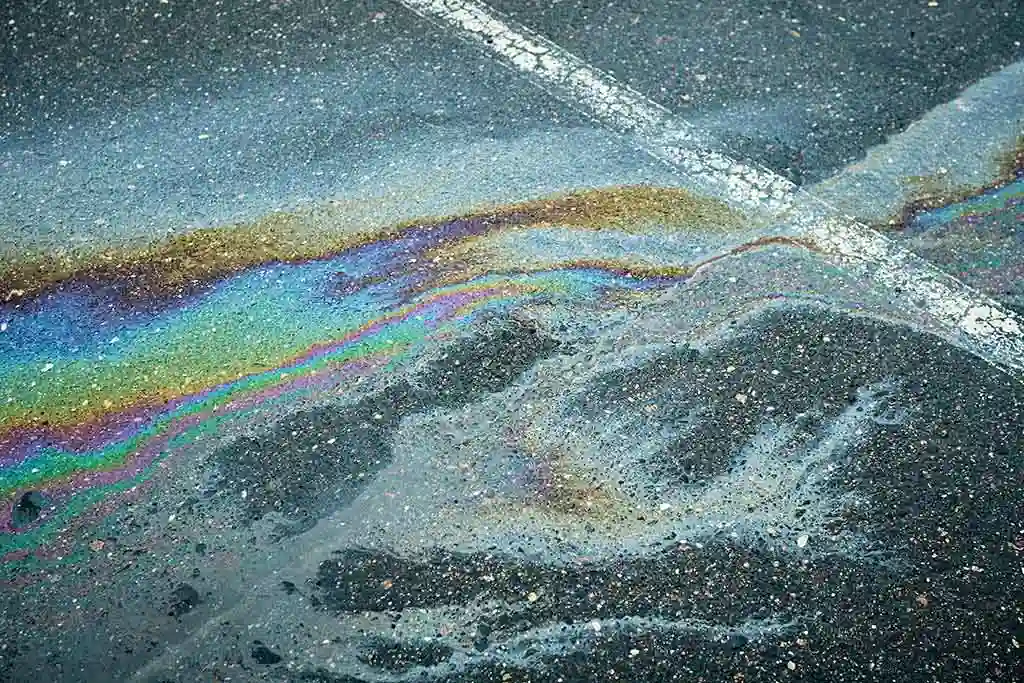
A pristine driveway is often the first thing people notice about a property, but a single vehicle leak can quickly change that. Because block paving is porous, oil spills don’t just sit on the surface; they soak into the substrate, leading to stubborn staining and, in some cases, structural degradation of the blocks.
In this guide, we’ll explain the best methods to remove oil from driveway block paving and when it’s time to call in the professional oil spill clean-up experts.
Skip to:
The challenge of oil on block paving
How to get oil off block paving
DIY removal for oil staining on block paving
The importance of professional oil spill removal
The challenge of oil on block paving
Block paving is typically made from concrete or clay, both of which act like a hard sponge. When oil is spilled, whether it’s engine oil, diesel, or hydraulic fluid, it begins to penetrate the surface immediately. As we’ve discussed in our guide to oil spills in the home, the key to successful remediation and avoiding secondary damage is speed.
How to get oil off block paving: Immediate steps
If you have caught the spill the moment it happened, your primary goal is to prevent the oil from spreading or soaking deeper into the sand joints. Just by following the three simple steps below you can contain the spill, prevent further contamination and reduce the chance of permanent staining.
-
Blot, don’t scrub: Use paper towels or an old rag to soak up as much standing oil as possible. Do not scrub, as this pushes the oil deeper into the pores of the block.
-
Use absorbents: Apply cat litter, sawdust, or a dedicated clay absorbent to the area. Leave it for at least 24 hours to “wick” the oil out of the stone.
-
Containment: If the spill is large, ensure it does not reach the drainage system. As highlighted in our diesel spill compliance guide, allowing oil to enter the main water system can lead to significant fines and environmental damage.
How to remove oil from block paving (DIY methods)
For smaller, older stains, you may want to attempt a DIY clean. However, be aware that harsh chemicals can sometimes discolour the paving or damage the jointing sand.
Using household detergents
For light staining, a highly concentrated degreasing dish soap can work. Apply the soap directly to the stain, add a small amount of warm water, and gently agitate with a stiff brush. Rinse with clean water and repeat.
Dedicated patio cleaners
There are many “off-the-shelf” oil removers. These often use emulsifiers to break down the oil. Always test these on an inconspicuous area first to ensure they don’t bleach the block’s pigment.
The dangers of the DIY approach
For a small localised oil spill a DIY approach is a viable option but one that does not guarantee results. It’s also important to understand that household cleaners don’t neutralise the oil, meaning that you could still be fined if the oil or contaminated water enters an open watercourse. Another thing to consider is that the longer the staining remains, the more difficult and unlikely it is to be successfully removed. So, if your initial DIY attempt fails, it makes it more difficult for a professional to get the oil removed from the block paving afterwards.
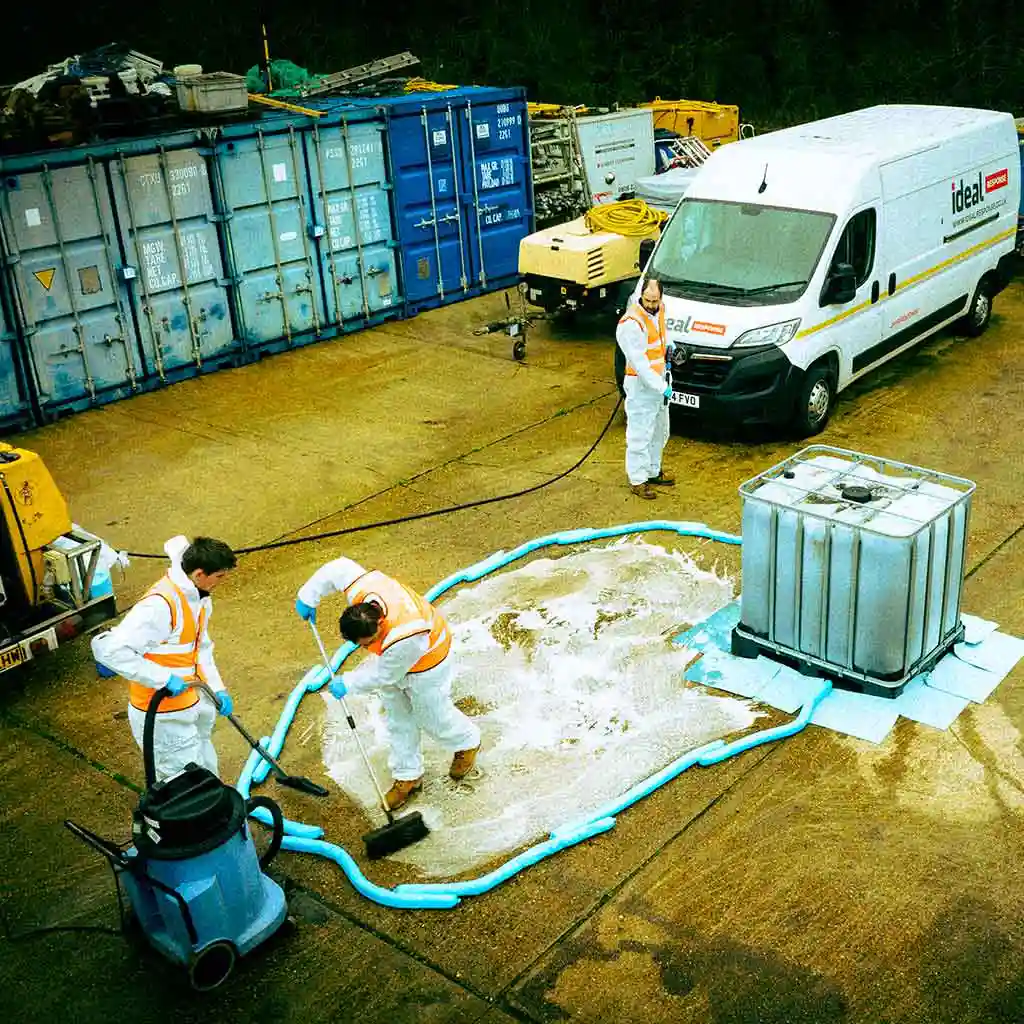
Why you should remove oil from driveway block paving professionally
While DIY methods might remove the surface “shadow” of a stain, they rarely address the oil that has migrated deep into the block and the sub-base.
1. Environmental protection and compliance
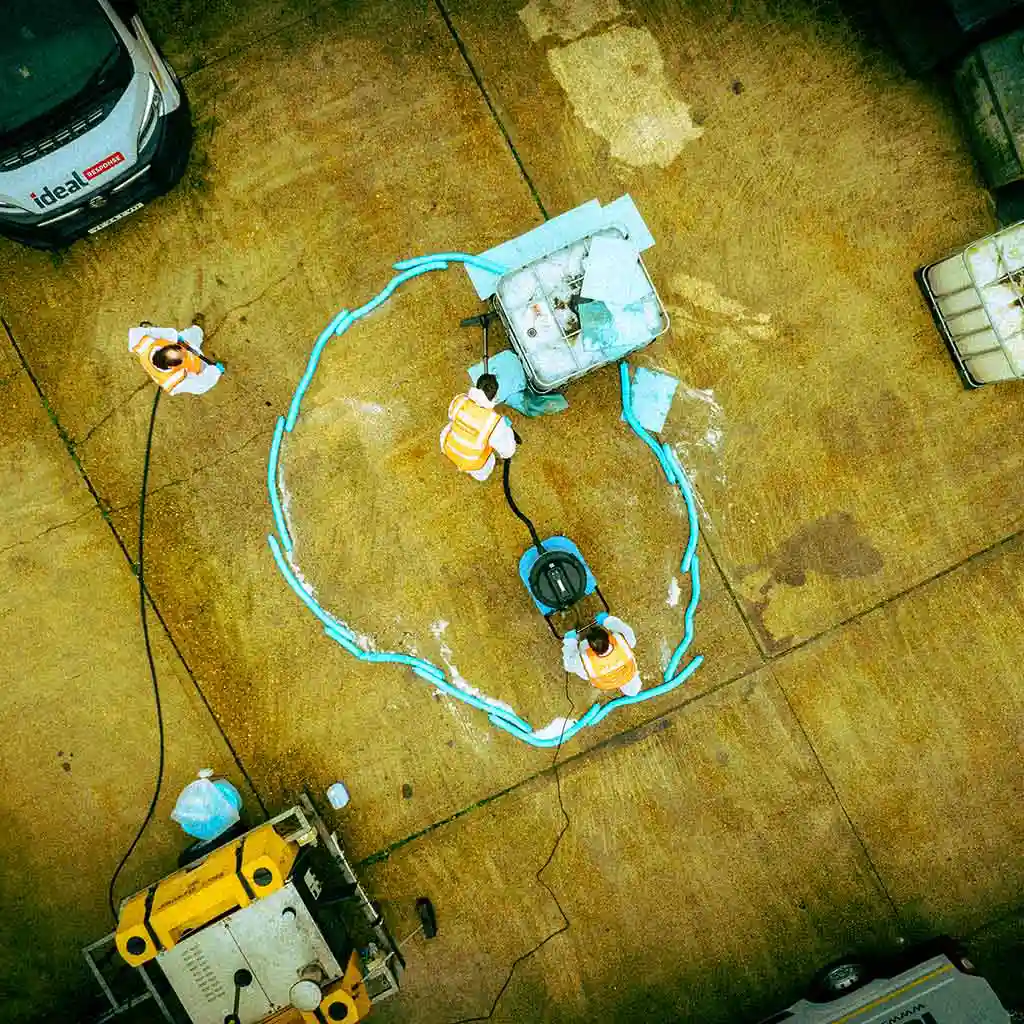
As noted in our UK Oil Spill Guide, domestic spills can still fall under environmental regulations. If oil leaches into the soil beneath your driveway, it can contaminate groundwater. Ideal Response uses bio-remediation technology, pH-neutral, biodegradable agents that encapsulates oil molecules, making them non-flammable and easy to remove without harming the environment.
2. Preventing secondary damage
Scrubbing at oil with the wrong chemicals can ruin the aesthetic of your driveway. Furthermore, if the oil is not fully neutralised, it can continue to eat away at the bitumen or binders in the paving over time. This will lead to structural instability (cracking and crumbling) and over time will deteriorate to the point that replacing it becomes the only viable option.
3. Deep extraction
Standard pressure washers often just push oil deeper into the paving. Professional equipment uses controlled high-pressure steam and industrial-grade vacuums to lift the oil out of the pores entirely. At Ideal response we utilise DOFF cleaning systems when dealing with difficult oil stains. This in combination with remediation agents and wet-vac ensures that our teams are able to lift even the deepest staining from block paving and safely extract the contaminated water without it spreading.
A tried and tested approach to oil spill remediation
We have been offering oil spill clean-up and remediation services to the UK for over two decades. In this time we have fine tuned our approach and helped countless UK homeowners and facility managers with oil spill emergencies. Check out our recent Oil Spill Remediation for Cennox case study to see how we successfully remediated a spill and left no traces of oil behind.
What should you do after an oil spill?
Once you have identified the source of the oil spill, you must take action. Check our step-by-step oil spill guide for a detailed breakdown of the safety precautions you should take, including turning off ignition sources and ventilating any nearby areas if the spill is close to the property. This guide is must read for both domestic and commercial oil spills. Areas with high footfall or vehicle movement are the most difficult but most important to contain because of how easily the contained area can spread.
Professional remediation with Ideal Response
If you are struggling with a large spill or a stubborn stain that DIY methods won’t touch, we can help. Our technicians are experts in dealing with everything from minor driveway oil spills to large scale industrial spills. Contact our team today to learn more and receive a free over the phone quote.
Call our emergency response team 0800 088 4170
Removing oil from block paving FAQs
Does WD-40 remove oil stains from driveways?
While WD-40 is a solvent that can break down oil, it is often ineffective for deep-set stains on porous block paving and can leave its own residue. Professional degreasers or steam extraction are more effective for total removal.
Can I use a pressure washer to remove oil from block paving?
Using a standard pressure washer is not recommended for oil spills. The high-pressure water often drives the oil deeper into the porous concrete or clay and can spread the contamination to the surrounding jointing sand.
What is the best household product to remove oil from a driveway?
For fresh spills, concentrated liquid dish soap or biological laundry detergent are the most effective household products. These contain surfactants and enzymes that help break down the grease before it sets.
Is oil damage to a driveway permanent?
If left untreated, oil can cause permanent discolouration and weaken the structure of the blocks. However, professional remediation using bio-remediation technology and deep extraction can often restore the driveway to its original condition.
What areas does Ideal Response cover?
We cover the entire UK, serving areas like London, Kent, Surrey and Birmingham for oil spill cleaning and removal.
Click the link to see a full list of the areas we cover.

Tahlia Ibrahim - Delivery Manager
Tahlia has over four and a half years of in-depth experience across various facets of the disaster recovery industry. Having progressed through roles in marketing and sales to her current position, Tahlia possesses a comprehensive understanding of the entire business operation, from initial client contact to meticulous service delivery. A certified BioSweep Specialist, she excels in advanced odour elimination techniques, ensuring thorough restoration.