Available 24/7 | 0800 088 4170

Available 24/7 | 0800 088 4170
When people think about fire risk in the home, they tend to picture something sudden. It could be a spark, a fault.or an immediate emergency.
But in reality, many fires, particularly in kitchens, develop gradually.
According to data published by the UK Fire and Rescue Service , cooking appliances are consistently the leading cause of accidental house fires in the UK, accounting for tens of thousands of incidents every year. A significant proportion of these are linked to fat and grease ignition.
That matters, because a smoking oven is often part of that same process. Not the end result, the stage before it.
Skip to:
What oven smoke actually is (and why it shouldn’t be ignored)
The critical link between smoke and fire
Why grease is the real risk factor
The health impact: More than just an unpleasant smell
Why smoke rarely stays contained to the oven
When a smoking oven becomes a genuine fire risk
What to do and what not to ignore
Prevention is simple but often overlooked
When it stops being an oven issue and becomes a property contamination problem
A smoking oven is a known fire risk and not a minor issue
FAQs
Smoke from an oven isn’t just ‘burning food’. It’s the visible result of thermal decomposition, where substances break down under heat before they fully ignite.
In a typical domestic oven, this usually involves:
As temperatures rise, these materials begin to degrade and release:
This is why oven smoke often appears dark, smells strong, and lingers.
One of the biggest misconceptions is treating smoke and fire as separate problems. They aren’t. Smoke is produced as materials approach ignition conditions.
In the case of ovens:
This creates the exact conditions needed for ignition. Basically, a smoking oven is often a system already moving towards fire, not away from it.
Grease behaves very differently to other types of residue. When heated repeatedly, it:
This is why grease-related incidents are a leading factor in kitchen fires.
The London Fire Brigade has repeatedly highlighted cooking with fats and oils, particularly when build-up is present, as one of the most common causes of domestic fires.
A smoking oven containing grease deposits is not a minor issue, it’s a known fire risk.
Even where fire doesn’t occur, oven smoke affects indoor air quality.
The particles released during heating are small enough to be inhaled deeply into the lungs, particularly in enclosed kitchens with limited ventilation.
Guidance from the UK Health Security Agency confirms that exposure to indoor air pollutants, including fine particulates and VOCs, can contribute to:
While occasional exposure may be limited, repeated exposure in domestic environments is not risk-free.
Once released, smoke behaves as a contaminant. It doesn’t stay localised.
This is why even a relatively minor smoking incident can leave behind:
Over time, this can develop into a broader indoor contamination issue, not just an appliance problem.
There’s a clear threshold where a smoking oven shifts from inconvenience to hazard.
This typically includes situations where:
At this point, the conditions required for ignition are already present and importantly, many kitchen fires occur during routine use, not extreme scenarios.
If your oven starts smoking, the response should be immediate but controlled. Turn the appliance off and allow it to cool before inspecting it. In many cases, the issue will be identifiable:
A thorough clean will often resolve the issue, but only if the source is fully removed.
Where the cause is not obvious, or the issue persists after cleaning, it may indicate:
Continuing to use the oven in this state increases the risk rather than resolving it.
Most smoking ovens are not the result of a single event. They develop gradually. Small amounts of residue build up over time, eventually reaching a point where they begin to smoke under normal operating temperatures. Reducing the risk comes down to consistency:
None of these are complex, but they are often neglected until a problem appears.
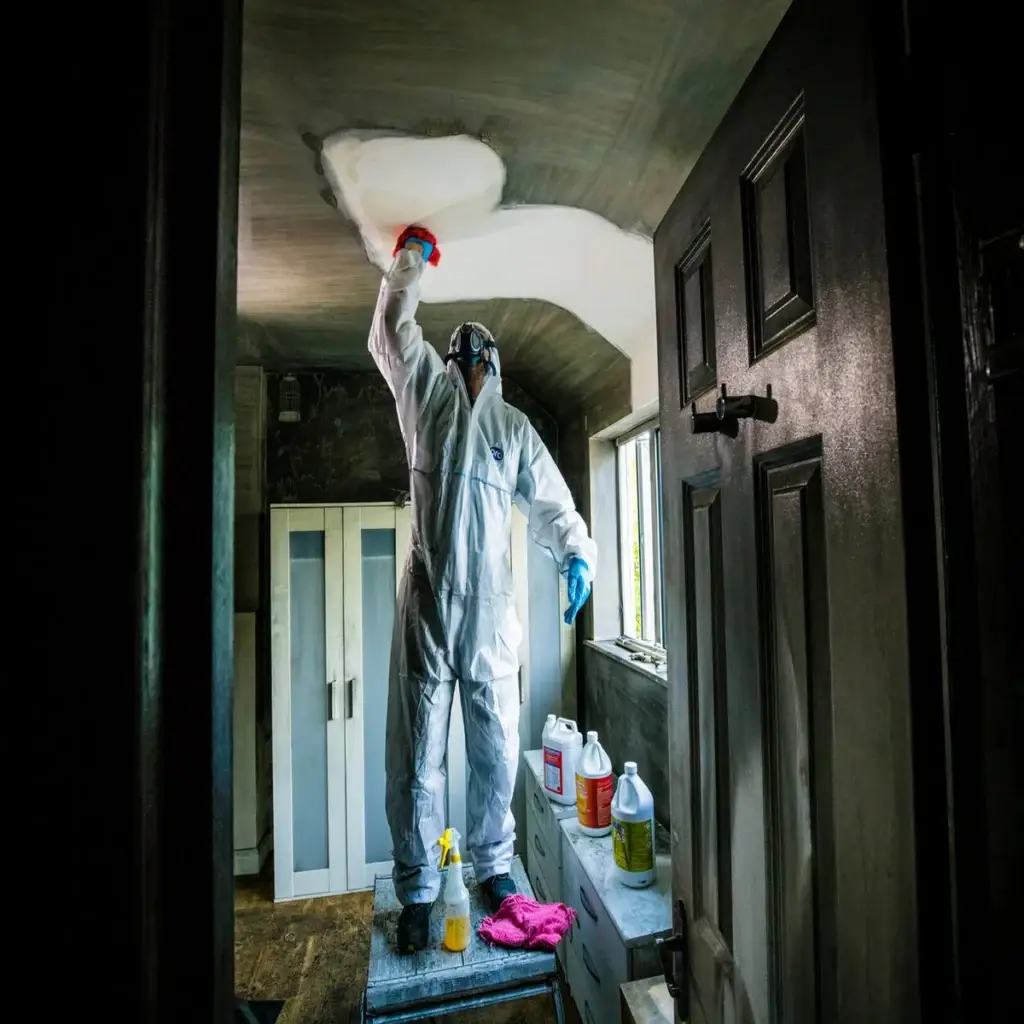
When an oven produces heavy smoke, or ignites, the impact doesn’t stay contained within the appliance.
What you’re dealing with at that point isn’t just heat or visible smoke. It’s a mixture of airborne contaminants made up of partially combusted materials, grease particles and gases released during high-temperature breakdown. Once those particles are released, they don’t behave in a controlled way.
They move rapidly through the property, carried by natural air currents and pressure differences, often reaching areas well beyond the kitchen itself.
In an enclosed environment, smoke will:
This means that even a relatively short-lived incident can affect:
In many cases, the visible damage is only a fraction of the actual spread.
As smoke cools, the particles it carries begin to deposit onto surfaces. These deposits are often:
This is where the longer-term issues begin. Materials such as paint, timber, fabrics and painted surfaces can all absorb or retain these residues to some degree. Once that happens, the problem is no longer surface-level. Volatile Organic Compounds (VOCs), embed in porous materials, releasing frequently and causing lingering smoke odour. When this occurs, professional smoke odour removal is the the most reliable option. Check out our smoke odour removal guide to learn more.
Conventional cleaning methods are designed to remove visible dirt, not bonded contaminants.
Wiping surfaces or using household cleaning products may:
But they rarely:
This is why smoke smells often come back, sometimes days or weeks later.
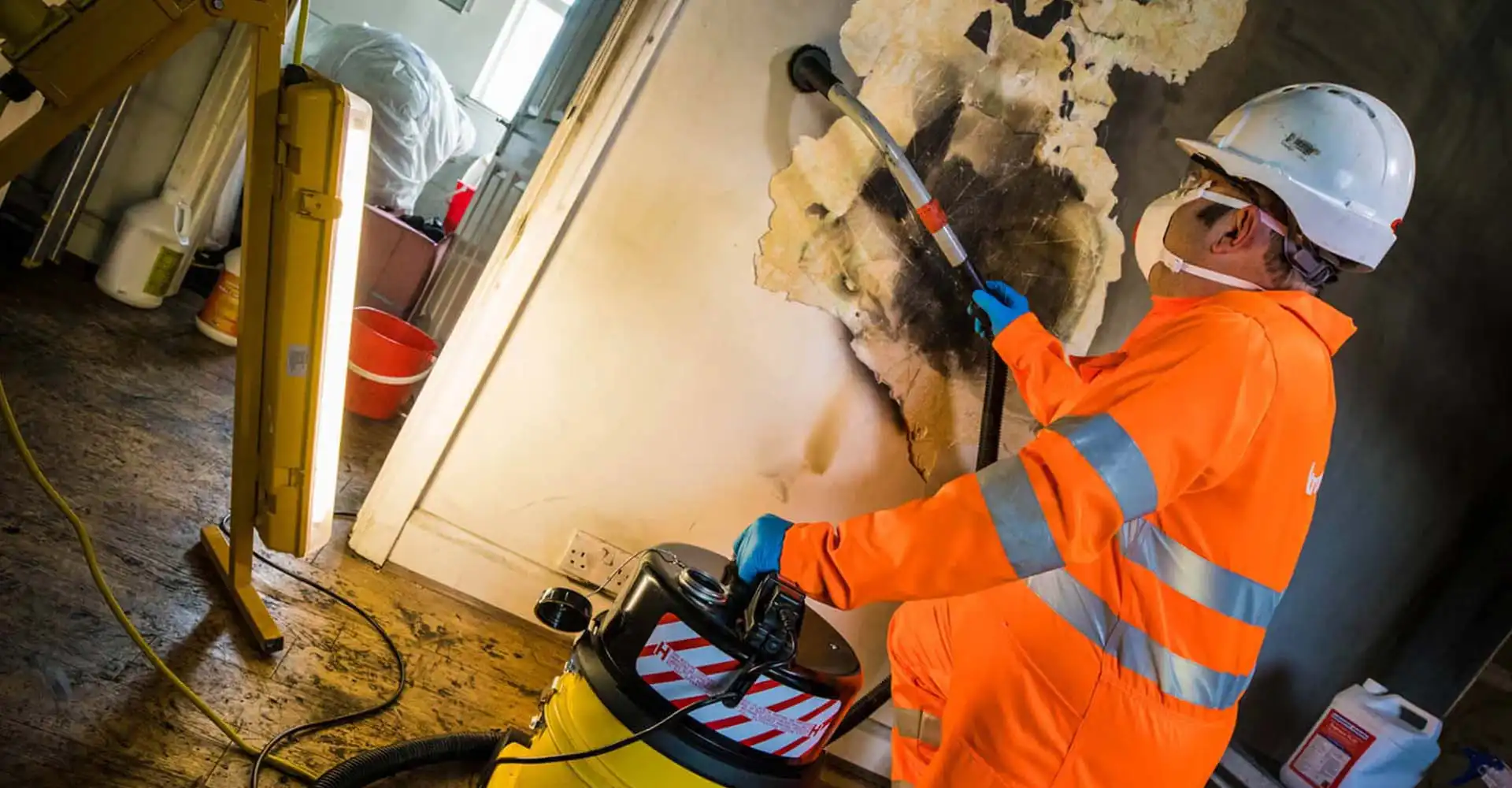
At this stage, the focus changes completely. It’s no longer about making the space look clean. It’s about removing contamination at a level that can’t be seen.
That involves:
Because without that, the effects of the incident don’t fully go away, they just become less obvious for a period of time.
This is the point where a smoking oven stops being a maintenance issue and becomes a restoration problem.
A smoking oven is not just an inconvenience.
In most cases, it is the result of heat acting on grease, food residue or other materials inside the appliance, the same conditions that lead to ignition if left unchecked.
Across the UK, cooking appliances remain the leading cause of accidental house fires, with grease and fat playing a significant role in many of those incidents. Smoke is often present before those fires develop.
Once smoke is being produced regularly, the issue has already progressed beyond normal use.
At that point:
This is not a situation that resolves on its own. If ignition occurs, or heavy smoke is produced, the impact extends into the property.
Smoke contamination can:
A smoking oven is an early-stage warning of a process that can lead to fire and wider damage.
Ideal Response supports properties across the UK where fire or smoke damage has occurred, providing specialist cleaning and decontamination to return environments to a safe, usable condition.
If your property has been affected, contact our expert team to see how we can help.

Chris Hedges is Head of Marketing at Ideal Response and the author of every article published on this site. With over 25 years of senior marketing experience across property, legal, and professional services sectors, Chris brings a clear, evidence-led approach to writing about fire damage, flood restoration, and specialist property remediation. His philosophy is simple: cut through the noise, respect the reader's time, and give people the information they actually need.
Explore more articles about damage restoration, specialist cleaning and what we do
If you’re dealing with fire damage, flooding, or an environmental incident, our team is ready to respond. No matter if you have a question or have an emergency that you need help with, call:
If you’d prefer to drop us a message, use our main contact form and upload any pictures of the incident. Would you like us to call you? Fill out the short ‘Request a call back’ form.