Available 24/7 | 0800 088 4170

Available 24/7 | 0800 088 4170
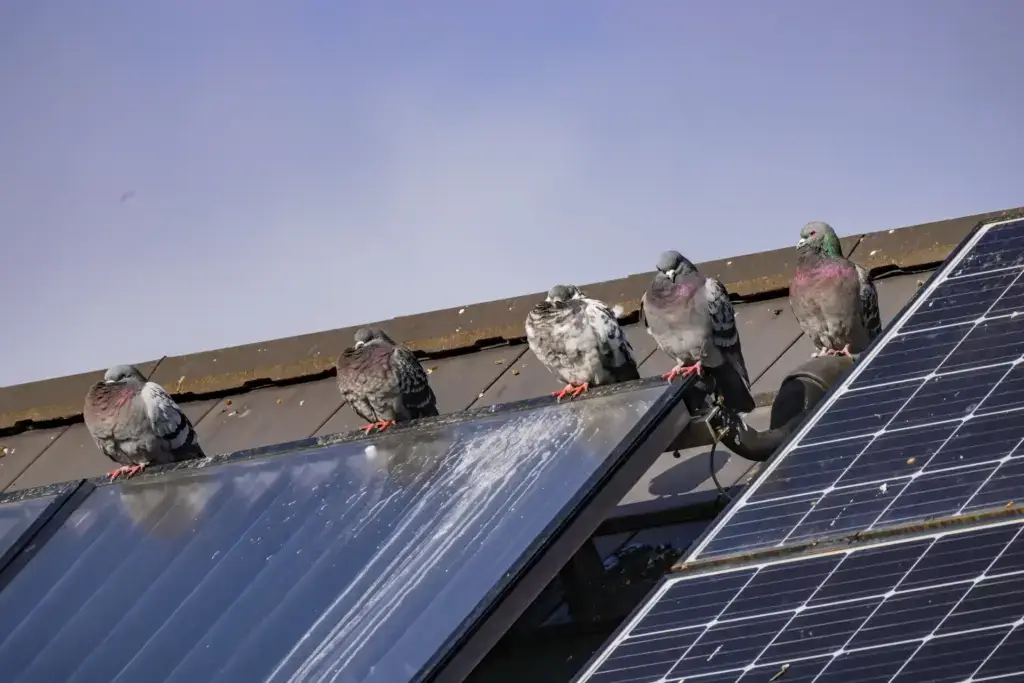
Pigeons are a familiar sight across towns and cities in the UK, and at first, a couple of birds on your roof may not seem like a cause for concern.
However, once pigeons begin nesting, the situation can change quickly.
Roofs, loft spaces and especially solar panels provide sheltered, elevated environments that pigeons actively seek out. Once a nesting spot is established, birds will often return repeatedly and bring others with them.
What starts as a minor nuisance can quickly develop into a persistent contamination and property issue, particularly if left untreated.
Skip to:
Quick summary: What you should know
Why pigeons choose roofs and solar panels
The hidden problems pigeon nesting can cause
The hidden cost of ignoring pigeon nesting
Pigeons under solar panels: A growing UK problem
Why DIY pigeon removal often falls short
When to consider professional pigeon guano cleaning
How professional pigeon guano cleaning works
Conclusion: A small problem that rarely stays small
FAQs
If pigeons are nesting on your roof or solar panels:
Pigeons are highly adaptable and thrive in urban environments. They are drawn to roofs and solar panels because they provide:
Solar panels are particularly attractive because they create a protected void underneath, making them one of the most common nesting locations in modern UK properties. Once pigeons settle, they tend to return year after year.
While pigeons may seem harmless, nesting activity can create serious and often underestimated problems.
Pigeon droppings accumulate quickly and can:
Pigeon guano is acidic and, over time, can damage:
Nesting pigeons often create persistent noise, particularly in lofts or above living spaces.
Pigeon guano can contain bacteria and fungal spores, which may affect air quality — especially in enclosed or poorly ventilated areas.
One of the most common mistakes property owners make is assuming pigeon activity is just a nuisance.
In reality, the longer nesting is left untreated, the more difficult and costly it becomes to resolve.
Over time:
What could have been a straightforward clean can develop into a more complex and costly restoration issue.
With the rapid increase in solar panel installations across the UK, pigeon nesting beneath panels has become one of the most common property issues reported by homeowners. The challenge is that the problem is often hidden.
By the time it becomes noticeable:
In some cases, this can begin to affect the efficiency and long-term performance of the solar system.
Because access beneath panels is limited, safe cleaning typically requires specialist equipment and experience.
It’s completely understandable that many property owners try to resolve pigeon problems themselves first.
Common DIY approaches include:
While these methods can sometimes disrupt pigeon activity temporarily, they rarely solve the root of the problem.
Pigeons are highly adaptable birds. Once they become familiar with a location, particularly one that offers shelter and safety, they tend to ignore or quickly adjust to deterrents.
More importantly, DIY approaches do not address:
In many cases, partial or unsuccessful attempts can actually make the situation worse, as birds relocate slightly but remain on the property.
Without fully removing the nesting environment and contamination, the problem is likely to return, often more established than before.
While early-stage activity may appear manageable, there is a clear point where professional bird dropping removal becomes the most effective and safest option.
You should consider specialist cleaning services when:
At this stage, the issue is no longer just about bird presence, it becomes a contamination and property condition problem.
Professional cleaning ensures that:
Acting at the right time can prevent the need for more extensive restoration work later.
Effective pigeon guano cleaning is a structured process that goes far beyond simply removing visible droppings.
It involves a combination of safe access, contamination control and preventative measures to ensure the problem is properly resolved.
The first step is the controlled removal of all guano and nesting debris.
This is carried out using appropriate protective equipment to minimise exposure to harmful particles and to prevent contamination spreading to other areas of the property.
Particular care is taken in confined or enclosed spaces, such as lofts or beneath solar panels.
Once bulk contamination has been removed, all affected surfaces are thoroughly cleaned.
This process targets:
The aim is not just to improve appearance, but to restore the area to a safe and hygienic condition.
One of the most challenging aspects of pigeon guano cleaning is access.
Rooflines, solar panels and high-level areas require:
This ensures that all contamination, including hidden build-up beneath panels, is properly addressed.
Once cleaning is complete, preventing pigeons from returning is critical.
Depending on the property, this may involve:
Without this step, there is a high likelihood that pigeons will return and the problem will repeat.
Pigeons nesting on roofs and solar panels are often underestimated in the early stages. What may seem like minor bird activity can quickly develop into a persistent and increasingly costly problem.
Once pigeons establish a nesting site, they tend to return repeatedly, leading to ongoing guano build-up, contamination and potential damage to your property.
Across the UK, the rise in solar panels has made this issue more common than ever, with many property owners only realising the scale of the problem once it has become difficult to manage.
The key is acting early.
Addressing nesting before contamination spreads can:
If pigeons are nesting on your roof or beneath your solar panels, Ideal Response provides professional pigeon guano cleaning and specialist support across the UK.
Contact Ideal Response today to resolve the issue properly and prevent it from getting worse.

Chris Hedges is Head of Marketing at Ideal Response and the author of every article published on this site. With over 25 years of senior marketing experience across property, legal, and professional services sectors, Chris brings a clear, evidence-led approach to writing about fire damage, flood restoration, and specialist property remediation. His philosophy is simple: cut through the noise, respect the reader's time, and give people the information they actually need.
Explore more articles about damage restoration, specialist cleaning and what we do


If you’re dealing with fire damage, flooding, or an environmental incident, our team is ready to respond. No matter if you have a question or have an emergency that you need help with, call:
If you’d prefer to drop us a message, use our main contact form and upload any pictures of the incident. Would you like us to call you? Fill out the short ‘Request a call back’ form.