Available 24/7 | 0800 088 4170

Available 24/7 | 0800 088 4170
Illegal waste disposal is a growing concern across the UK, affecting local councils, private landowners, and the environment alike. But while most people recognise a pile of rubbish on a country lane as an issue, many are still asking: what is fly-tipping exactly, and what are the legal consequences of getting it wrong?
In this guide, we break down the fly-tipping meaning, the significant risks involved, and the potential fly-tipping fine you could face if waste isn’t handled correctly.
Skip to:
What is fly-tipping?
Fly-tipping meaning: Why it matters
What are the risks of fly-tipping
How to deal with fly-tipped waste
Summary: Stay legal and stay safe
FAQs
The term “fly-tipping” refers to the illegal deposit of any waste onto land that does not have a license to accept it. This includes public highways, private land, and open spaces.
Unlike littering, which usually involves small items like a crisp packet or a cigarette butt, fly-tipping involves larger amounts of waste. This can range from a single bin bag to truckloads of construction debris.
Understanding the fly-tipping meaning goes beyond just dumping rubbish. It is a serious criminal offence under the Environmental Protection Act 1990.
The practice is often driven by individuals or rogue traders trying to avoid the costs of legitimate waste disposal at licensed facilities. However, the cost to the taxpayer and the environment is immense. Especially in high-density areas, our London damage restoration teams often see how illegal dumping attracts vermin and creates secondary hazards.
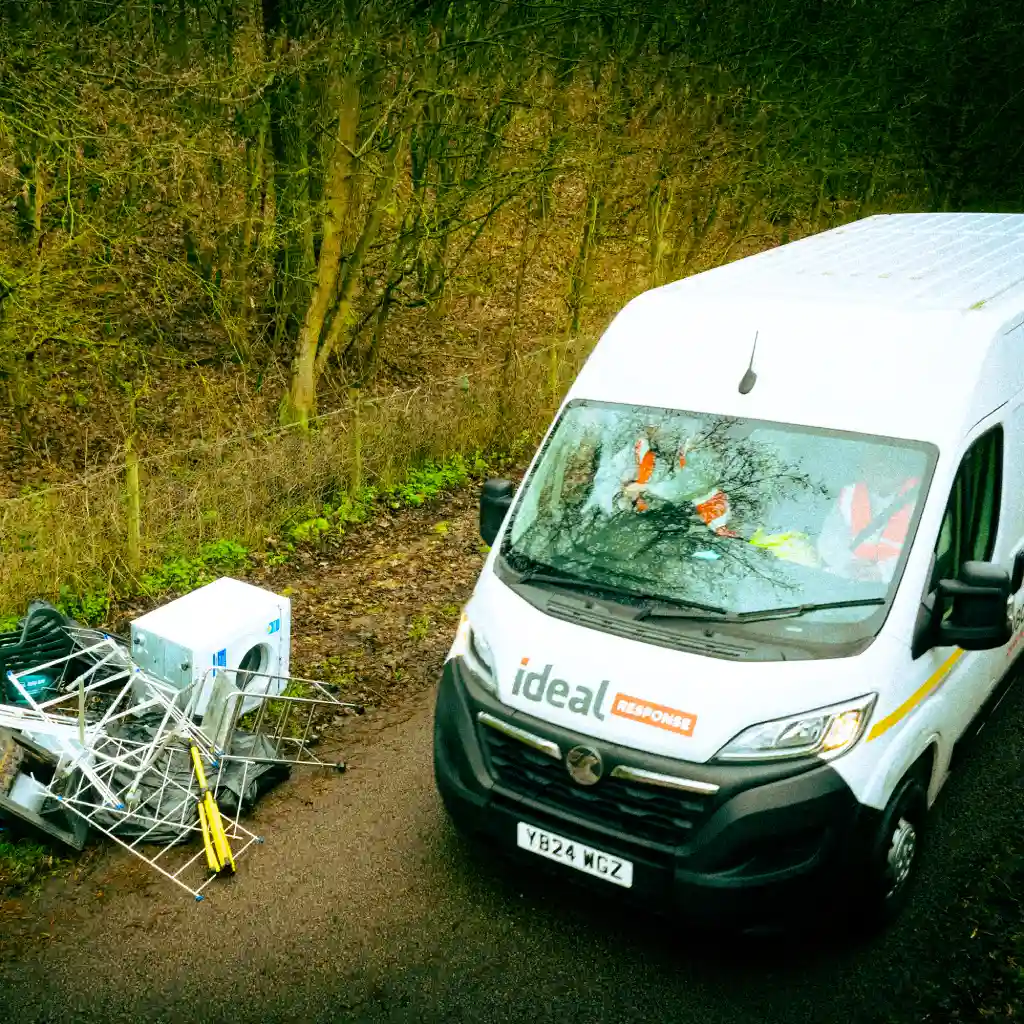
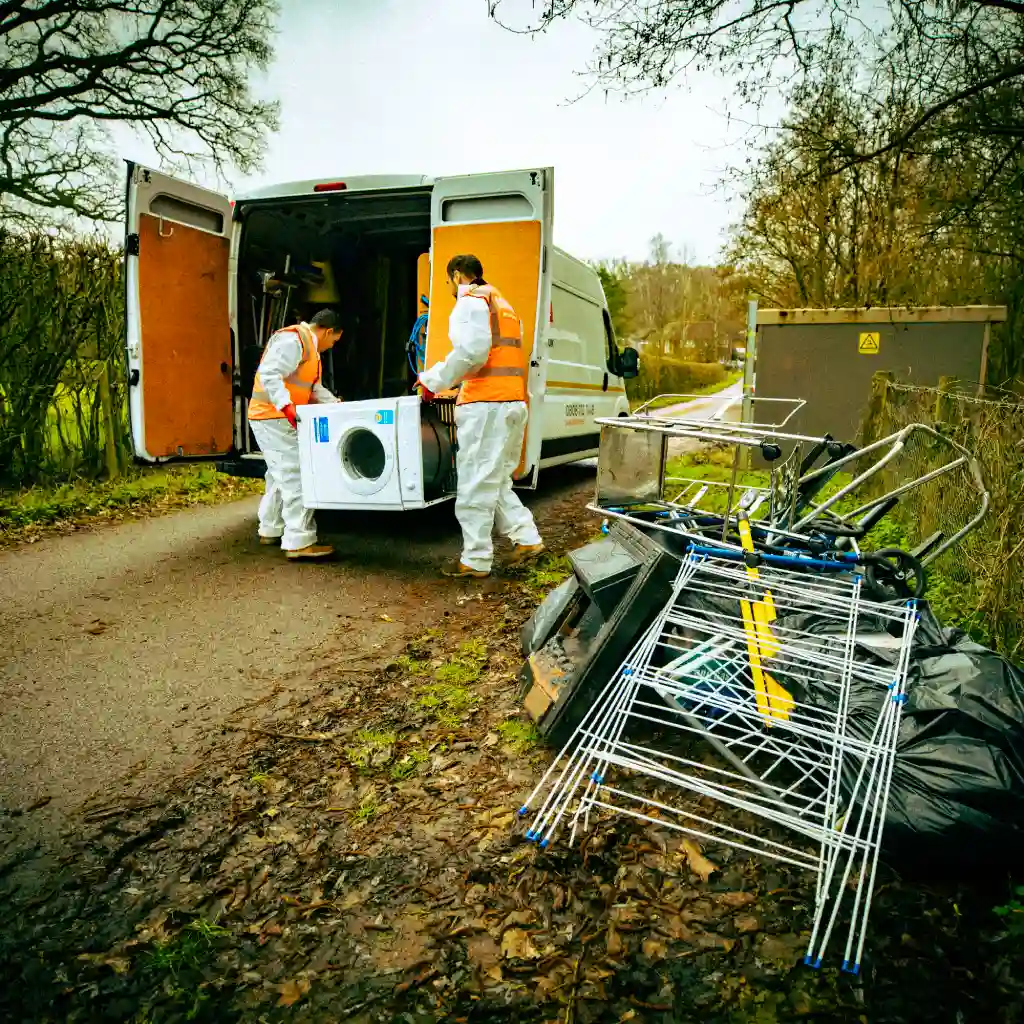
If you are caught fly-tipping, the authorities take it very seriously. Under the “Duty of Care” legislation, householders can be held responsible if they pay an unlicensed waste carrier to take their rubbish away and it ends up being fly-tipped.
Beyond the legalities, fly-tipped waste poses severe physical and biological threats to the local area:
Local authorities and the Environment Agency have the power to issue substantial penalties:
If you are a victim of fly-tipping on your private property, you are unfortunately responsible for the removal of the waste. Dealing with this yourself is not recommended, especially given the risks of sharp objects and hazardous contaminants mentioned above.
For safe and legal disposal, you should always use a licensed professional. Ideal Response provides expert fly-tipping removal services across London and the South East. We ensure that the site is not only cleared of debris but also fully decontaminated, returning the area to a safe and hygienic state.
Fly-tipping is more than an eyesore, it is a crime that damages our communities. By ensuring you always use a licensed waste carrier and verifying their credentials via the Environment Agency, you can protect yourself from a hefty fly-tipping fine.
If your land has been targeted by fly-tippers, don’t risk your health or legal standing by attempting to clear it yourself. Ideal Response offers a fast, efficient, and fully compliant fly-tipping removal solution to clear and sanitise affected areas. We provide same-day 24/7 rapid response and are licensed waste-carriers , meaning we can quickly remove and safely dispose of fly-tipping waste 365 days a year. Contact our team today to get a free quote and book your fly-tipping clean-up service.

Chris Hedges is Head of Marketing at Ideal Response and the author of every article published on this site. With over 25 years of senior marketing experience across property, legal, and professional services sectors, Chris brings a clear, evidence-led approach to writing about fire damage, flood restoration, and specialist property remediation. His philosophy is simple: cut through the noise, respect the reader's time, and give people the information they actually need.
Explore more articles about damage restoration, specialist cleaning and what we do
If you’re dealing with fire damage, flooding, or an environmental incident, our team is ready to respond. No matter if you have a question or have an emergency that you need help with, call:
If you’d prefer to drop us a message, use our main contact form and upload any pictures of the incident. Would you like us to call you? Fill out the short ‘Request a call back’ form.