Hurricane exposure created two problems, not one
“Thank you all for the quick and efficient work to get this resolved for us. Such a breath of fresh air to be working with a team who were so efficient and good to work with, and able to accommodate show crew testing gear alongside the works you needed. Please pass on our thanks to all the guys - both on site and in your offices - who made this all happen.””
Stage Technologies
The concert schedule set the pace
How we remediated the mould
The visible mould was only part of the remediation challenge. The cases had also absorbed significant moisture during transit and subsequent storage, so cleaning the surfaces without controlling the retained moisture would not address the conditions that had allowed mould to develop.
Fifteen cases required particularly intensive attention internally and externally, while the remaining 45 also needed treatment. The scale meant the programme had to move efficiently without losing control of the cleaning and drying environment.
The flight cases were needed for forthcoming Wembley concerts, giving the project a fixed operational deadline. At the same time, stage crew were carrying out PAT testing and equipment repairs on site.
The remediation therefore had to fit around an active production workflow. Rather than isolating the equipment from every other activity, the teams coordinated access so cleaning, testing and repairs could progress alongside one another.
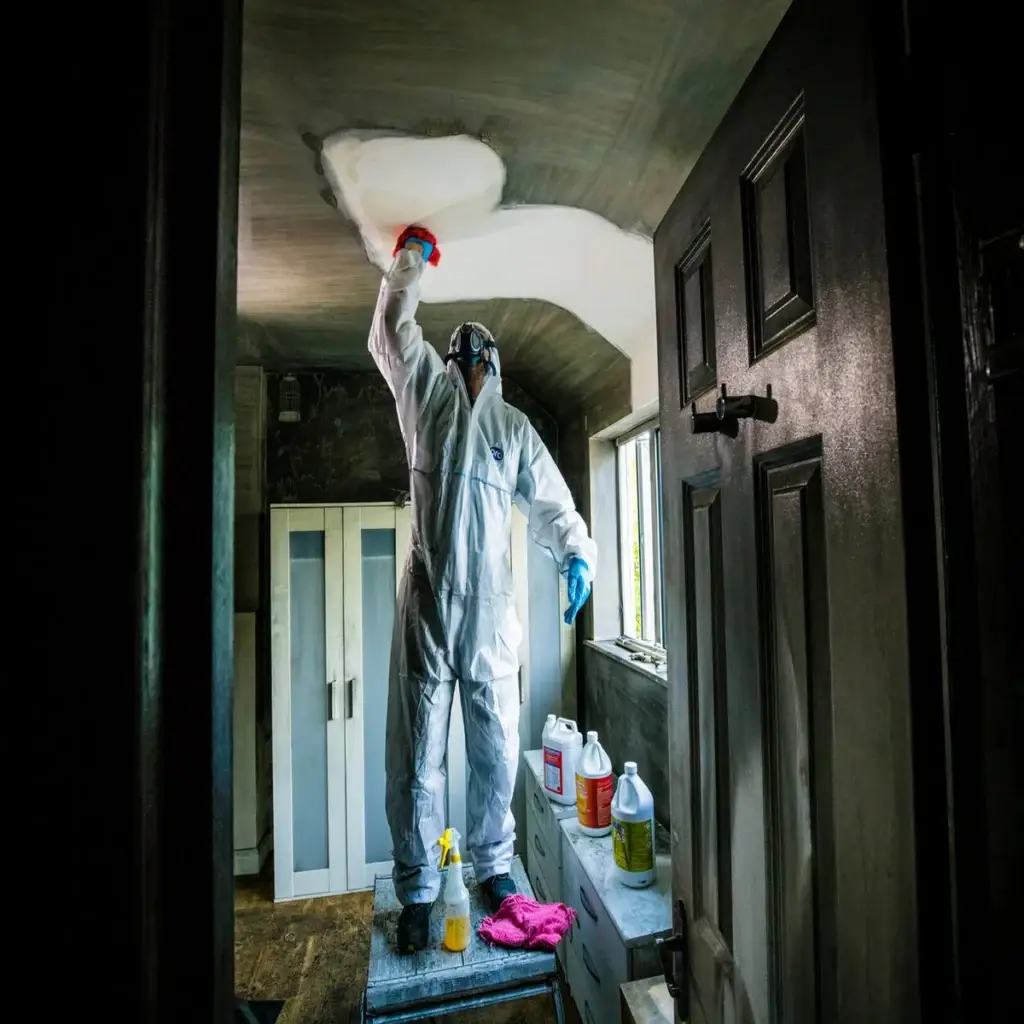
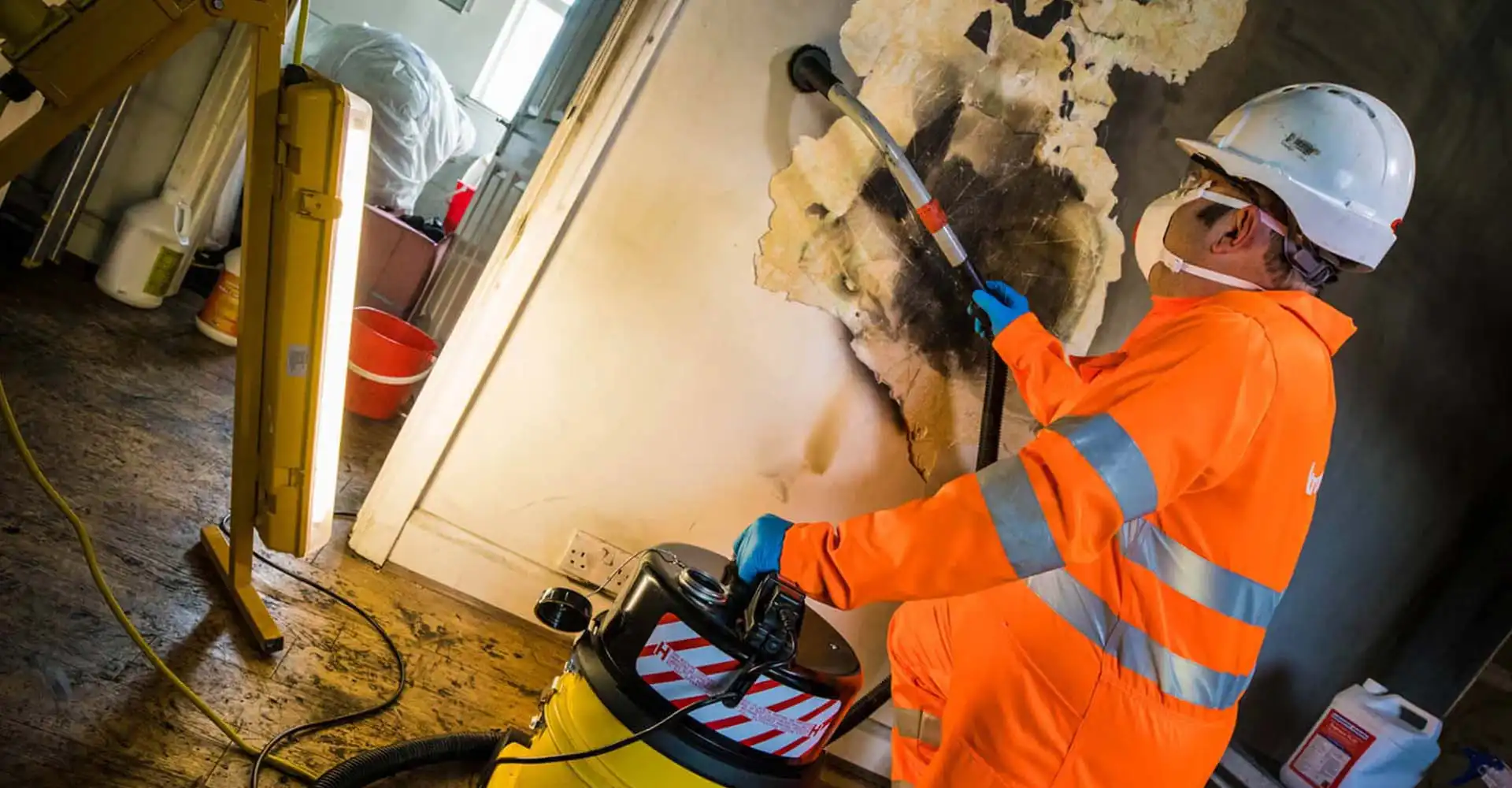
Step 1Clean and sanitise the casesInternal and external surfaces were cleaned with specialist antimicrobial products to remove mould contamination. Air scrubbers were operated in the immediate work area to help manage airborne particulate contamination while the cases were being treated.
Step 2Complete the controlled decontamination treatmentA trailer was set up as a dedicated treatment environment, allowing the flight cases to undergo a controlled decontamination process after physical cleaning.
Step 3Apply the protective surface treatmentFollowing decontamination, a protective antimicrobial treatment was applied to the treated surfaces as the specified post-remediation stage.
Step 4Build a dedicated drying chamberBecause the cases had been heavily saturated, drying could not be treated as an afterthought. A specialist chamber was constructed to concentrate the drying conditions around the affected equipment.
Step 5Drive moisture out under controlled conditionsDesiccant dehumidification and pressure-drying equipment were used to create a low-relative-humidity environment and accelerate moisture removal from the cases. Drying conditions were managed against the project’s specified moisture targets before the equipment returned to use.
The key was to treat mould contamination and retained moisture as connected problems. Physical cleaning dealt with contamination on accessible surfaces, controlled decontamination addressed the cases after cleaning, and the dedicated drying chamber tackled the moisture that had helped mould establish in the first place. Air management and specialist drying were therefore not separate add-ons: they formed part of the same remediation strategy, designed around getting production equipment back into service within a fixed event schedule.
Ready for Wembley within the required timeframe
The remediation programme was completed within the required production window, allowing all 60 flight cases to return to use for the planned Wembley concerts.
The result depended on more than cleaning visible mould. The combination of decontamination, controlled drying and coordination with the stage crew meant the equipment could progress through remediation without derailing the parallel testing and repair programme.
What the client said
Project insight
This project shows why commercial mould remediation often has to be designed around the asset, not simply the room it is sitting in. The flight cases were valuable working equipment with a fixed date for reuse. By combining cleaning and decontamination with a dedicated drying environment, the response addressed both the mould and the moisture conditions behind it while accommodating the production team’s wider workload.
Drying was as important as mould removal
Elena Filoti
Mould Remediation Specialist
“When equipment has been saturated, removing visible mould is only one part of the job. If high moisture remains within the materials, the conditions that supported the growth have not really been addressed. Here, the dedicated drying chamber allowed us to manage that moisture alongside the cleaning and decontamination work, while the production team continued preparing the equipment for its next use.”