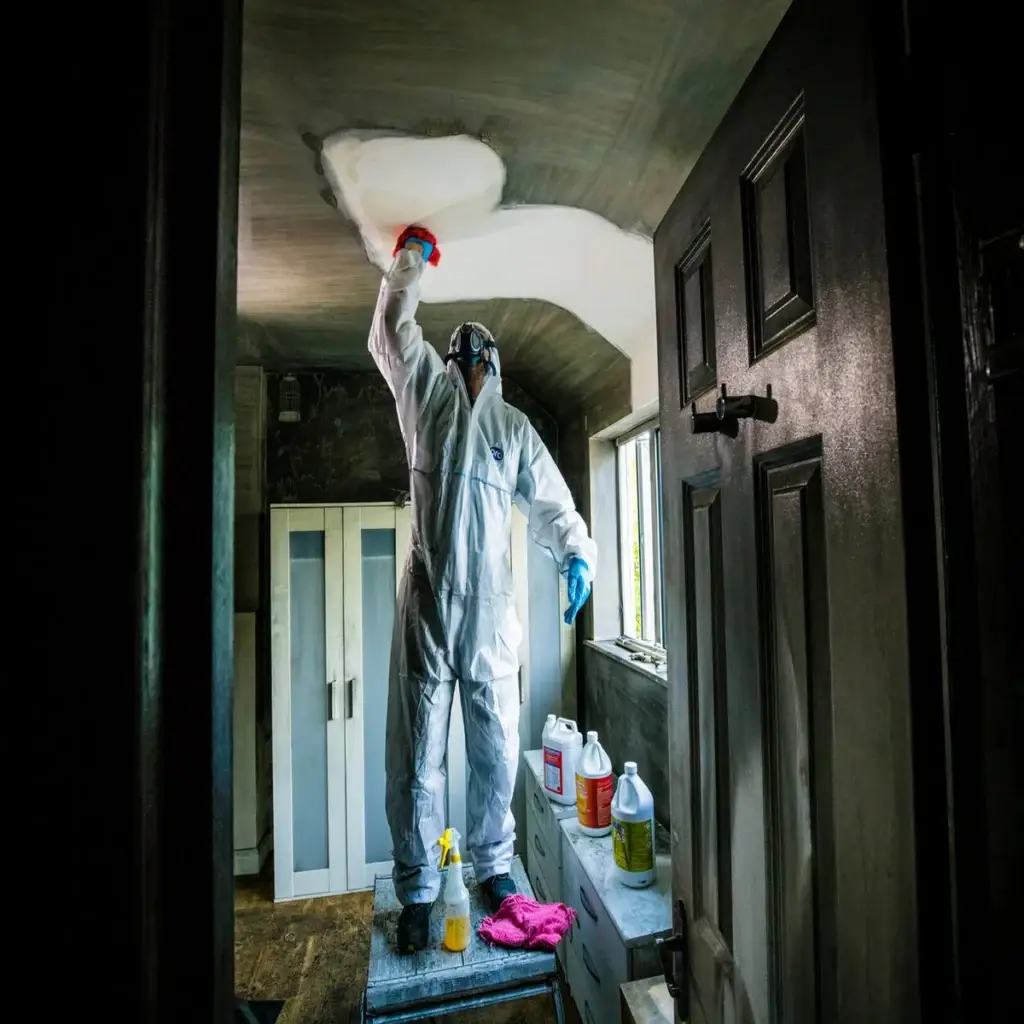
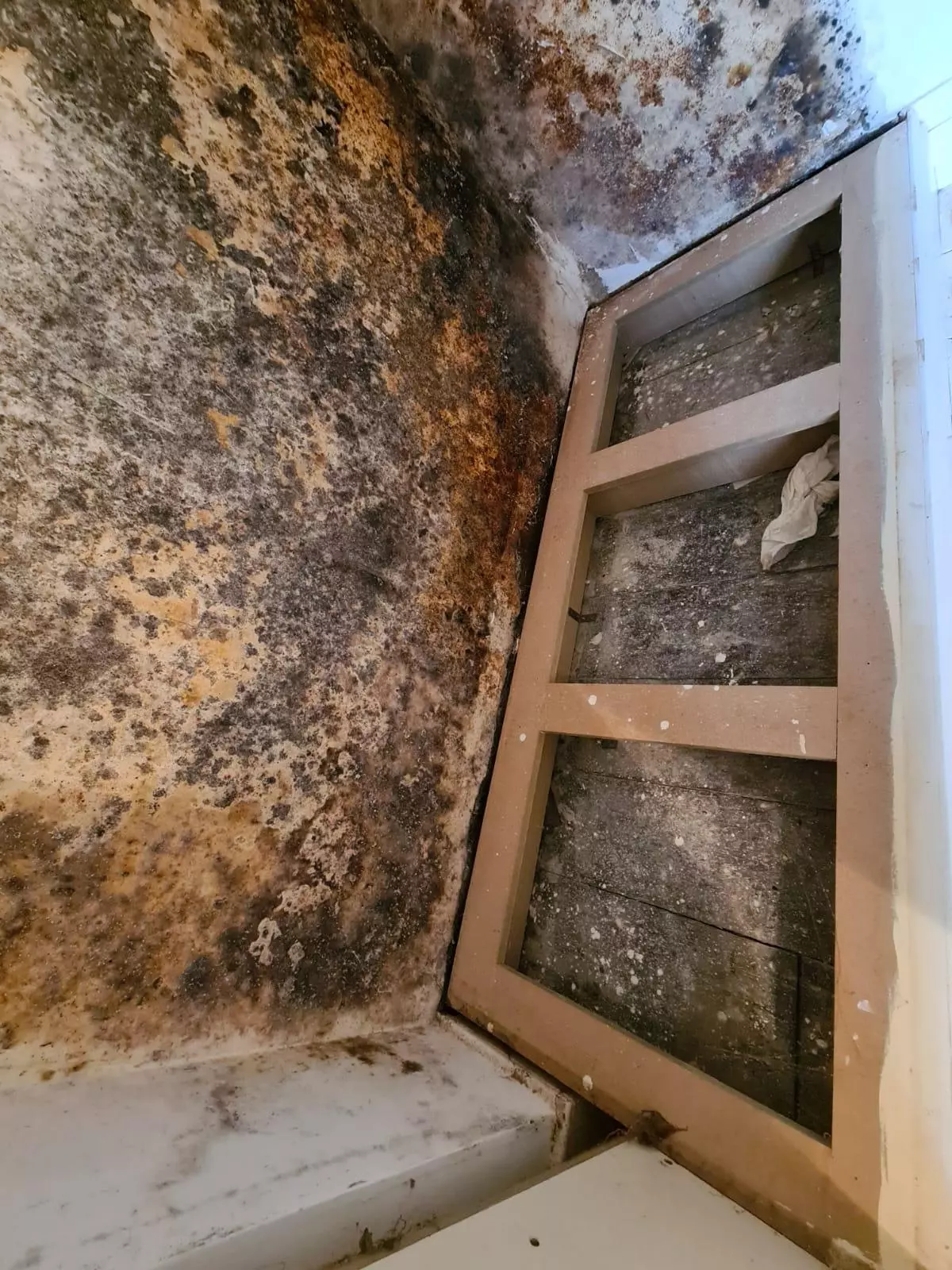
The first warning sign was a pervasive musty smell coming from the bedroom. When the back of the built-in wardrobe was opened up, significant mould growth was found behind it. Because the fitted furniture restricted access to the affected wall, the team needed to expose the contaminated area before the specialist treatment could be carried out properly. The wardrobe itself was heavily affected, so its dismantling and disposal formed part of the remediation.
With the wardrobe removed, the technicians could work directly on the affected surfaces rather than attempting to treat a concealed problem from the accessible side of the room.
The mould remediation then followed four defined stages:
The sequence matters because mould remediation is not simply a matter of applying a chemical treatment. Loose contamination was recovered first, followed by direct cleaning of the exposed surfaces and then the subsequent treatment stages.
Removing the wardrobe was equally important. It gave the technicians access to the area where the mould had developed, allowing the treatment to be applied directly rather than around the edges of the fitted furniture.
The homeowner made contact online on 1 February and the specialist team attended the next day. The affected wardrobe was dismantled and removed, the concealed area was exposed and the four-stage mould remediation was completed during that visit.
By the end of the day, the contaminated fitted furniture had been taken out of the room and the newly accessible mould-affected surfaces had received the specified remediation treatment. This brought the specialist cleaning phase of the project to completion without requiring a return visit.
The immediate problem had been hidden behind fitted furniture. Following the work, the contaminated wardrobe was no longer concealing the affected area and the exposed surfaces had been worked through the full four-stage remediation sequence.
The project also removed the need to keep treating the mould as an unexplained smell or inaccessible patch behind furniture: the affected area had been opened up, physically cleaned and treated directly.
The fire started in electrical equipment within a ground-floor storeroom outside normal working hours. The fire service had extinguished the fire before Ideal Response became involved.
At first glance, the worst of the damage appeared concentrated around the storeroom. Heavy black soot was clearly visible close to the seat of the fire and extended into the adjoining corridor.
But there was another indication that the problem went further.
A persistent smoke odour remained across much of the ground floor and could also be detected in parts of the first floor, including areas where very little visible soot could be seen.
That mattered because approximately 60 employees normally worked from the premises. Some staff had been relocated or were working remotely while the affected areas were unavailable.
The customer also wanted to avoid unnecessary replacement of furniture, fixtures and other items that could potentially be cleaned and retained.
Our technicians carried out a room-by-room assessment before establishing the cleaning scope.
As expected, the heaviest deposits were concentrated inside the storeroom and immediately outside it. Further inspection, however, identified fine soot particles extending beyond the obviously fire-damaged areas.
Some affected surfaces looked relatively clean from a distance. Concentrating solely on the heavily blackened surfaces around the fire would therefore not have addressed the wider contamination.
The team documented the affected areas, photographed conditions before work began and used appropriate surface assessment/testing in selected locations to help establish the extent of soot migration.
Once the extent of the contamination had been established, the team developed a staged cleaning programme.
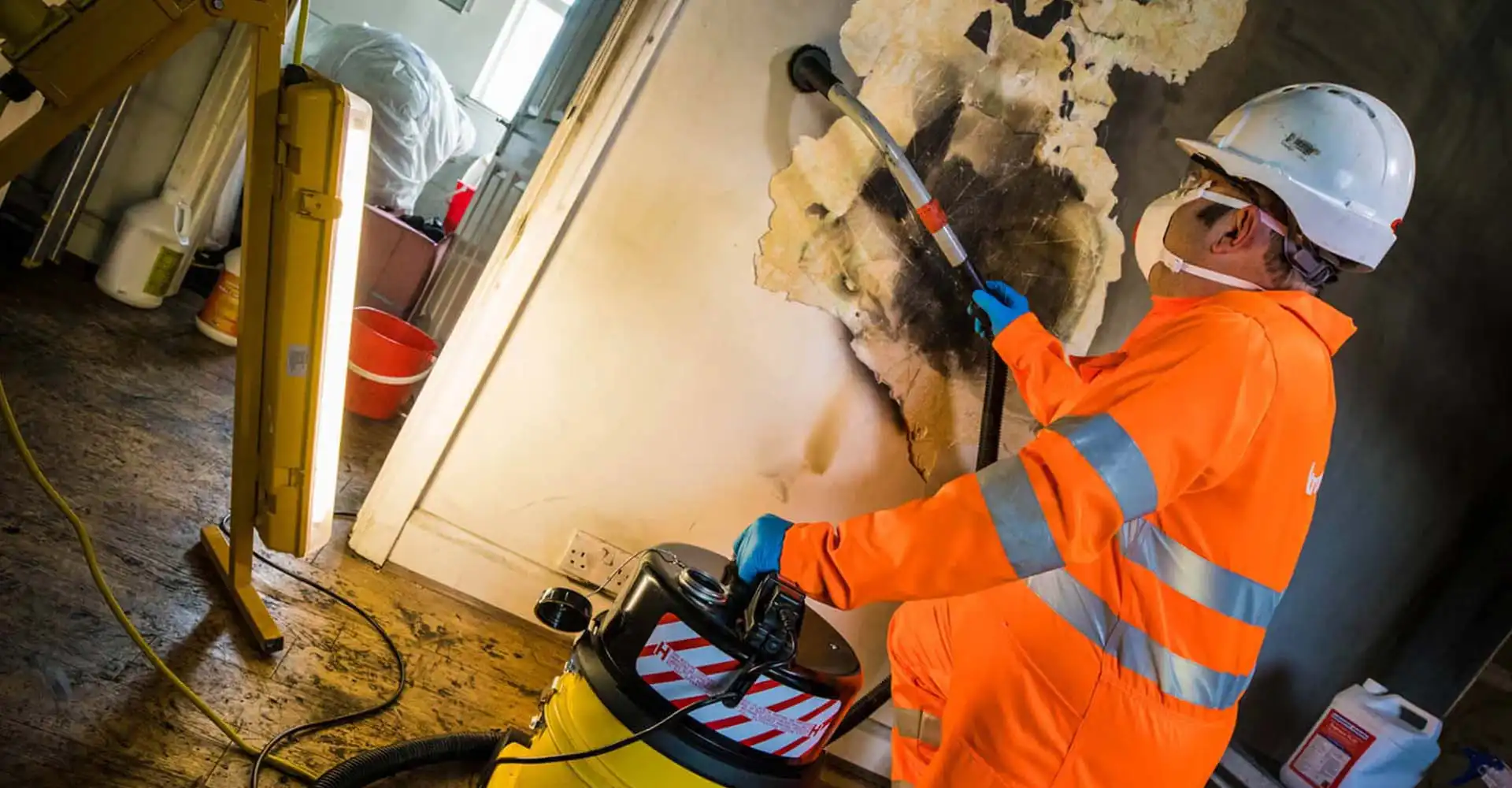
The first priority was the controlled removal of loose particulate contamination using appropriate HEPA-filtered vacuum equipment. This came before more detailed surface cleaning.
That sequencing was deliberate.
Attempting to wet-clean loose soot immediately can risk spreading or smearing contamination across some surfaces. Removing appropriate loose particulate contamination first gave the team a better foundation for the subsequent detailed cleaning stages.
The technicians then worked systematically through the affected areas, progressing from higher-level surfaces through walls, fixtures, furniture and flooring.
Professional cleaning products and degreasers appropriate to the surfaces and contamination were used to remove adhered fire residues. Where furniture, fixtures and other contents could be successfully cleaned, the team treated them rather than automatically assuming that everything exposed to smoke needed to be discarded.
Although the fire itself had been contained to one relatively small storeroom, the final treatment area extended to approximately 650 m² because of the way smoke and fine soot had migrated through the property.
The project included the fire-affected storeroom, ground-floor corridor, six office and meeting areas, stairwell and first-floor landing.
Across five working days, visible soot and fire residues were removed from the treated areas, salvageable furniture and fixtures were cleaned where appropriate, and the persistent smoke odour was treated following the physical cleaning process.
A final inspection was completed before the treated areas were handed back. The customer could then begin returning those areas to normal use.
Visible damage doesn't necessarily define the affected area. The heaviest black soot was concentrated near the storeroom, but lighter contamination had travelled considerably further.
Cleaning sequence matters. Appropriate loose particulate contamination was removed before detailed surface cleaning, and smoke odour treatment followed the physical removal of fire residues rather than being treated as a substitute for cleaning.
Assessment should continue during the project. An additional affected area was discovered because the technicians continued checking conditions while the work progressed.
For a facilities or property manager dealing with a similar incident, the scope of fire damage cleaning shouldn't be based solely on the rooms that look visibly blackened.
If a fire has affected a commercial property, the visible damage may be only part of the problem.
Ideal Response provides fire damage cleaning, soot and ash removal, smoke damage cleaning and smoke odour treatment for commercial properties across England, supporting recovery through the specialist cleaning and restoration stages up to pre-reinstatement.