Available 24/7 | 0800 088 4170

The key technical finding came before removal began. The visible surface coatings were not lead-containing, but laboratory analysis identified lead in the older layers beneath them. Relying on the appearance of the topcoat alone would therefore have given an incomplete picture of the material being disturbed.
Combining that finding with the production's access plan allowed the response to stay targeted: the controls were based on what the paint layers contained, while the extent of the work was based on where the crew actually needed to go.
The initial survey had also identified high-level areas before the urgent second visit. That meant the team arrived with a mobile access tower rather than losing time solving an access problem on the day. In a project working to a production deadline, that preparation was as important as the cleaning sequence itself: controlled removal, continuous HEPA-filtered air scrubbing, HEPA vacuuming, detailed decontamination, fogging, waste containment and final visual inspection.
Samples of the deteriorating paint were submitted for specialist laboratory analysis before the remediation scope was finalised.
The visible surface coatings did not contain lead, but the underlying paint layers did. That distinction mattered: apparently lead-free surface paint was sitting over older lead-containing coatings, so loose and flaking material still required controlled removal and decontamination.
Instead of treating every deteriorated area in the large building, the team used the test result alongside the production's access plan to identify the spaces that genuinely needed intervention.
Budget and timing both mattered. The brief was to find a proportionate way of treating the necessary access and filming areas rather than committing resources to parts of the building the production did not need.
Across the two full-day remediation visits, priority areas included the main hallways, first-floor brown-tiled corridor, lecture theatre, the stairwell leading towards the basement and part of the blue corridor.
This kept the remediation tied to the production's actual access requirements while applying the full planned controls wherever lead-containing material was being disturbed.
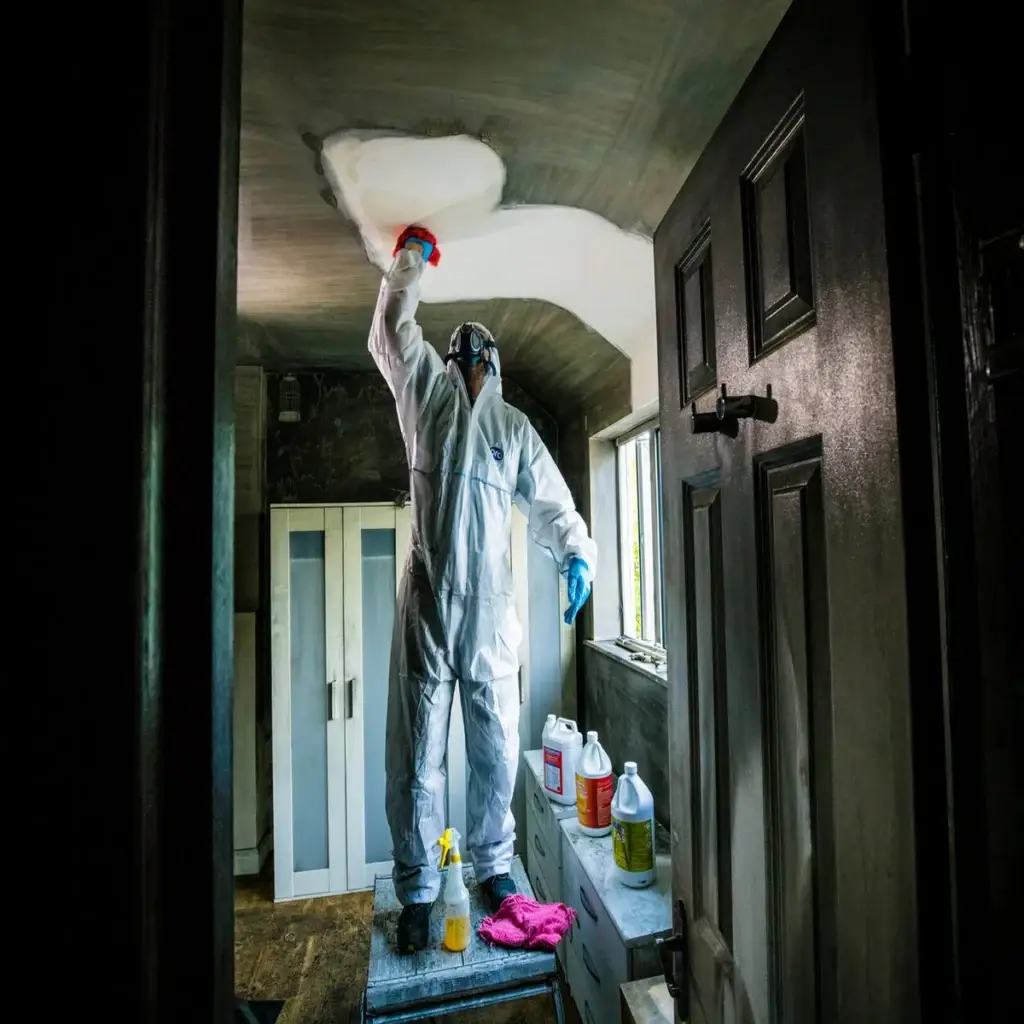
Controlled work areas were established first and access was restricted. HEPA-filtered air scrubbers then operated continuously while the remediation was underway to support air filtration and particulate control.
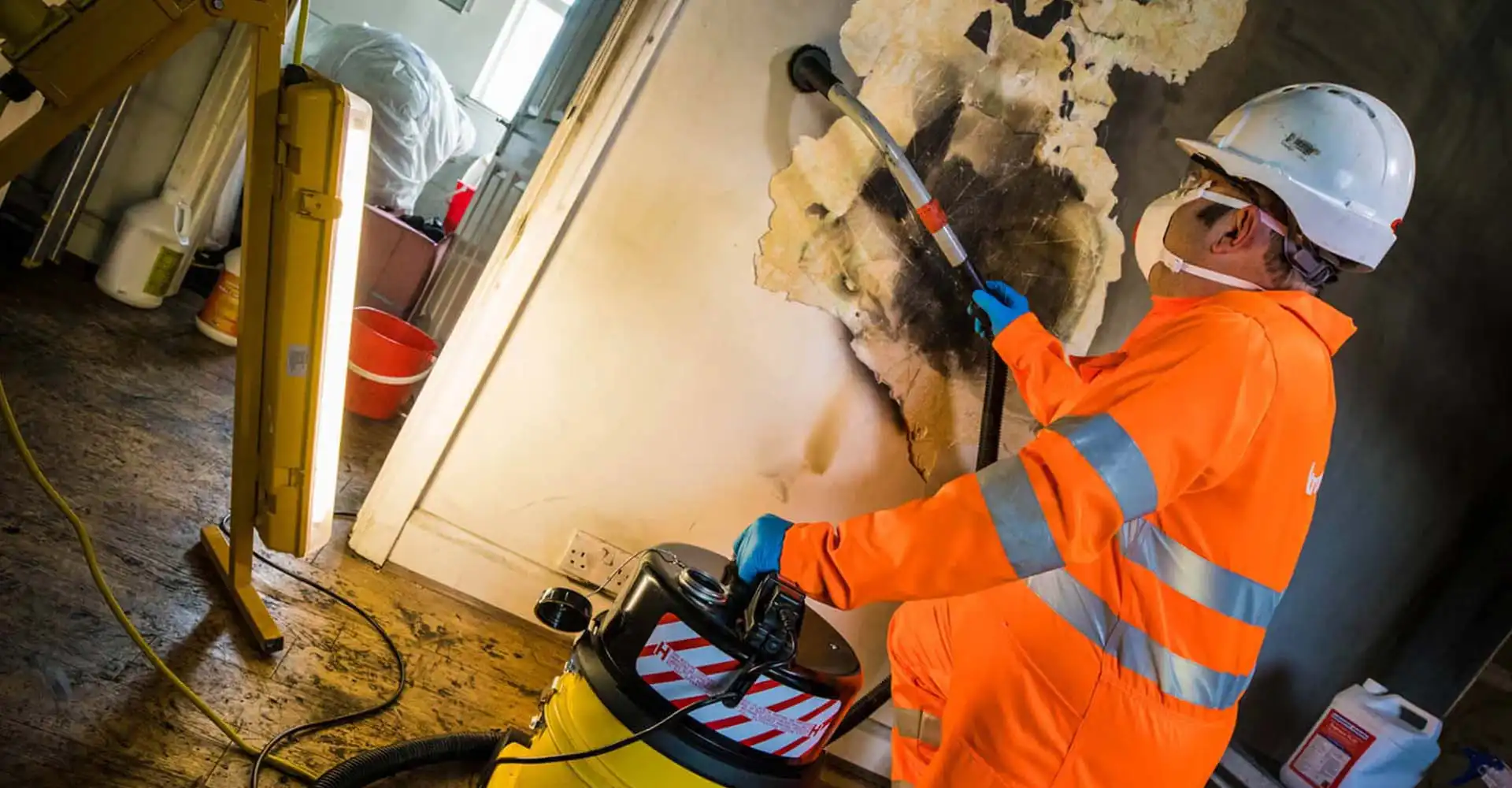
Loose, flaking and unstable lead-containing paint was carefully removed using controlled methods intended to minimise dust generation and spread. Debris was collected and contained as the work progressed rather than being allowed to accumulate around the treatment areas.
Once the unstable coatings had been removed, affected and surrounding surfaces - including floors, ledges, fixtures and other horizontal areas - were HEPA vacuumed. A detailed decontamination clean followed to remove residual dust and debris, with specialist fogging also used as part of the decontamination process.
Generated waste and contaminated debris were bagged, contained and removed for appropriate disposal. The sequence finished with a final visual inspection and clean of the treated areas.
The second phase put the earlier survey and planning to the test.
On the Thursday, Ideal Response was told that the production crew needed access on Monday. The identified priority areas therefore had to be dealt with immediately.
Because the initial survey had already identified the site conditions, priority areas and high-level access requirements, the team could mobilise prepared. A three-person specialist team attended the following day with the planned controls and a mobile access tower for the elevated areas.
The technicians worked through the priority areas for the full day with the HEPA-filtered air scrubbers running continuously. The planned scope for the visit was completed without delay, allowing the production's Monday access to proceed as scheduled.
Across the agreed priority areas, loose and flaking lead-containing paint was removed, affected surfaces were HEPA vacuumed and decontaminated, and generated debris and waste were contained and removed.
The scope remained deliberately tied to the areas the production needed. Rather than treating a large, largely unused building indiscriminately, the remediation focused resources on the access routes and spaces required by the crew.
During the urgent second phase, the Thursday instruction led to Friday mobilisation and completion of the identified priority work in time for the crew's planned Monday access.