Available 24/7 | 0800 088 4170

Following the repair and reinstatement, normal water pressure was restored to the farmhouse and no further leak was evident. The surface-water problem associated with the escaping mains was also resolved.
For the property owner, the important part of the response was the progression from symptom to source: low pressure and unexplained water at ground level were converted into a precise excavation point, a defined pipework defect and a completed repair.
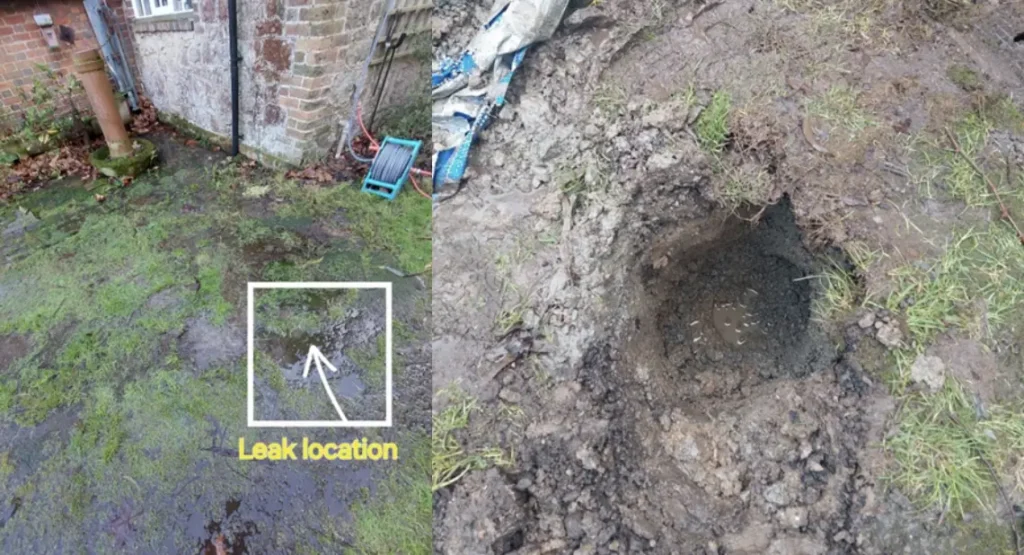
The problem was presenting in two different ways. Inside the farmhouse, water pressure had dropped significantly. Outside, water was collecting across the entrance yard and travelling towards the adjacent highway.
Rather than excavating on the basis of the visible surface water alone, the first task was to establish where the pressurised cold mains was actually leaking below ground. Pinpointing the defect before digging would reduce unnecessary disturbance around the property.
Acoustic profiling was used to narrow down the leak location. Water escaping from a pressurised buried pipe creates sound and vibration that can be detected at the surface using sensitive listening equipment. By comparing those sound variations, the team identified the area where the leak was strongest.
That gave the engineers a targeted excavation point rather than a broad search area, allowing the next stage to focus on exposing the suspected failed section of the cold mains.
Before breaking ground, the proposed excavation area was scanned with a Cable Avoidance Tool. The CAT scan was used to identify buried services that could otherwise be damaged during digging, adding an important safety check before the pipework was exposed.
With the excavation point established and the surrounding service risk assessed, the team carried out a careful localised dig to reach the mains pipe.
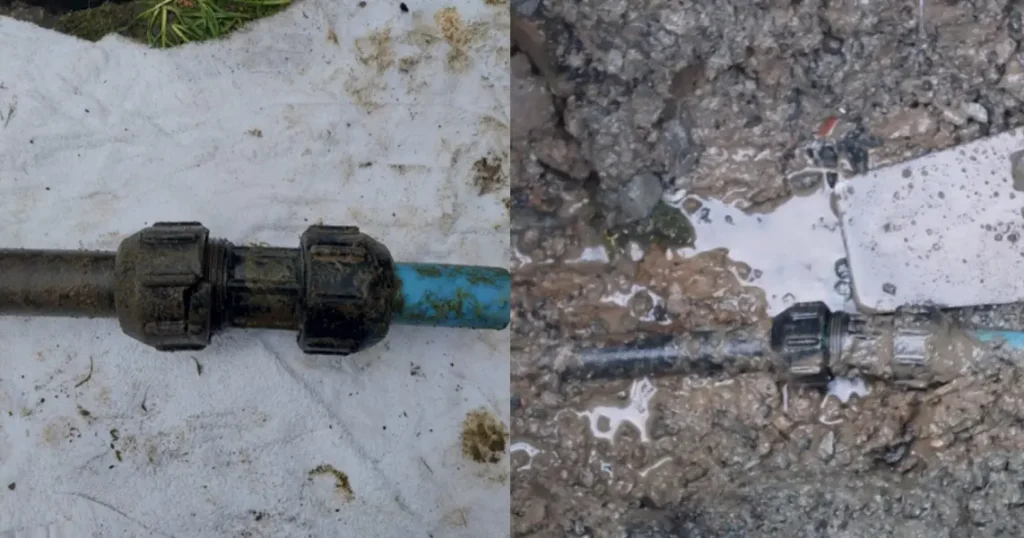
The excavation exposed the leaking pipe joint. A new section of pipework was installed to replace the failed section, after which the repair was tested before the ground was reinstated.
This meant the same response progressed from diagnosis to physical repair: first locating the leak non-invasively, then opening only the area required to reach the defect and finally confirming the new section was functioning before closing the excavation.