Treating the residue before tackling the odour
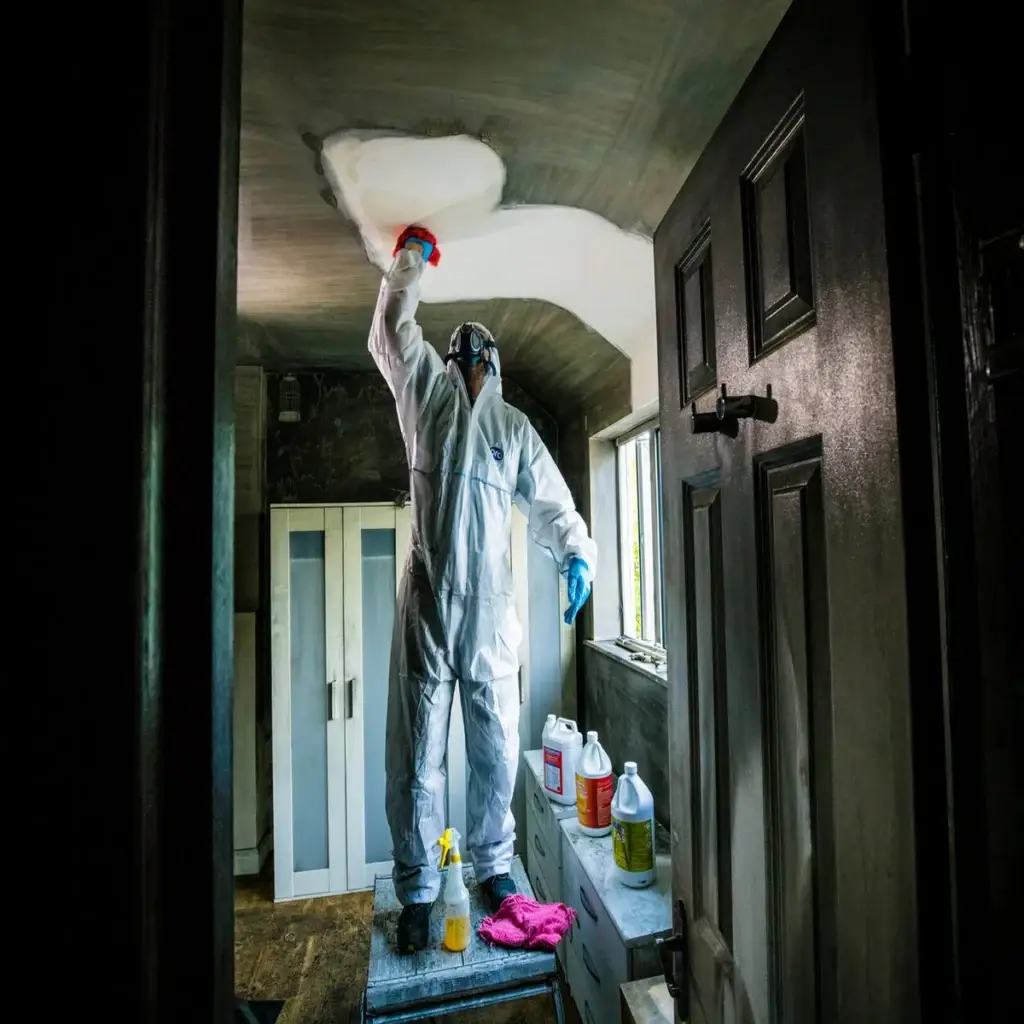
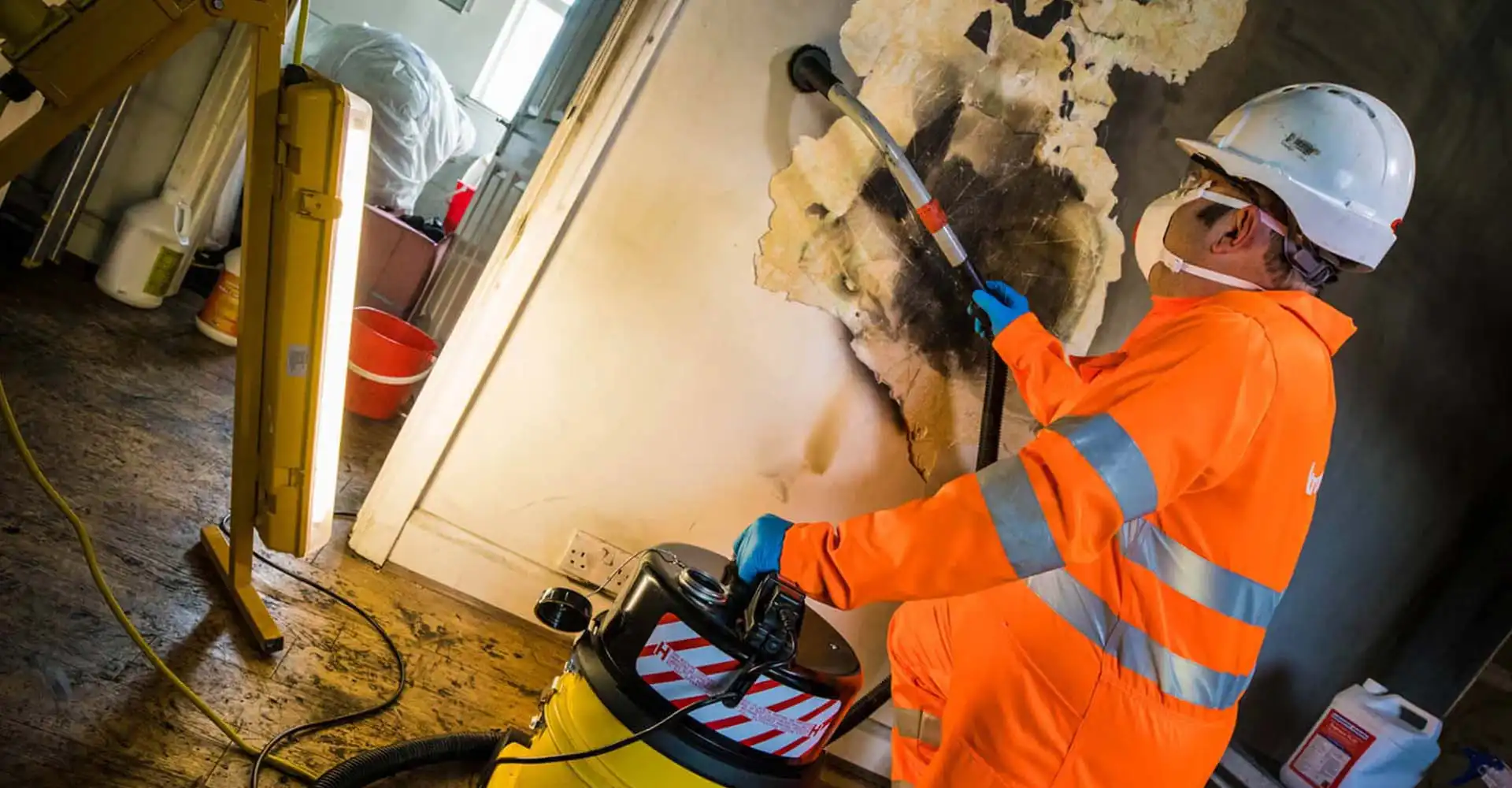
The flat required specialist treatment after having been smoked in. The challenge was not simply to introduce a deodorising treatment: tar residue could be present on the internal surfaces, so the walls and ceilings first needed to be prepared and cleaned.
Wallpaper was to be removed before Ideal Response attended. This was an important part of the preparation because wallpaper can act as a vapour barrier, preventing effective treatment of the wall surface beneath it.
With the underlying surfaces accessible, the team could address the physical smoke residue first and then progress to the odour-treatment stage.
Step 1Alkaline cleaning of walls and ceilingsThe first stage used an alkaline-based wash to clean the walls and ceilings and remove tar residue from the exposed surfaces. This sequencing matters with cigarette-smoke contamination. Applying an odour treatment without first dealing with deposits on the building surfaces risks leaving part of the contamination untreated. The wash-down therefore formed the physical cleaning stage of the remediation rather than treating odour as the only problem.
Step 2Five-stage oxidation odour treatmentOnce the surface-cleaning stage had been completed, the flat progressed to a specialist oxidation treatment. The system uses a five-stage oxidation process designed to treat airborne organic contaminants and persistent odours. The process operates at low temperature and is residue-free, allowing the treatment to be used within the property without leaving a secondary treatment residue on the materials inside. For this project, the important technical sequence was straightforward: expose the surfaces, remove the tar residue, then treat the residual cigarette-smoke odour throughout the flat.
Project insight
This project demonstrates the importance of separating smoke-residue removal from odour treatment. In the Chelmsford flat, wallpaper removal gave access to the underlying surfaces, the alkaline wash addressed tar deposits on walls and ceilings, and the five-stage oxidation process followed as the dedicated odour-removal stage. The complete treatment was delivered in a single day and backed by an odour-removal guarantee.
Why cigarette-smoke odour removal starts at the surface
Toufik Bouraine
Fire Damage Specialist
“Persistent cigarette-smoke odour is not just an air-quality problem. If tar residue is still sitting on walls and ceilings, treating the air alone leaves part of the source in place. The important decision on a property like this is to expose and clean those surfaces first, then move to the odour-treatment stage once the physical residue has been dealt with.”
A one-day treatment programme
A treatment backed by an odour-removal guarantee
The remediation separated physical contamination from residual odour. Wallpaper was removed before attendance so it could not act as a vapour barrier over the wall surfaces. The exposed walls and ceilings then received an alkaline wash-down to remove tar residue. Only after that cleaning stage did the property progress to the five-stage oxidation treatment for the remaining cigarette-smoke odour. This avoided relying on deodorisation alone where smoke residues were still present on the building surfaces.
The works were completed on 12 April 2021 in a single planned attendance. Multiple technicians were assigned to the job, allowing the approximately 60 m² flat to progress through the surface-cleaning and odour-treatment programme within the day.
Keeping the work within one coordinated attendance also meant the two stages remained part of the same remediation process rather than being treated as unrelated cleaning and deodorising tasks.
The odour treatment was supplied with an odour-removal guarantee. If the treated cigarette-smoke odour returned, the affected area could be retreated under the guarantee.
That provided a defined outcome for the odour-treatment stage and reflected the purpose of the overall method: not simply masking the smell, but combining surface preparation and cleaning with a dedicated oxidation treatment.