Sewage Damage Cleaning at Langdon House | Ideal Response

Available 24/7 | 0800 088 4170

Same-day sewage decontamination in a Cambridge care home kitchen

The visible leak was in the kitchen. The contamination route continued above it.

When sewage leaked through the ceiling of a Cambridge care-home kitchen, the immediate concern went beyond the mess on the surfaces below. The wastewater had passed through a modular metal ceiling system, creating the possibility of contamination remaining out of sight above an area used to prepare residents' meals.

With elderly and vulnerable people relying on the care home, the kitchen could not simply be wiped down and reopened. Ideal Response mobilised a two-person specialist team on the day of the incident to follow the contamination pathway, open up the affected ceiling and complete the decontamination in a single attendance.

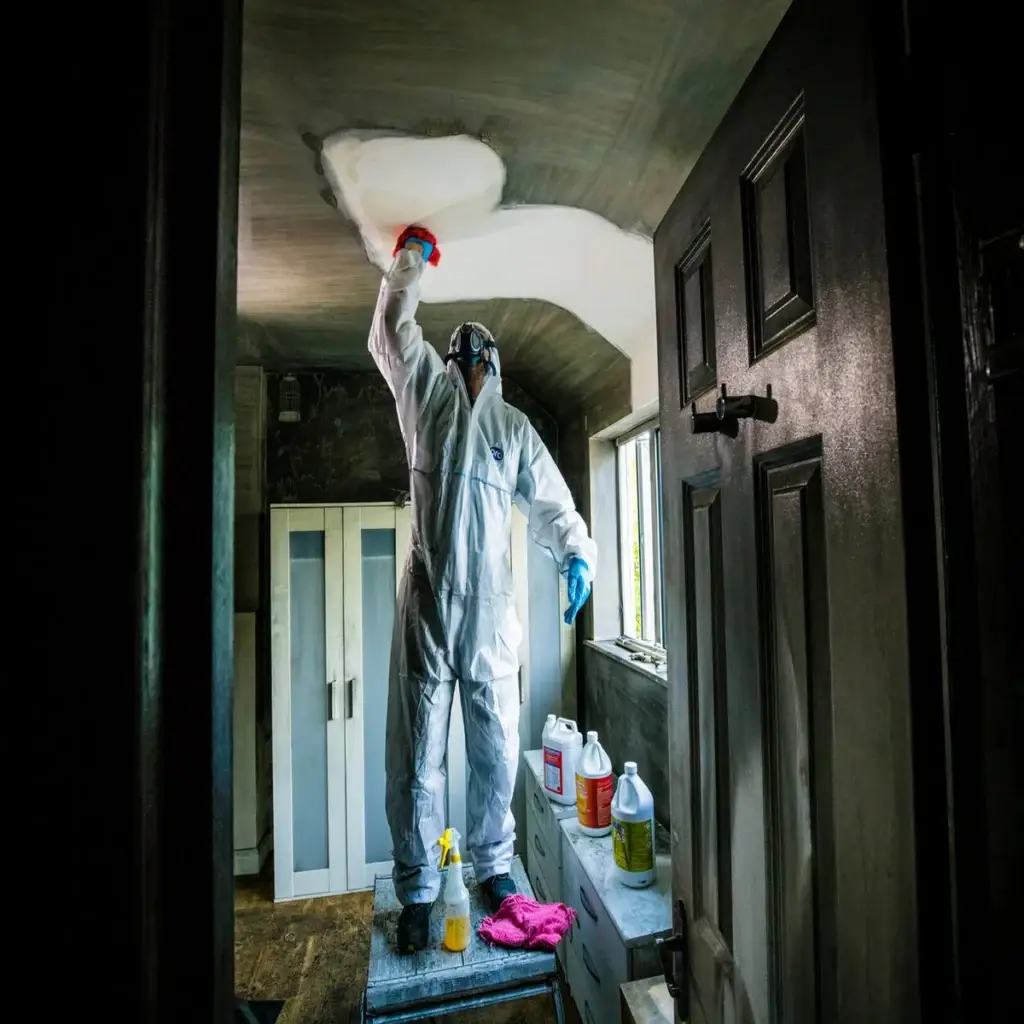
Ideal Response technician decontaminating ceiling
Location
Cambridge, Cambridgeshire
Response
Same-Day Emergency
Service
Sewage Cleaning
Sector
Health & Social Care

Following the sewage beyond the visible leak

The affected area included the commercial kitchen, a small cupboard and the ceiling system above. Stainless-steel preparation benches, sinks, catering equipment and the kitchen floor all sat within the working environment below the leak.

The more important issue was overhead. Sewage had travelled through the modular metal ceiling, so selected panels had to be removed to expose the concealed area. That changed the job from a straightforward surface clean into a controlled decontamination of both the room and the route the sewage had taken.

For a care-home kitchen, that distinction mattered. Treating only the surfaces at working height could have left contamination behind the ceiling panels directly above a food-preparation space.

The response combined physical removal with detailed decontamination. Industrial wet-vacuum equipment supported recovery of liquid contamination before specialist cleaning agents were used across the affected hard surfaces. Selected modular metal ceiling panels were removed to create direct access to the concealed contamination above the kitchen. Detailed manual cleaning addressed the stainless-steel preparation areas, sinks, fixed equipment, floors and small cupboard. ULV fogging was then used as a supplementary final treatment stage after the physical clean - not as a substitute for removing contamination from the surfaces themselves.

A dry-looking surface was not the finish line

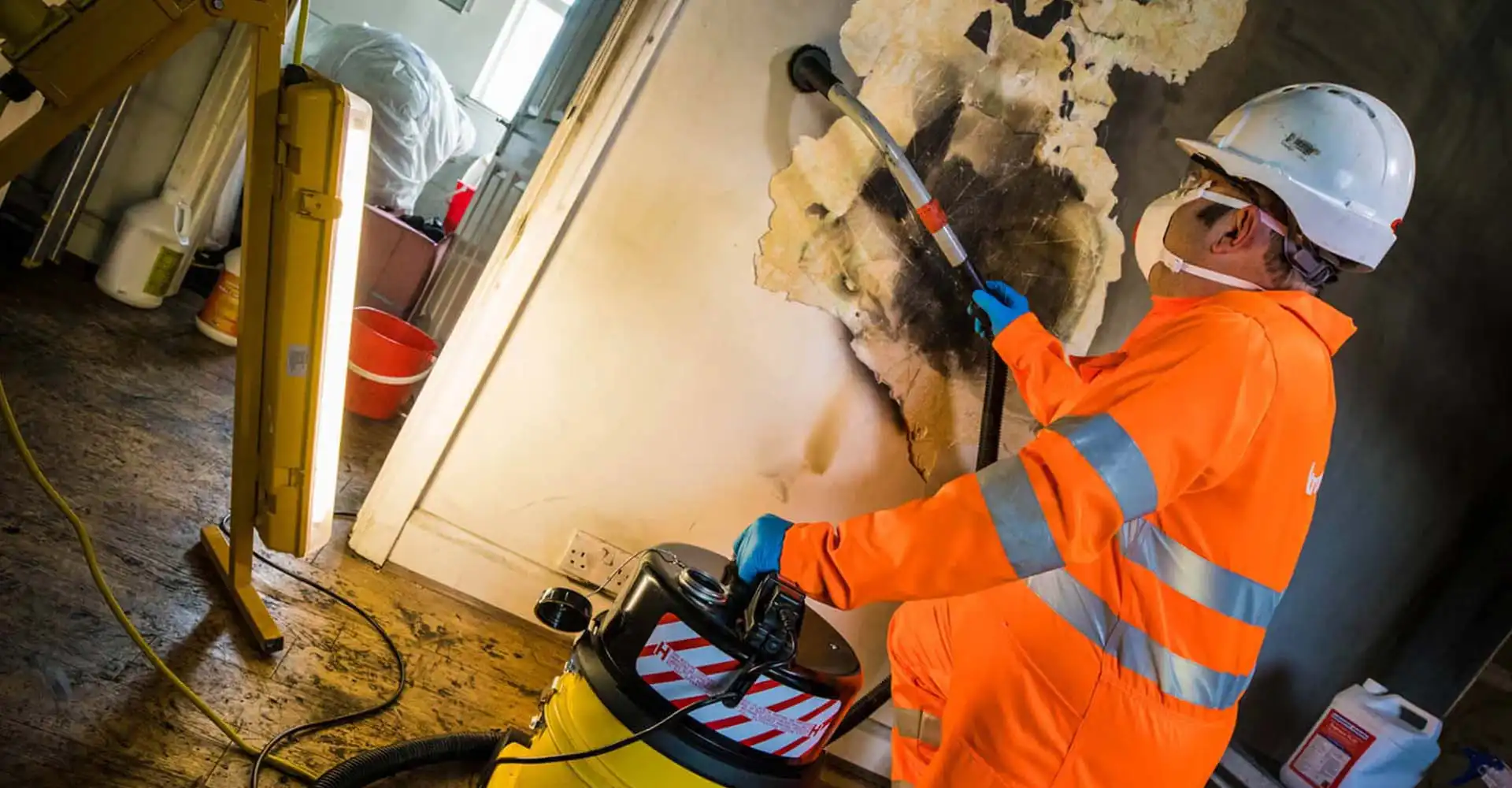
The team began by assessing the contamination footprint and removing liquid and residues from the accessible areas. Industrial wet-vacuum equipment was used where liquid recovery was required before detailed surface decontamination progressed through the kitchen.

Selected modular ceiling panels were then carefully opened so the technicians could reach the affected concealed surfaces. Working in full protective clothing, the team accessed the ceiling opening directly rather than attempting to treat the concealed area from below.

Once access had been established, the cleaning sequence moved systematically through the affected ceiling area, kitchen floor, stainless-steel work surfaces, sinks, fixed catering equipment and the small cupboard.

Why the order of the process mattered

Sewage remediation depends on removing contamination, not simply applying a disinfectant over it. Recovering liquid and physically cleaning affected surfaces first gave the specialist treatment a properly prepared surface to work on.

The same principle applied above the ceiling. Opening the panels meant the team could clean the actual contamination pathway rather than relying on treatment from a distance. ULV fogging came later in the sequence as an additional treatment stage once the detailed cleaning had been completed.

This was particularly important in a kitchen serving vulnerable residents, where the aim was to complete the work quickly without allowing speed to reduce the thoroughness of the decontamination.

Project insight

When sewage enters a room through a ceiling, the visible drip path does not define the full remediation area. Panels, voids and concealed surfaces along that route need to be considered as part of the same contamination footprint. At this Cambridge care home, opening the modular ceiling was the step that turned a surface clean into a controlled sewage decontamination.

An evening response that protected the next day's routine

Work progressed through the evening of 16 August, with the decontamination sequence running from the initial kitchen assessment and ceiling access through to the detailed treatment of stainless-steel surfaces and flooring. The project was completed during the same attendance.

The full decontamination was completed during that single attendance. By the following day, the kitchen was operational again, allowing staff to resume meal preparation without an extended closure.

For the care home, the value of the response was not simply a cleaner kitchen. It was the combination of rapid mobilisation and a remediation plan that addressed the hidden ceiling contamination as well as the surfaces staff could see.

Why sewage contamination has to be followed beyond the visible water

Steve Kiddell
Lead Technician, Ideal Response
“With sewage incidents, a surface looking dry does not mean the contamination risk has gone. Polluted water can track beneath finishes and into joints or adjacent materials, so the technician has to follow the route the water has taken rather than clean only the visible boundary. The order of extraction, removal and decontamination is what prevents contaminated material being spread back through an area that has already been treated”

Related information

Sewage CleaningWater Damage

Need urgent help?

Call our team 24/7 on 0800 088 4170.

Send an Enquiry
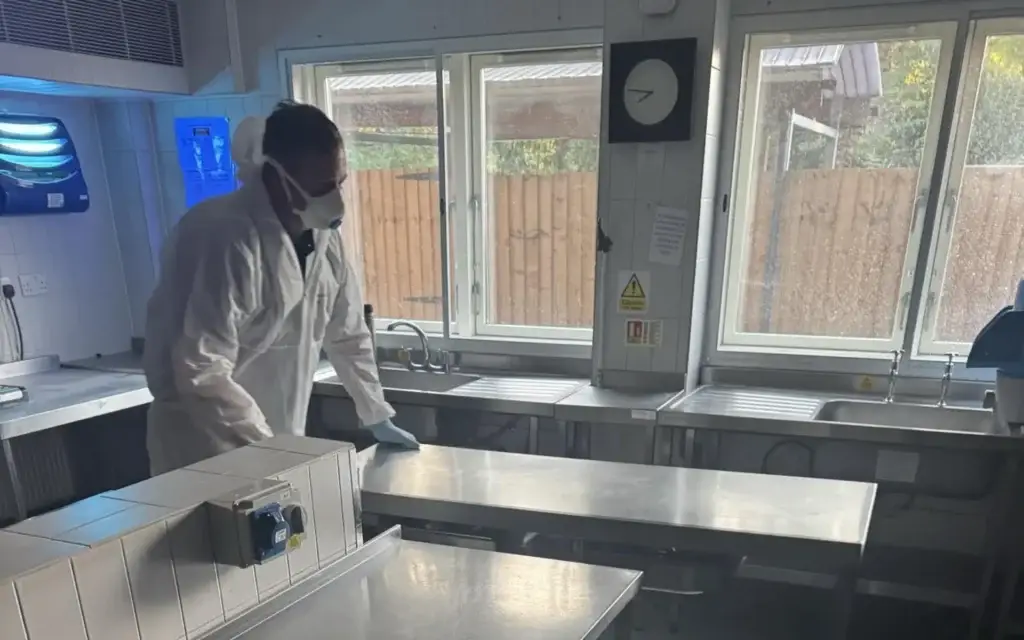
Ideal Response technician in the final stages of the kitchen decontamination.
The final decontaminated kitchen

The Cambridge care home kitchen decontamination which was completed as an emergency response within a day.