Available 24/7 | 0800 088 4170

The instruction was recorded as a combined trauma and hoarder clean, with the trauma-affected area taking priority. That distinction was important. An undiscovered death can create contamination that requires specialist controls, while heavy clutter can restrict access, obscure surfaces and make it harder to understand the true extent of the work before entry.
Inside the flat, accumulated belongings, bags and waste extended through living, sleeping, kitchen and circulation areas. The bathroom showed the most obvious visible contamination. Rather than treating the property as a routine clearance, the technicians first established what they were dealing with and where the immediate priorities lay.
This on-site assessment gave the team a practical sequence for the first intervention: protect themselves appropriately, establish the condition of the rooms, prioritise the trauma-related contamination and then progress with controlled clearance and cleaning within the agreed attendance.
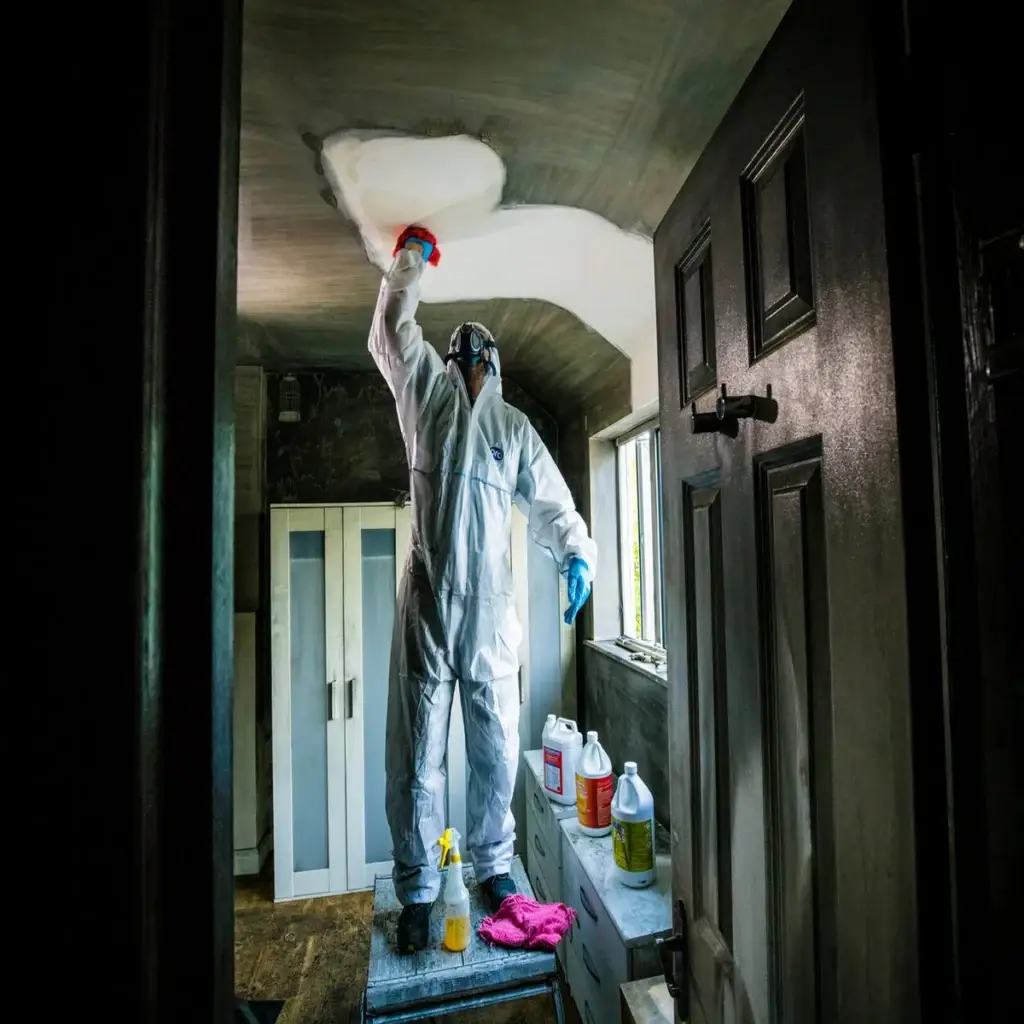
The technicians entered in full personal protective equipment and carried out a room-by-room assessment before progressing with the works. The condition of the property was documented before cleaning began so that the starting point and subsequent improvement could be clearly recorded.
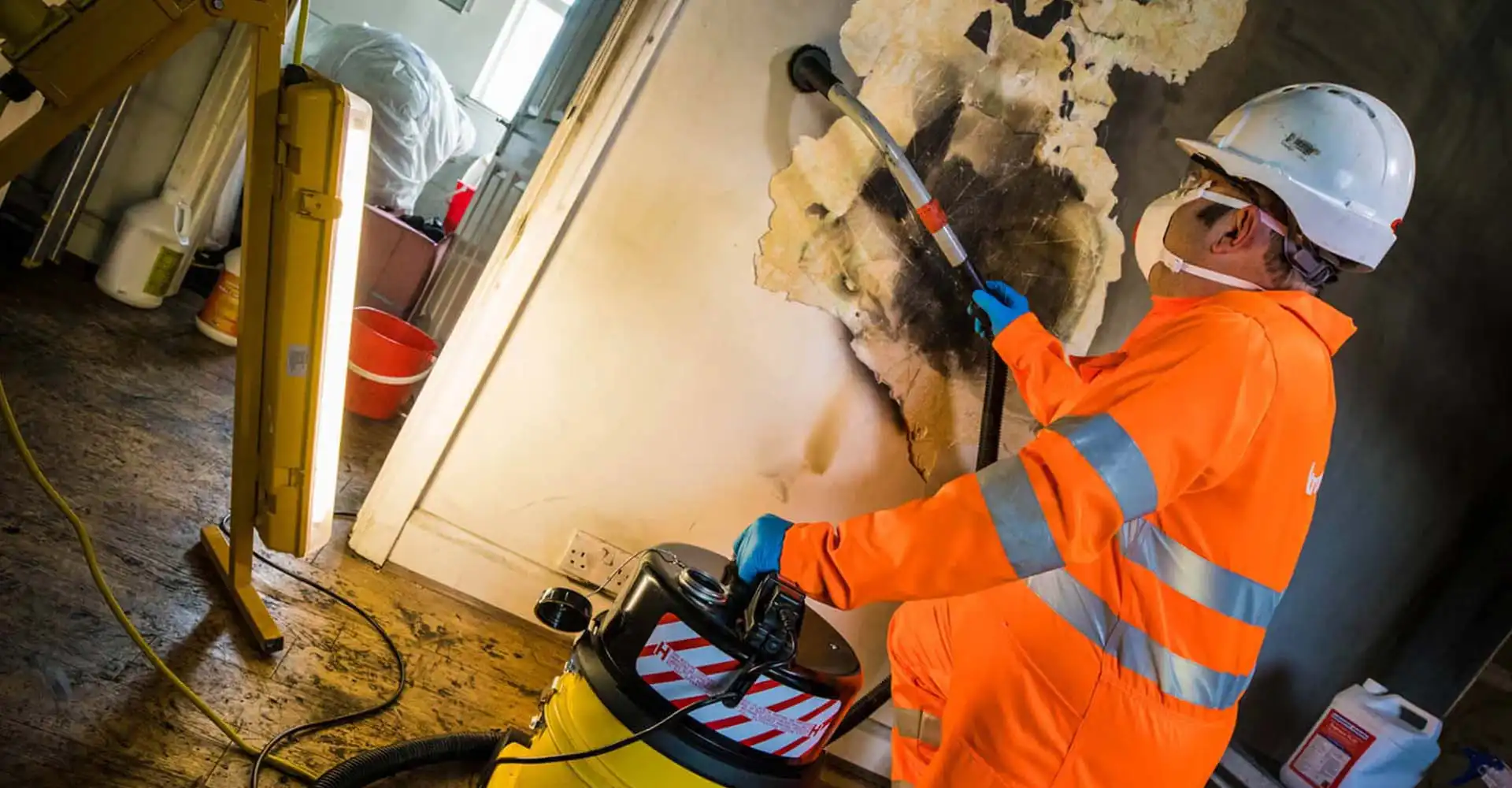
The trauma-affected area was dealt with first. From there, the team progressed with controlled removal of accumulated material and specialist cleaning of the areas included within the initial scope. Working methodically was particularly important because the combination of clutter and contamination increased the risk of transferring material from affected areas into cleaner parts of the flat.
Waste was removed as part of the attendance within the agreed initial allowance, while previously obscured floors and surfaces were progressively exposed and cleaned. The emphasis was on making meaningful progress in the highest-priority areas rather than presenting a one-day intervention as a complete clearance of a heavily affected property.
In a relatively clear room, contamination may be visible and accessible from the outset. Heavy accumulation changes that. Floors and surfaces can be concealed, movement through the property can be restricted and the extent of affected material may only become apparent as items are carefully removed.
That is why the initial assessment was central to this job. The team had to distinguish between the immediate trauma-cleaning priority and the wider hoarding condition, then work through the property in an order that allowed the specialist clean to progress without unnecessarily disturbing or transferring contamination.
It also meant being realistic about what could be achieved during the first attendance. The objective was to address the priority contamination and make substantial progress through the affected areas while maintaining the controls expected of specialist trauma cleaning.
By the end of the documented one-day intervention, the treated areas were substantially clearer and cleaner. Significant quantities of accumulated material had been removed, previously obscured floor areas and surfaces were accessible again, and the priority trauma-related cleaning had been progressed within the agreed scope.
The transformation was particularly evident when the condition before and after the attendance was compared. What had initially been a heavily cluttered environment with visible contamination had been brought into a much more controlled condition, giving the property a materially improved starting point for any further clearance or remedial work required.
This was an initial intervention rather than a basis for claiming that every part of the flat had been fully remediated. Its value lay in establishing the true scope, addressing the immediate specialist-cleaning priority and achieving substantial improvement during the first controlled attendance.