Available 24/7 | 0800 088 4170

The original leak had occurred in October 2023 from the kitchen above the store and had been resolved before the remediation programme began. What remained was moisture-related mould contamination inside a room used to house an archaeological collection.
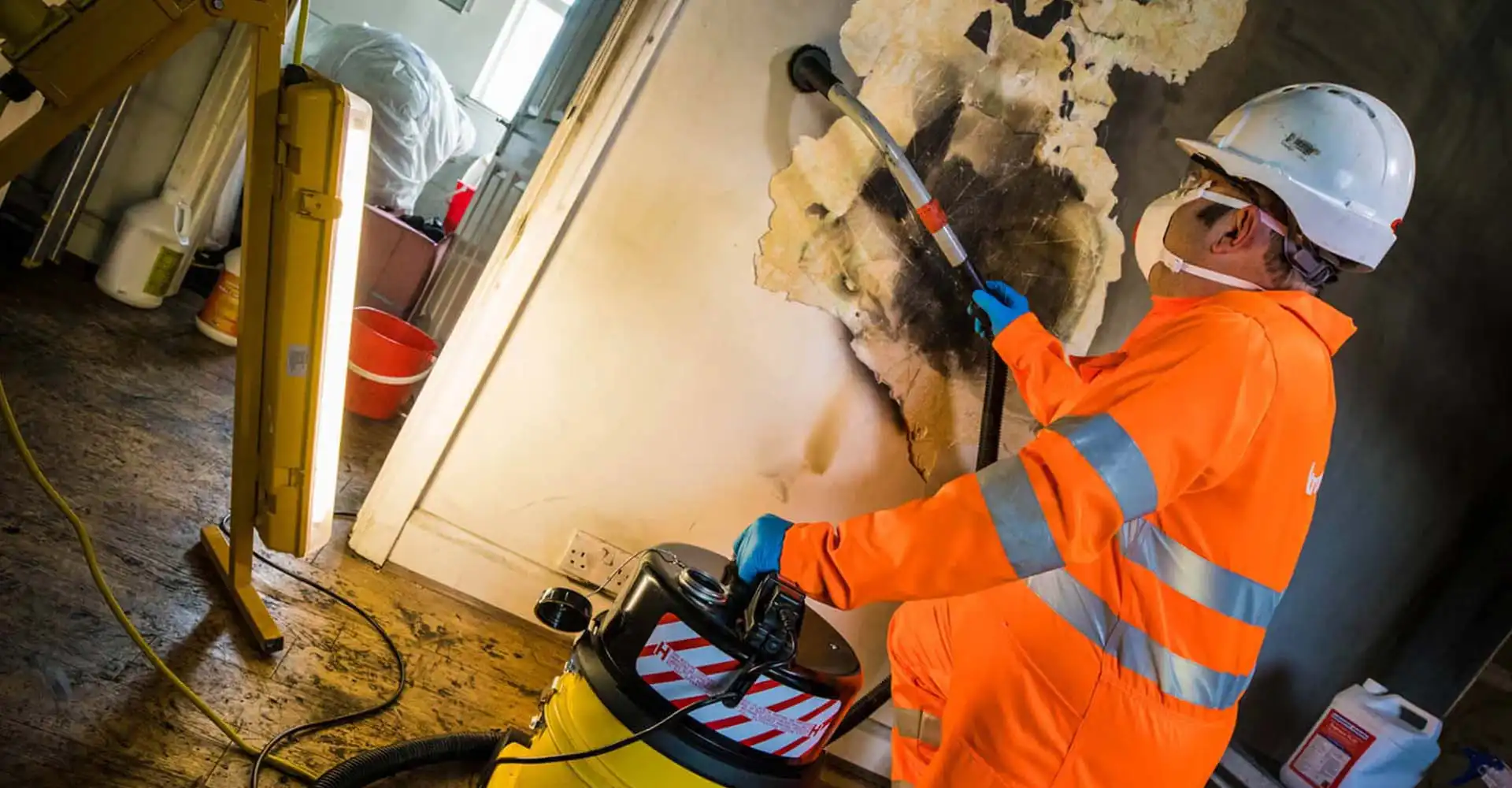
Inspection identified heavy mould growth across a large wall and down the right-hand side of the window bay. Mould was also present on the wooden storage racking and across boxes containing human and animal bone.
That made the project fundamentally different from a straightforward mould clean. Hundreds of collection boxes had to be moved and managed without losing control of which material was contaminated and which remained clean, while the affected room itself still required remediation and drying.
The response was planned in stages. The corridor was cocooned in plastic and two transfer stations were established, creating separate clean and dirty routes for material leaving the store.
Boxes were removed in a controlled sequence. Where required, bones were transferred into pre-labelled new bags and boxes, while contaminated packaging was removed for disposal. The scope allowed for up to a van load of contaminated boxes and bags to be removed each day.
Where bags containing bones had been compromised, the university’s academics assessed the remains themselves. This created a clear division of responsibility: the academic team retained control of decisions relating to the collection, while Ideal Response managed the contaminated environment, transfer process and remediation around it.
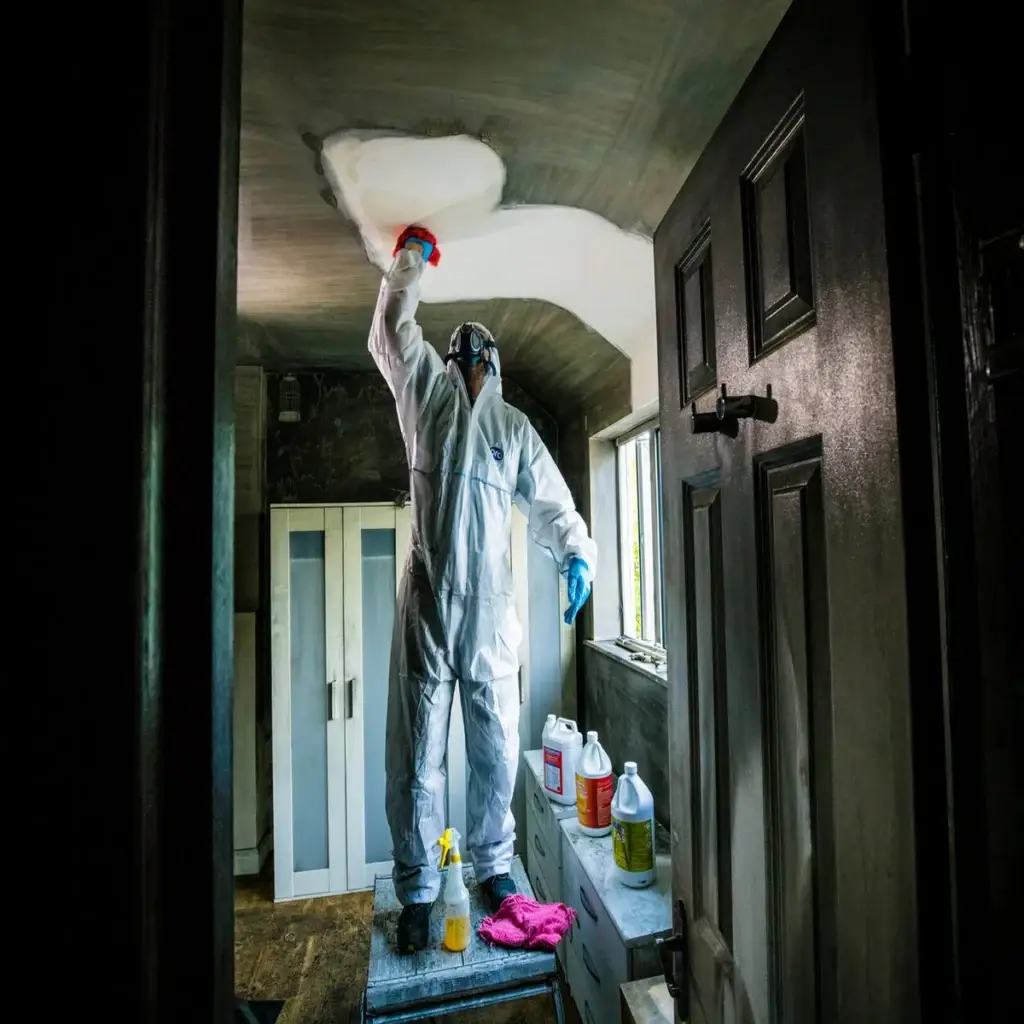
With the contents operation under way, the store could progress through the physical remediation stage. The team carried out a four-stage mould remediation process and stripped out affected materials that could not remain in place.
This included removal of the timber shelving, together with damaged ceiling tiles and skirtings identified within the scope. The planned strip-out covered up to 2 m² of ceiling tiles and up to 6 linear metres of skirting.
Sequencing mattered. The collection and contaminated packaging needed to be brought under control before the room could be treated effectively, avoiding unnecessary movement of affected material while remediation was taking place.
After the strip-out and mould remediation stages, the store underwent a photocatalytic oxidation treatment. This separate stage was designed to address residual odours and microbiological contamination within the room, including mould spores and fungal hyphae.
The treatment required the area to be cordoned and respiratory precautions to be observed while the equipment was operating. Importantly, it followed the physical remediation rather than replacing it: affected materials and visible contamination were dealt with first, before the post-remediation treatment was introduced.
Drying was installed using one refrigerant dehumidifier and one air mover. Plastic tenting reduced the volume of air being processed, concentrating the drying equipment on the affected area rather than unnecessarily conditioning the entire room.
The programme was planned over two weeks, with checks at seven-day intervals. If readings failed to improve sufficiently, the scope allowed the team to move to target drying instead of simply continuing with the same arrangement.
That gave the drying stage a clear decision point: performance would be monitored and the approach adjusted if the building fabric did not respond as expected.
The operational programme began on 15 January and concluded on 1 February 2024. Across eight visits, the team progressed through contents handling, mould remediation, post-remediation treatment, installation of drying equipment, moisture assessment and the final attendance.
The original scope allowed eight working days, but the wider programme extended across 18 calendar days because drying and monitoring needed time between attendances. This allowed the physical remediation work and the moisture-management stage to operate as parts of the same controlled programme rather than rushing the store back into use.
The defining challenge was the relationship between the contaminated room and the archaeological material stored inside it. Around 600 - 700 boxes could not simply be treated as ordinary contents, particularly where individual bags containing human or animal bone had been affected.
By establishing dedicated transfer stations, separating clean and contaminated material, using pre-labelled replacement packaging and retaining academic oversight of compromised remains, the team could remediate the environment without taking responsibility for specialist archaeological decisions that properly sat with the university.