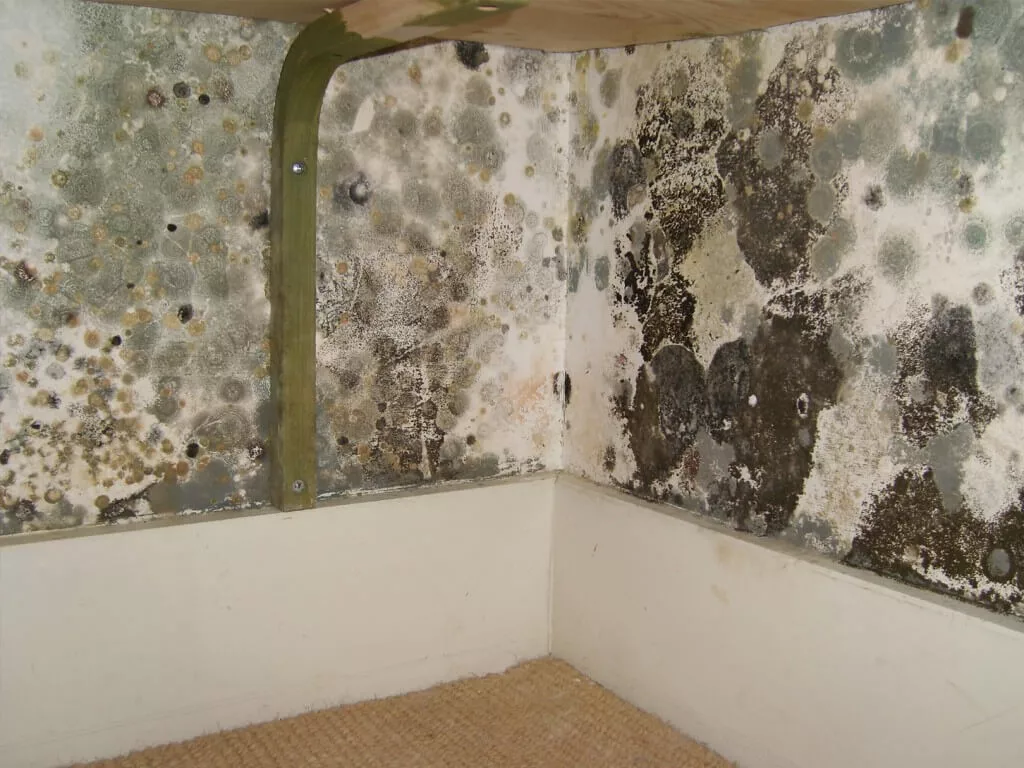
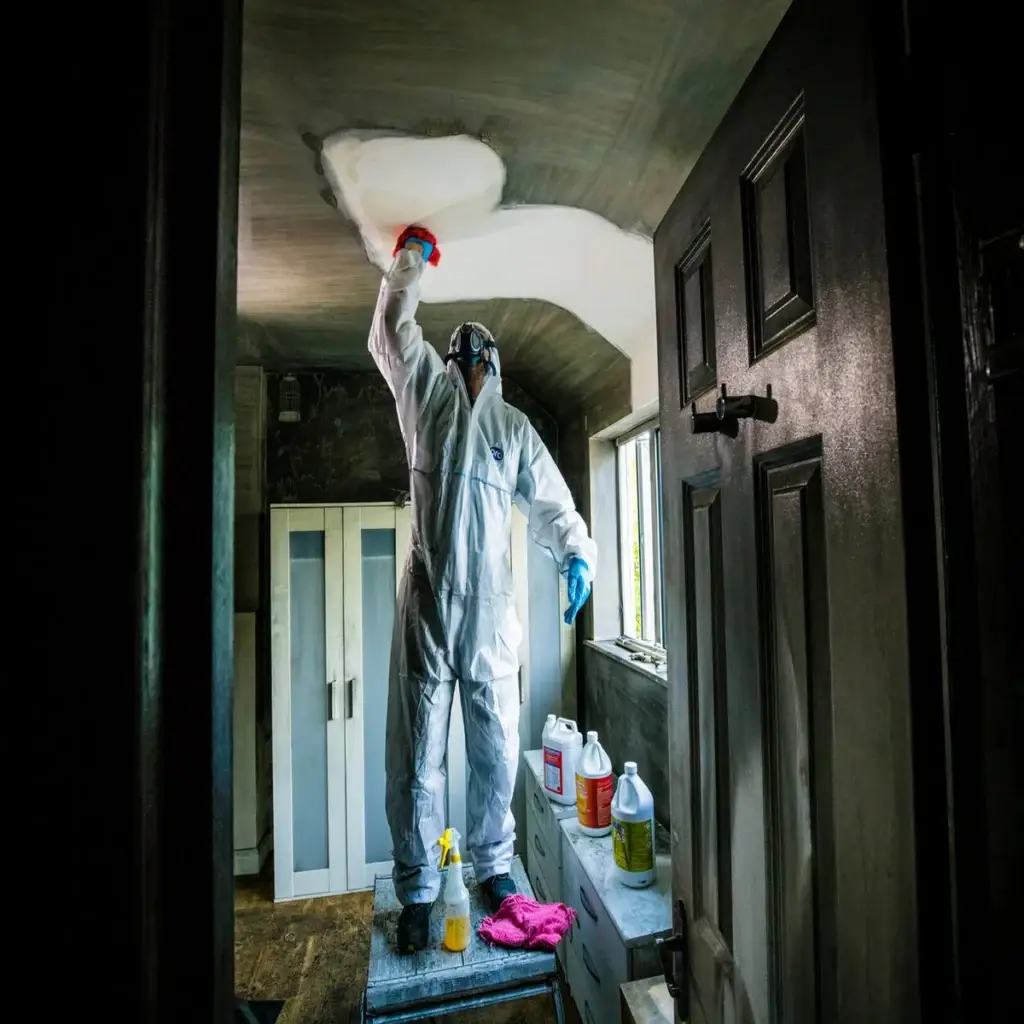
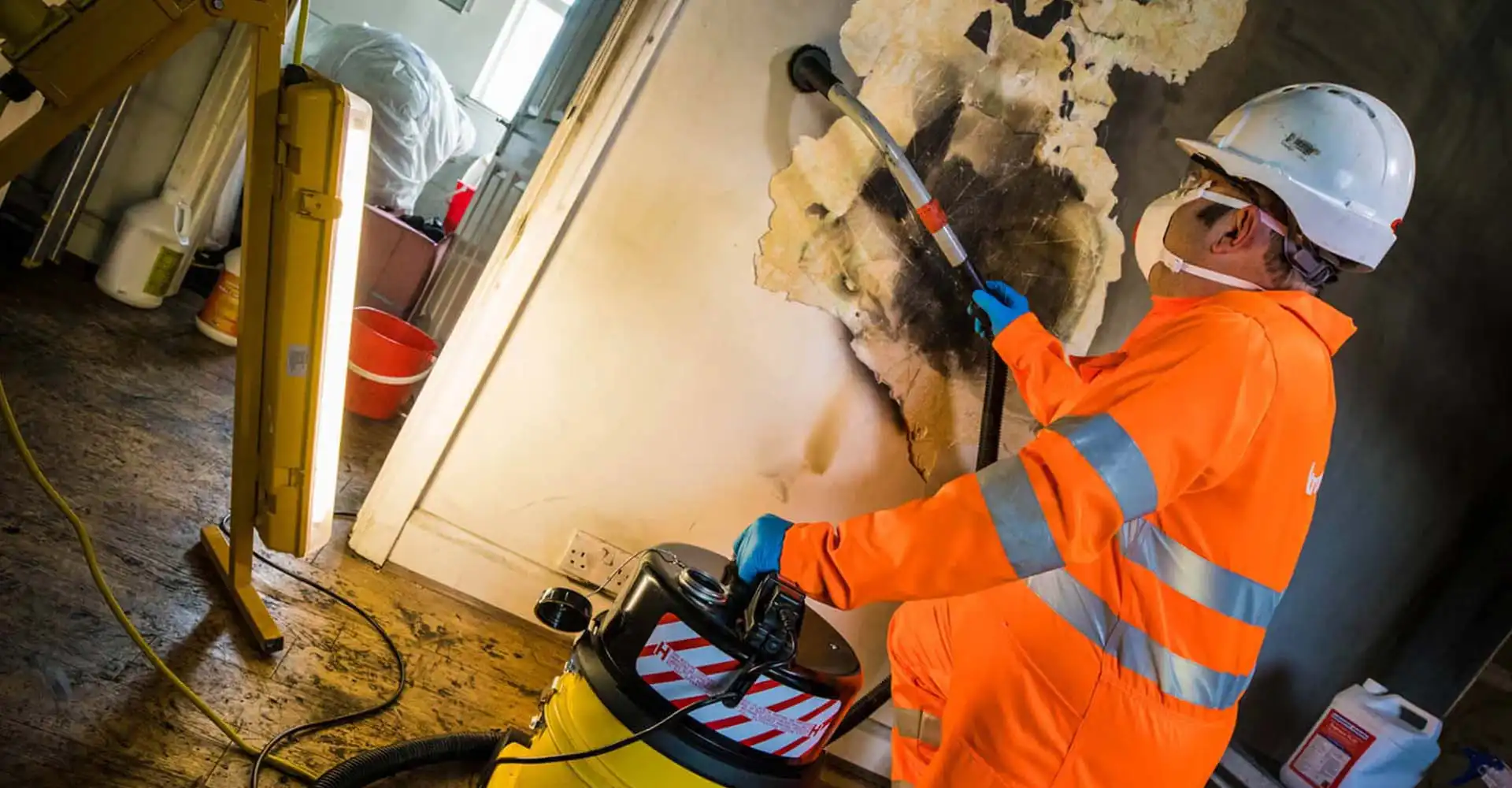
Water ingress had affected more than the visible surfaces
Project insight
One of the most important aspects of this project was the relationship between access, remediation and drying. Concealed mould cannot be properly addressed until affected surfaces can be reached, while treating mould without considering the moisture conditions that supported it leaves part of the problem unresolved.
At this church, those elements had to be coordinated with another complication: an active renovation programme. The remediation strategy therefore needed to work technically and operationally within the wider project.
Remediation had to work around an active construction site
The mould removal process we used
The scale of the mould growth meant this was not a case of treating isolated surface patches. Contamination extended across three floors, while parts of the affected construction were difficult to access.
Sections therefore had to be stripped out where necessary to expose mould-affected surfaces before remediation could progress. This was particularly important where the building construction prevented the team from reaching contaminated areas directly.
The church was already undergoing renovation, so the mould team was not working in an empty building. Site safety and coordination with other trades formed part of the project from the outset.
That affected how some of the work was scheduled. In particular, ULV fogging was undertaken outside normal working hours so that the treatment could be completed without unnecessarily interrupting the construction teams working elsewhere in the building.
Step 1Expose inaccessible contaminationSections of the building were opened up where necessary to gain access to mould-affected surfaces that could not otherwise be properly treated.
Step 2HEPA vacuum affected surfacesHEPA-filtered vacuum equipment was used to recover loose surface contamination before wet cleaning began, helping control particulate material during the remediation.
Step 3Physically clean exposed areasAccessible walls, ceilings and other affected surfaces were manually cleaned using specialist mould-remediation products to remove remaining visible contamination.
Step 4Apply the fungicidal treatmentA fungicidal treatment was applied to the cleaned surfaces as the next stage of the remediation programme, including areas considered vulnerable to continuing moisture conditions.
Step 5Complete ULV foggingULV fogging was used as the final treatment stage, dispersing a fine biocidal mist within the treated areas. The work was scheduled around the construction programme to minimise disruption.
This project required more than applying a treatment to visible mould. Access had to be created where contamination was concealed, loose material was recovered using HEPA filtration, and exposed surfaces were physically cleaned before fungicidal treatment and ULV fogging were completed.
The sequence matters. Opening up and physical cleaning addressed contamination at surface level, while the subsequent treatment stages formed part of the wider remediation programme. Drying then addressed the moisture conditions within the building rather than treating mould removal as the end of the project.
Drying continued beyond the mould treatment
Once the mould remediation had been completed, dehumidification was used across the three affected floors to reduce moisture levels within the building.
The Christmas closure interrupted the programme, meaning the drying equipment had to be restarted when the church reopened. Moisture conditions continued to be monitored as drying progressed, and the programme was completed within the required timeframe.
Clearing the way for the renovation to continue
Mould remediation was completed across the three affected floors, followed by the specialist drying programme. This allowed the renovation works within the church to continue after the affected areas had been treated. Ideal Response
The project also demonstrates the value of flexibility on complex sites. Restricted access, other trades and the Christmas closure all affected how the programme could be delivered, but the remediation and drying work were adapted around those constraints rather than allowing them to derail the wider project.
Access is fundamental to effective mould remediation
Elena Filoti
Mould Remediation Specialist
“Where mould is hidden behind finishes or within difficult-to-reach areas, treating only what can be seen at the surface is not enough. You first need suitable access to the affected material. From there, physical removal, cleaning and treatment can be carried out in a controlled sequence, with the moisture conditions considered as part of the wider remediation strategy.”