Available 24/7 | 0800 088 4170

Available 24/7 | 0800 088 4170
When a chemical spill occurs in a commercial or industrial environment, the first few minutes are critical. The pressure to maintain operational uptime often conflicts with the absolute necessity of health and safety. However, failing to properly assess the risk of a spill can lead to severe HSE fines, environmental damage, and long-term health risks for your staff. In this guide, we break down the professional criteria used to determine if a spill can be managed in-house or if professional intervention is required to maintain COSHH (Control of Substances Hazardous to Health) compliance.
Skip to:
Substance complexity & SDS analysis
Atmospheric risks
Surface porosity & secondary contamination
Scale vs. Capacity
Compliance documentation
FAQs
The first step in any risk assessment is identifying the substance. Every chemical on-site should have an accompanying Safety Data Sheet (SDS).
You must look beyond the immediate volume and evaluate the Hazard Statements. Is the substance:
If the SDS indicates that the chemical requires specialist neutralising agents or has a high level of environmental persistence, standard “off-the-shelf” spill kits are likely insufficient.
Not all hazards are visible. Volatile Organic Compounds (VOCs) and chemical vapours can quickly overwhelm a workspace, especially in areas with poor ventilation.
If your team detects strong odours, experiences eye irritation, or if the spill occurred in a confined space, the area must be evacuated immediately. Professional chemical spill cleanup teams utilise industrial-grade air scrubbers and monitoring equipment to ensure the atmosphere is safe before re-entry.
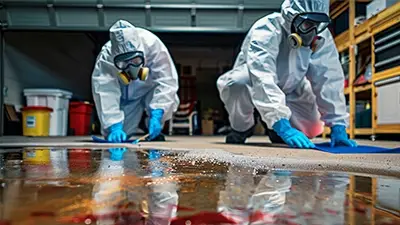
A common mistake in “in-house” cleanups is focusing only on the liquid visible on the surface. Chemicals can quickly leach into:
Once a chemical becomes “embedded” in a porous substrate, it acts as a reservoir for off-gassing, potentially causing illness weeks after the initial incident. A professional chemical spill cleanup involves deep-extraction methods that ensure no residual traces remain.
Every business should have spill kits, but these are designed for “incidental” spills. A professional assessment is required if:
In a regulated industry, if it isn’t documented, it didn’t happen. Following a significant spill, your insurers, landlords, or HSE inspectors will require proof of safe restoration.
Ideal Response provides a Certificate of Decontamination and legal Waste Transfer Notes. This documentation is vital for your audit trail, proving that the hazard was removed and the waste was disposed of at a licensed facility in accordance with UK law.
To learn more about compliance documentation visit our Legal Requirements of Commercial Chemical Spill blog.
If your risk assessment confirms that the spill is beyond your internal capacity, immediate professional containment is essential. We operate specialist teams across the South East to provide rapid deployment:
A chemical spill is more than a mess; it is a legal and safety liability. By using a structured risk assessment, you protect your staff and your business reputation. When in doubt, always err on the side of caution and consult a specialist. You can also visit our Emergency Chemical Spill Cleanup in Kent Hospital case study to learn more about spill remediation.
Need an immediate assessment? Contact Ideal Response today for expert guidance and rapid decontamination.

Chris Hedges is Head of Marketing at Ideal Response and the author of every article published on this site. With over 25 years of senior marketing experience across property, legal, and professional services sectors, Chris brings a clear, evidence-led approach to writing about fire damage, flood restoration, and specialist property remediation. His philosophy is simple: cut through the noise, respect the reader's time, and give people the information they actually need.
Explore more articles about damage restoration, specialist cleaning and what we do
If you’re dealing with fire damage, flooding, or an environmental incident, our team is ready to respond. No matter if you have a question or have an emergency that you need help with, call:
If you’d prefer to drop us a message, use our main contact form and upload any pictures of the incident. Would you like us to call you? Fill out the short ‘Request a call back’ form.