Efflorescence | What are the Signs of Rising Damp? | Ideal Response

Available 24/7 | 0800 088 4170

Efflorescence: The salty deposits affecting your UK property

Efflorescence refers to white, powdery salt deposits commonly found on brickwork, stone, or concrete, affecting over 60% of UK buildings, particularly new ones, due to our wet climate. It forms when soluble salts within building materials are dissolved by moisture (such as rain, groundwater, or condensation) and then crystallise on the surface as the water evaporates. While typically not a structural threat, its presence nearly always indicates an underlying moisture problem. Effective management involves both carefully removing the deposits and, critically, identifying and addressing the source of the moisture to prevent its recurrence.

Skip to:
Do you have efflorescence on your UK property?
What causes efflorescence?
The most likely locations to find efflorescence on your property
How to identify efflorescence
How to prevent efflorescence
How to remove efflorescence
Structural concerns
Conclusion
FAQs

Do you have efflorescence on your UK property?

If you’ve ever noticed white, powdery stains on brickwork, stone, or concrete, you’ve encountered efflorescence. This unsightly phenomenon occurs when water-soluble salts are drawn to the surface of a material and left behind as the water evaporates. Efflorescence is particularly common in the UK due to the country’s wet and variable climate, where persistent rainfall and moisture contribute to the conditions necessary for salt deposits to form. While it does not usually pose a structural threat, efflorescence can be a sign of underlying moisture issues and can detract from the appearance of a property. Often the only way to deal with this issue is to have your building exterior cleaned.

How common is efflorescence in the UK?

With an average annual rainfall of 885mm, the UK’s climate creates the perfect conditions for efflorescence. Approximately 60% of UK buildings experience some form of efflorescence, particularly in regions with high humidity or frequent rain. New build properties are especially susceptible, with reports indicating that up to 80% of freshly constructed brick buildings show signs of efflorescence within the first year.

What causes efflorescence?

Efflorescence appears when three key conditions are met:

  • The presence of soluble salts: These salts exist within building materials such as brick, cement, and mortar.
  • Moisture penetration: Water dissolves the salts and allows them to move through the material.
  • Evaporation: As moisture evaporates from the surface, it leaves behind crystallised salt deposits.

Common sources of moisture include:

  • Rain and damp weather
  • Groundwater rising through porous materials
  • Condensation in poorly ventilated areas
  • Water used during construction (e.g., in cement mixtures)

If any of these factors are controlled, the occurrence of efflorescence can be significantly reduced.

Where is efflorescence most likely to appear?

Efflorescence can form on various surfaces, including:

  • Brick: Due to its porous nature, brick absorbs water easily, making it one of the most common materials affected by efflorescence.
  • Concrete: Often contains soluble alkalis, particularly Portland cement, which increases susceptibility.
  • Stone: Natural stones like limestone and sandstone can show efflorescence, especially when used in exterior settings.
  • Plaster & mortar: If exposed to excessive moisture, these materials can also develop efflorescence stains.

Newly constructed buildings are particularly prone, as construction materials often contain residual moisture that can activate salt movement to the surface.

How to identify efflorescence

Efflorescence appears as a white or grey powdery deposit on the surface of a material. While it may resemble mould or staining, it can be distinguished in the following ways:
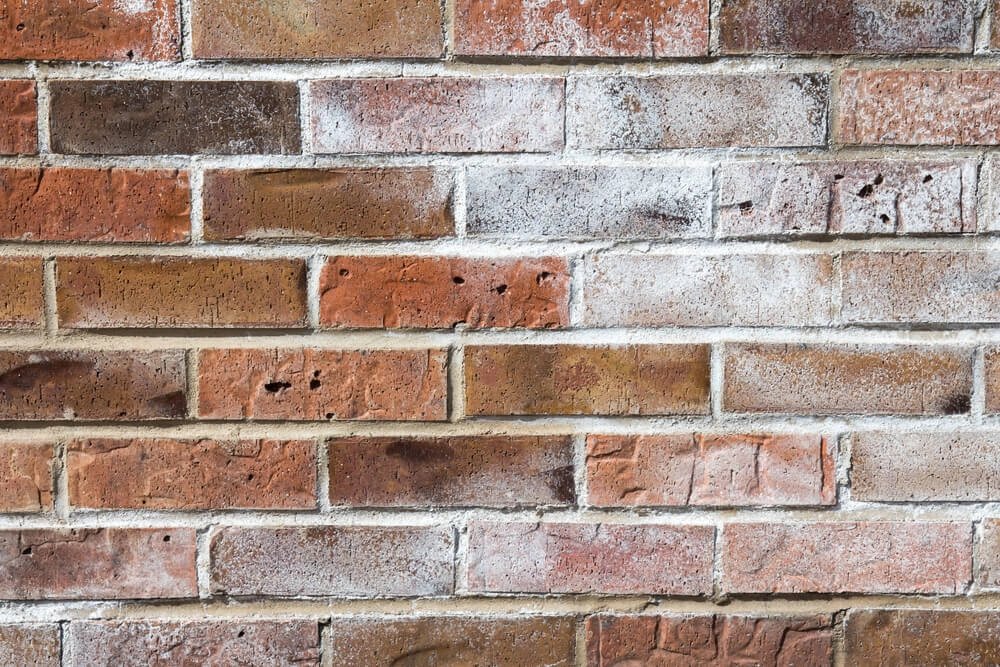
  • Texture: Unlike mould, efflorescence is dry and powdery.
  • Water Solubility: If the substance dissolves in water and disappears when wiped with a damp cloth, it is likely efflorescence.
  • Salt test: If you suspect efflorescence, scrape some of the deposit into a glass of water. If it dissolves, it confirms the presence of salt.
Efflorescence on an external brick wall

How to prevent efflorescence

Prevention is key when dealing with efflorescence. Here are some of the most effective measures:

  • Improve drainage: Ensure gutters and downspouts direct water away from the building foundation.
  • Use water-repellent sealants: Applying a breathable sealant can help prevent moisture ingress without trapping water inside the material.
  • Choose low-salt materials: Opt for construction materials with lower soluble salt content.
  • Improve ventilation: Reducing condensation inside buildings can help limit efflorescence on interior walls.
  • Proper construction techniques: Using appropriate flashing, waterproof barriers, and mortar joint finishing techniques can significantly reduce moisture penetration.

How to remove efflorescence

If efflorescence has already formed, there are several ways to remove it effectively:

  1. Brushing & dry cleaning: A dry, stiff-bristled brush can often remove fresh efflorescence. Avoid using wire brushes, as they can damage the surface.
  2. Pressure washing: A mild pressure wash can help remove salt deposits, but ensure the water does not saturate the material, which could lead to further efflorescence.
  3. Acid cleaning: For stubborn deposits, a diluted acid wash (such as a weak hydrochloric acid solution) can be effective. However, this should be used cautiously, as it may damage the surface and mortar joints.
  4. TORC system cleaning: For heritage buildings or delicate surfaces, the TORC system is the most effective and non-invasive method. It uses a fine granulate mixed with low-pressure water to gently remove efflorescence without harming the substrate.

Efflorescence and structural concerns

While efflorescence itself is not structurally harmful, it can indicate underlying moisture issues, such as:

  • Rising damp
  • Poor waterproofing
  • Blocked drainage systems

If efflorescence persists despite cleaning, it is advisable to investigate potential water ingress problems and seek professional assessment.

Conclusion: Don’t ignore efflorescence

Efflorescence is a common issue in UK properties, particularly due to high humidity and frequent rainfall. While it does not directly weaken a building, it is an indicator of excessive moisture, which could lead to more serious problems like damp and mould if left untreated. By understanding what causes efflorescence and implementing preventative measures, homeowners and property managers can maintain the aesthetic and structural integrity of their buildings.

Need professional assistance?

If you’re dealing with persistent efflorescence or suspect a moisture issue, our expert cleaning and restoration team can help. Contact us today for support.

Efflorescence FAQs

What exactly is efflorescence on property surfaces?
Efflorescence refers to the white, powdery, salt-like deposits that appear on the surface of porous building materials such as brickwork, stone, concrete, and render. It is essentially crystallised salt left behind as moisture evaporates from within the material.
How common is efflorescence in UK properties?
Efflorescence is very common in the UK, largely due to the wet climate. Approximately 60% of UK buildings experience efflorescence, with as many as 80% of new brick buildings showing signs within their first year, as they dry out from construction moisture.
Is efflorescence a sign of serious structural damage?
While efflorescence itself is generally not a structural threat to your property, its presence is a clear indicator of underlying moisture problems. Persistent or recurring efflorescence means that moisture is repeatedly entering and exiting the building materials, which could eventually lead to more significant issues like damp or mould if the root cause isn’t addressed.
When should I call a professional for efflorescence?
When choosing a damp surveyor, you should look for someone with practical experience and relevant qualifications. The gold standard is a surveyor certified by the Property Care Association (PCA), specifically holding a CSRT (Certified Surveyor in Remedial Treatments) or CSSW (Certified Surveyor in Structural Waterproofing) qualification.
Picture of Chris Hedges - Head of Marketing

Chris Hedges - Head of Marketing

Chris Hedges is Head of Marketing at Ideal Response and the author of every article published on this site. With over 25 years of senior marketing experience across property, legal, and professional services sectors, Chris brings a clear, evidence-led approach to writing about fire damage, flood restoration, and specialist property remediation. His philosophy is simple: cut through the noise, respect the reader's time, and give people the information they actually need.