Available 24/7 | 0800 088 4170

Available 24/7 | 0800 088 4170
Mould growth of any type can be harmful to your home and your health, and white mould is no exception to this rule. While many homeowners or businesses consider black mould the ‘worst’ type of mould, white mould can also be very damaging if left unchecked and often goes unnoticed for longer because it contrasts less with light-coloured walls. If you want to know what causes white mould on walls and the steps to take, read on. If you have spotted white mould in your home and need mould cleaning services, contact our specialist team on 0800 088 4170 .
Skip to:
What is white mould?
What causes white mould?
Is white mould dangerous?
What does white mould look like?
White mould vs black mould
White mould vs efflorescence
How to remove mould on walls
Where is white mould commonly found in the home?
Choose Ideal Response for mould removal
FAQs
Mould is a naturally occurring fungal colony often found in damp parts of woodlands or gardens. The initial cause of white mould entering your home is the distribution of spores from existing colonies, which can gain access through windows, doors or any ventilation system because of how tiny they are.
The real problem occurs when you have spaces that are perfectly suited to white mould growth. In your home, this means any surface that has high humidity levels and poor ventilation, allowing white mould to grow rapidly. Any damp patches, whether due to condensation, a leak or rising damp, provide the perfect opportunity for white mould spores to take root.
If white mould goes unnoticed, colonies will continue to grow and release their own spores. This means white mould can expand to other, damp areas of your home at a faster rate, leading to a larger infestation.
If white mould is left unchecked, it can be damaging to both your health and the structural soundness of your property. Many people make the mistake of assuming white mould isn’t harmful compared to black mould, but certain strains of fungus, such as some species of Aspergillus, can be seriously damaging.
Some of the health issues that can occur because of white mould include:
Alongside these concerning health issues, white mould can also be the cause of structural damage in your home, which can be costly to fix. For example, you may need to throw out furniture and clothing or rip up carpets. Mould can also indicate a level of dampness that will rot wood and damage insulation if not managed promptly.
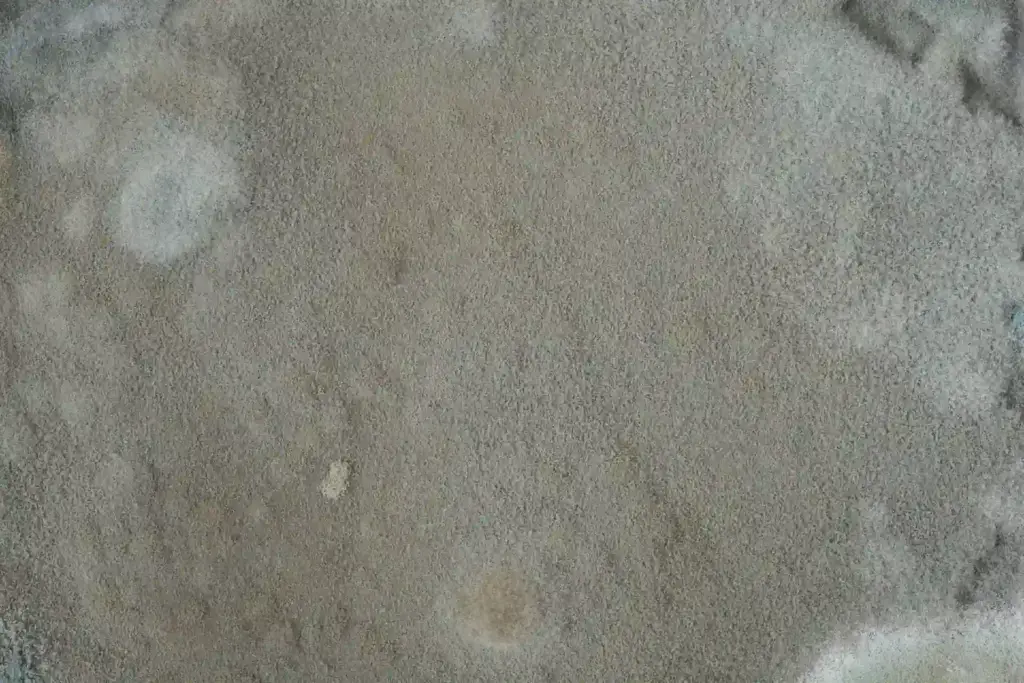
The appearance of white mould can vary, as the composition of each colony can differ depending on the particular species of fungus. Generally, white mould on walls or other surfaces is a white to light grey colour and has a fuzzy or powdery texture.
In some cases, it can appear slimy or have filaments that look like cobwebs, particularly in very high-humidity areas. Over time, white mould can change colour and may even begin to appear black. Whatever the colour of your mould, it’s important to remove it properly as swiftly as possible after you discover it.
Both black and white moulds thrive in areas of your home with high levels of moisture. Both grow most effectively on wood and plasterboard surfaces, like furniture and walls. However, white mould tends to grow on textiles more than black mould, including leather.
The most obvious difference when comparing white mould vs black mould is their appearance – you can spot black mould by its dark green or black colour, which often means it is noticed sooner. However, colour identification doesn’t tell you which species of mould is growing in your property.
Black mould is also more harmful to your health, with exposure causing a range of serious symptoms, including body aches, nosebleeds and memory loss. It is important to remove mould as quickly as possible with a professional mould removal service, whatever its colour. Without proper testing, it is very difficult to tell how harmful specific mould colonies are.
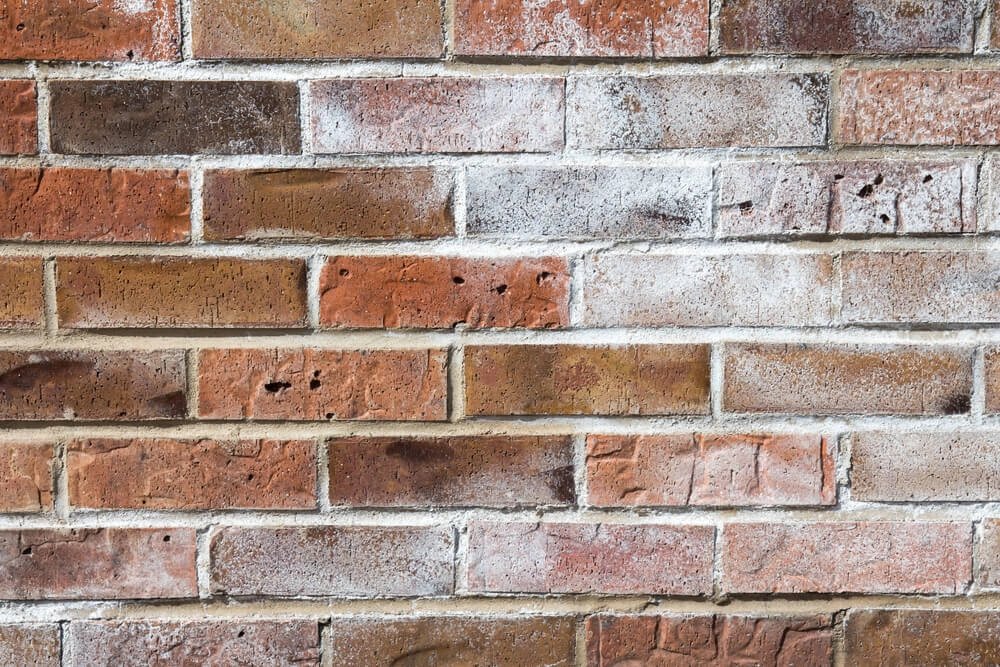
From a distance, it may appear that you have fluffy white mould on walls in your home, but close up, it may not resemble typical colonies. If this is the case, you may have efflorescence on your walls.
Efflorescence is a non-harmful deposit of salts migrating to the surface of building materials such as concrete. While the presence of minerals themselves isn’t dangerous, it can be an indicator of a moisture problem, which could lead to mould issues later on.
Efflorescence is typically white, yellow or grey and appears as a powdery, fluffy residue, which is why it may be mistaken for certain kinds of white mould. This substance is not a living organism like mould, and can be relatively easily removed.
However, you shouldn’t ignore signs of efflorescence on your walls as this can indicate unseen moisture issues. Leaks, condensation and damp ingress can all cause efflorescence.
While some kinds of surface-level mould are relatively easy to remove with DIY tricks, we recommend that white mould removal be handled by professionals. Colonies of this fungus are often well-established before they are found, resulting in deeper contamination.
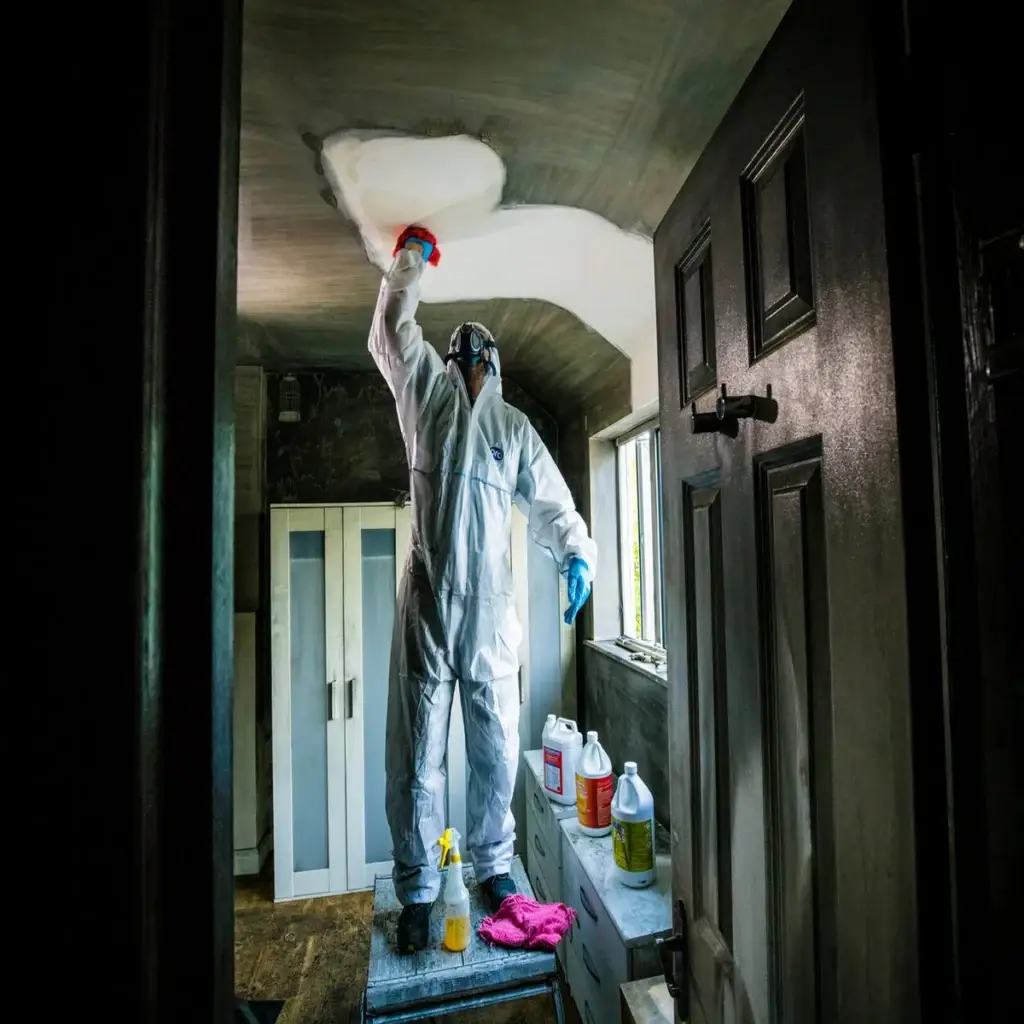
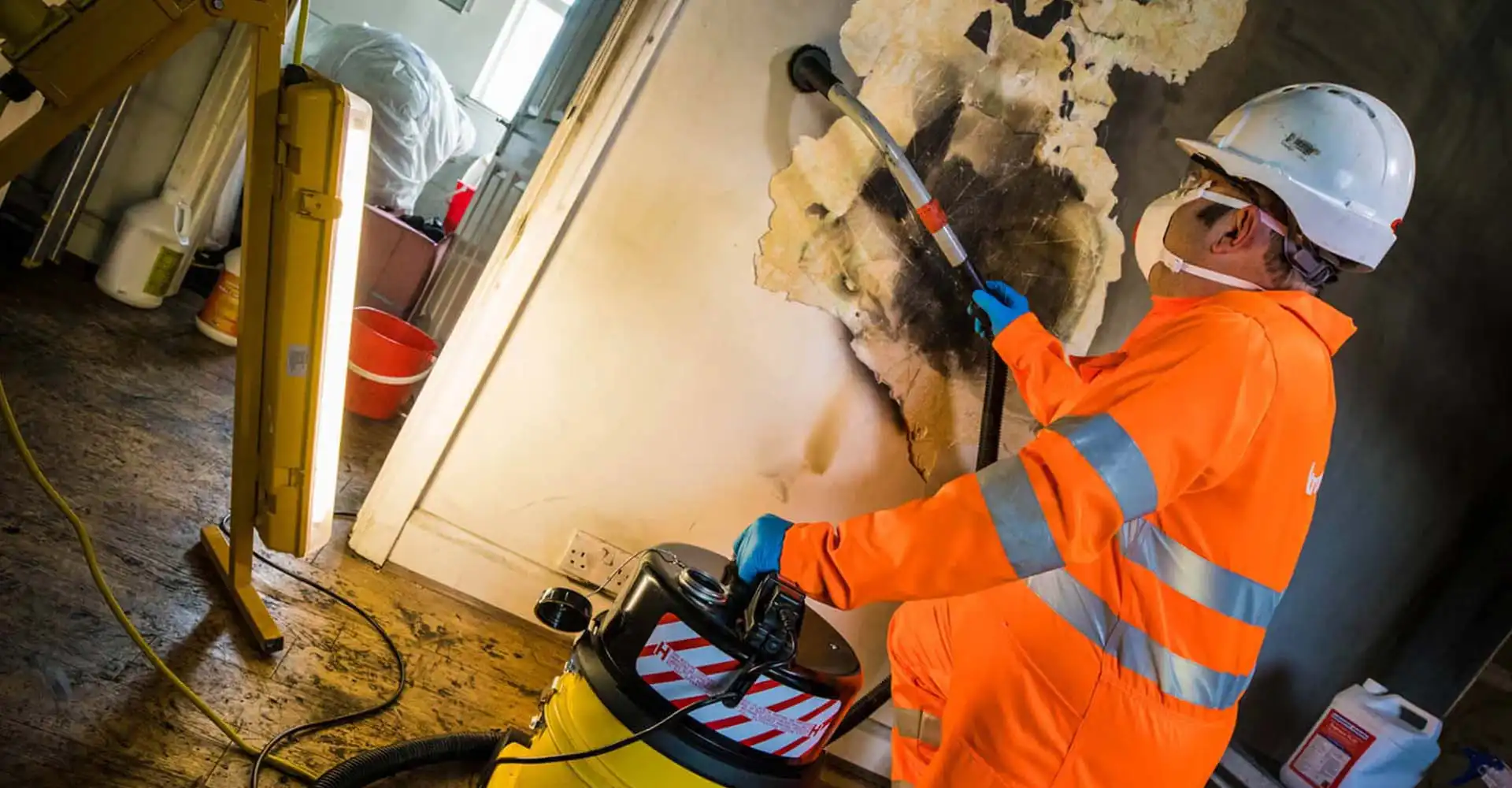
At Ideal Response, we follow a six-step removal process, with an optional moisture and damp survey, to remove mould from your property swiftly and effectively. We are a trusted company for the professional removal of mould, ensuring your property is safe for occupation and preventing structural damage without delay. Our removal process includes:
Failing to remove white mould thoroughly can result in it growing back swiftly or even contaminating other items in the case of textiles such as clothes. Ideal Response offers a comprehensive removal service for all mould types, protecting your property and your health with rapid removal at the source.
White mould can proliferate in many different areas of the home, some more visible than others. This makes it important to regularly check for mould in damp areas you can access. Some areas where white mould can be commonly found include:
If you have found white mould in your property, it’s important to remove any colonies and spores as soon as possible. Ideal Response can help with professional mould removal services, ensuring your property is mould-free and safe for habitation.
We offer a range of comprehensive water damage restoration services, including basement flooding, general flooding, sewage cleaning and specialist drying. Our team of qualified BDMA & certified specialists has the necessary experience to effectively eradicate mould and restore your property following flooding or damp issues. Contact us today to start the mould removal process or call us on: 0800 088 4170.

Chris Hedges is Head of Marketing at Ideal Response and the author of every article published on this site. With over 25 years of senior marketing experience across property, legal, and professional services sectors, Chris brings a clear, evidence-led approach to writing about fire damage, flood restoration, and specialist property remediation. His philosophy is simple: cut through the noise, respect the reader's time, and give people the information they actually need.
Explore more articles about damage restoration, specialist cleaning and what we do
If you’re dealing with fire damage, flooding, or an environmental incident, our team is ready to respond. No matter if you have a question or have an emergency that you need help with, call:
If you’d prefer to drop us a message, use our main contact form and upload any pictures of the incident. Would you like us to call you? Fill out the short ‘Request a call back’ form.