Available 24/7 | 0800 088 4170

Available 24/7 | 0800 088 4170
The UK is known for its variable weather conditions, and whilst hail isn’t as frequent as rain, the damage it leaves behind is often severe. Hail damage to property is usually covered by home buildings insurance in the UK. This is because most insurers will treat hail as a form of storm. However, there are some differences in how a hail claim qualifies. Where many storm claims are based on wind speed, claims for hail aren’t. Instead, they consider the intensity of the hail itself.
This means that there is often a mix of paid and disputed claims for very similar incidents.
This homeowner and business owner guide helps explain what hail damage is, when it can be claimed, and why you may need a specialist to assess and repair the external and internal damage afterwards.
Skip to:
Hail damage at a glance
What counts as hail damage to s property?
Does home insurance cover hail damage?
Does business insurance cover hail damage?
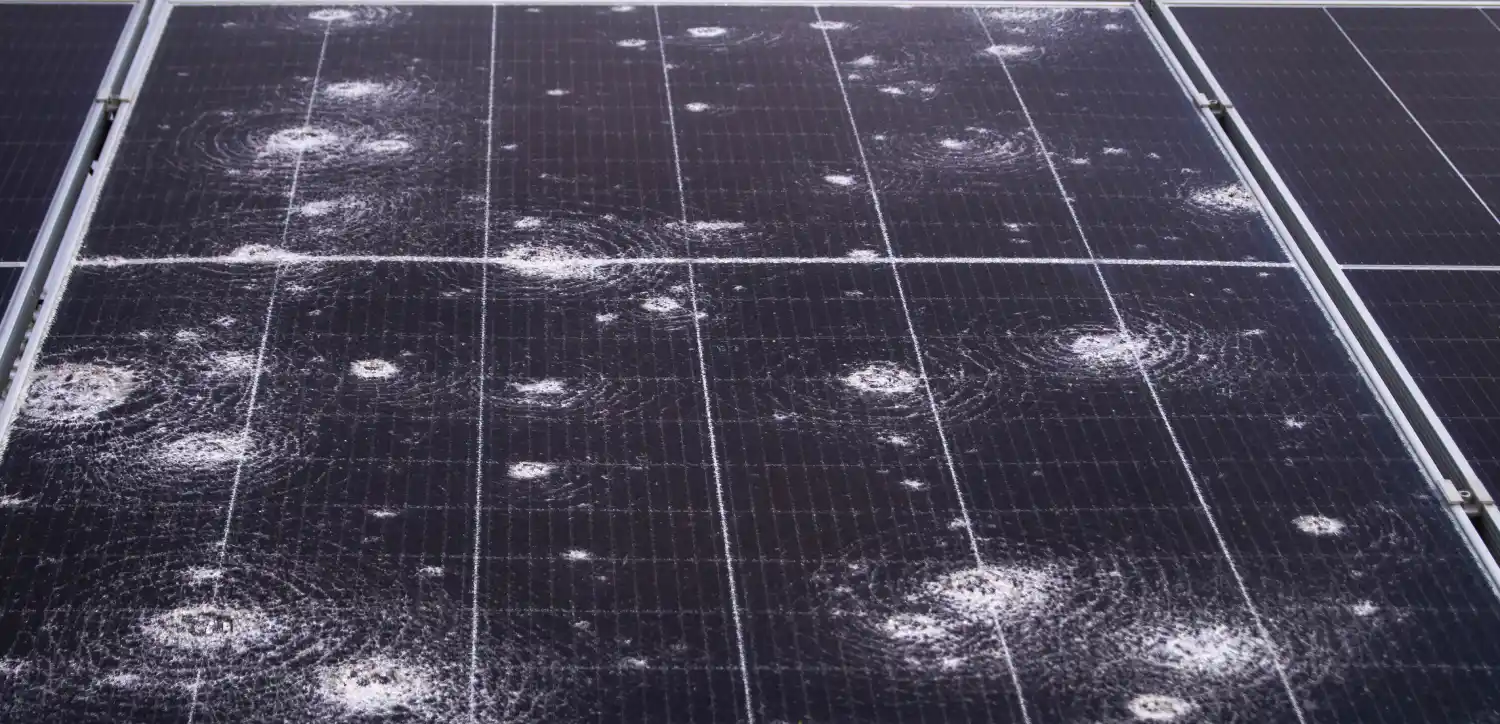
Are solar panels damaged by hail and covered by insurance?
How much does it cost to repair hail damage to a roof?
Who pays for hail damage repairs?
How to claim for hail damage to your property
FAQs
| Question | Short answer |
|---|---|
| Is hail damage covered by insurance? | Usually, yes, under the storm peril of buildings insurance, as long as the hail was severe enough to qualify. |
| Does it need high winds to count? | No. Hail qualifies on intensity, not wind speed. |
| What does buildings insurance cover? | The structure: roof, tiles, glazing, guttering, fixed solar panels. |
| What does contents insurance cover? | Belongings damaged by the hail if it breaks through a roof, window or rooflight. |
| Who pays? | Your insurer, if the claim is accepted, minus any excess. |
| Why are claims declined? | Wear and tear, gradual deterioration, or a roof in poor condition before the hail storm. |
| Can you dispute a refused claim? | Yes. The Financial Ombudsman Service can review the decision for free. |
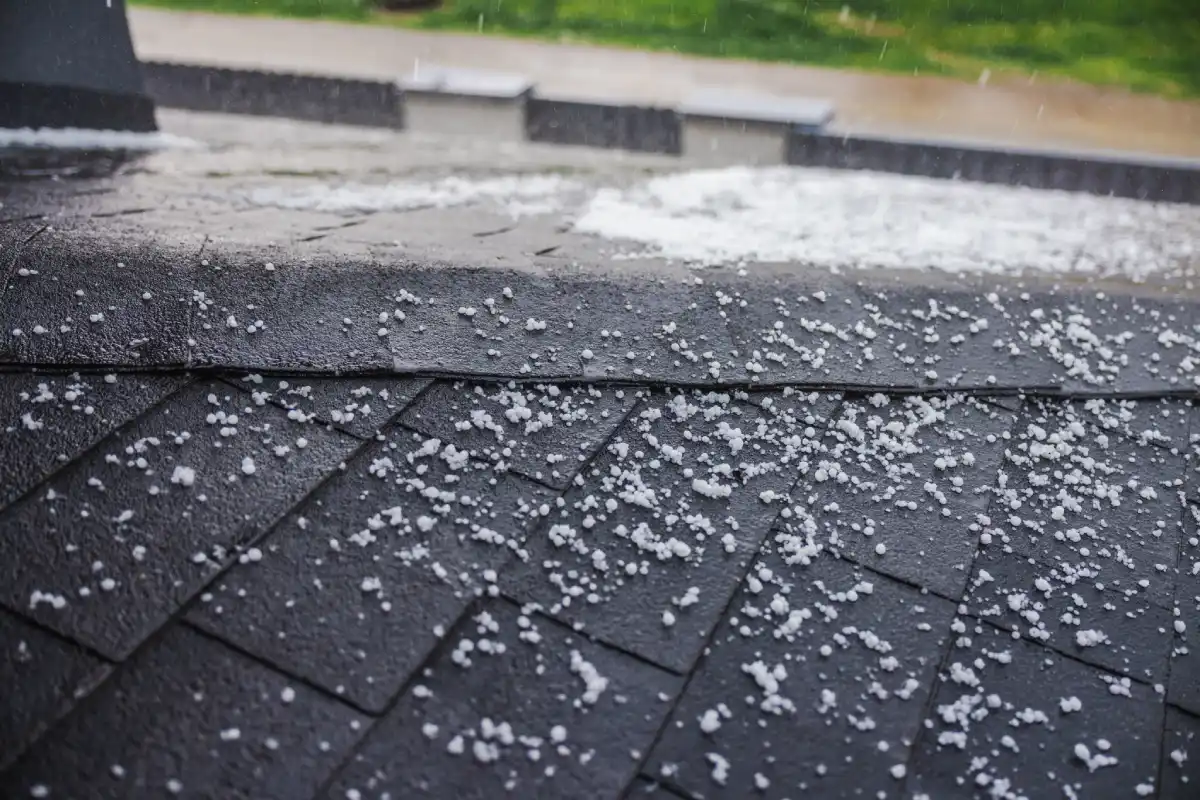
Hail damage is damage caused by falling ice. It’s usually impact damage to parts of the building that take the hit from above. Unlike wind, which lifts and strips materials, hail can crack, shatter and dent surfaces that are otherwise in good working order.
The damage caused by hail is different to the damage you’d find from a wind-driven storm. Common examples of hail damage include:
A lot of this damage can be hard to spot at ground level. In many cases, some damage won’t be noticed until other issues appear elsewhere. Roof damage, for example, may not be apparent until you spot a leak or damp patch much later.
This is where hail damage is often a larger problem than the initial impact. Once hail breaks a tile or window, rain gets in through the gap, and it’s this ingress that causes costly secondary damage inside. From soaked ceilings to ruined carpets, the damage can be wide-ranging. For this, you need to look beyond your roofer or glazier.
Hail sits inside the same storm peril as wind damage, but it behaves and qualifies differently. These are important differences to understand, as they could be the difference between making a successful claim and having one denied. The table below breaks down the key differences that separate hail damage and storm damage to UK property.
| Factor | Wind-driven storm | Hail |
|---|---|---|
| What triggers cover? | High wind speeds (the ABI benchmark is gusts of at least 55mph, Force 10 on the Beaufort Scale) | Intensity of the hail regardless of wind speed |
| Typical damage | Tiles lifted or stripped, displaced ridge, fallen chimneys, debris impact | Impact damage, cracking, shattering, denting |
| How it's evidenced | Names storms and recorded wind speeds | Localised, short-lived event, harder to evidence |
| Common dispute | Whether the wind was strong enough | Whether the damage is functional or cosmetic |
What is important to note is that a hail claim can be successful where wind claims may fail, as there is no wind-speed threshold to meet.
Yes. A home insurance policy will normally cover hail damage to property under the storm section of a standard policy, provided the hail met the definition of a storm as found in the policy terms.
Both the ABI ( Association of British Insurers ) and the Financial Ombudsman Service clearly confirm how it works. The ABI includes hail in its definition of a storm where the hail is intense enough to damage hard surfaces or break glass without wind speed being a determining factor. The FOS goes a little further and states how rain, hail or snow on their own can constitute a storm.
Insurers will not treat every incident of hail as a storm. FOS guidance states that hail qualifies as a storm when a high volume falls over a relatively short period of time, and the hail is defined as extreme.
The ABI applies the same logic, stating that hail counts as a storm when it is hard enough to damage hard surfaces or break glass.
This means that the test for a hail claim is more about severity rather than the wind-speed measurements that are used in most other storm claims.
Which policy pays out will depend on what was damaged:
The FOS advises insurers to check every relevant part of both a contents and buildings insurance policy rather than just the storm section.
If your property has been damaged by hail, but the damage is only cosmetic, you may find a claim rejected. It’s a grey area, as many insurers may not see a dented garage door or dimpled roof as damage. Whilst the door or roof may no longer be in its best condition, both still work as intended.
However, if the damage allows water in or compromises the structure, a claim can be much easier to make. Where the extent of the damage may be hard to determine, a professional assessment would be advised to help establish the true extent of any hail damage.
Commercial property and business insurance generally covers hail damage in the same way domestic policies do, but figures and add-ons are different. Owners of shops, warehouses, offices and rental properties, for example, should check two things before making a claim.
Solar panels can be damaged by hail, and roof-mounted panels are usually covered because insurers view them as a permanent fixture of the property. There are some specific caveats, though:
There is no single fixed figure for repairing hail damage to a roof. The cost varies depending on roof type, the extent of the damage and the level of access required. The main factors that will determine the cost of roof repair include:
Rather than relying on online estimates, you can get a much more reliable quote by obtaining a professional survey and written quote. It is worth noting that the FOS has often had to deal with disputes where an accepted claim has stalled over whether replacement materials match the originals.
When assessing a hail claim, the FOS applies three questions:
If an insurer relies on an exclusion to refuse the claim, it must prove that the exclusion applies.
There are instances when an insurer will decline a hail damage claim. This is normally when the damage wasn’t caused by the weather. This could include:
The ABI says that property must be kept in good condition for cover to hold, whereas the FOS says insurers must conduct a proper inspection rather than rely on aerial photo evidence to determine a claim.
A clear and well-evidenced claim is far more likely to be paid. You can do this by:
Proving hail is much more difficult than proving a named windstorm. Hail is localised and happens in short bursts. It could easily affect your street, but not the one next to it. Insurers and the FOS rely on independent weather data to confirm the conditions in your area, so your own dated photographs, Met Office records or local weather information can help to strengthen your claim.
You should report hail damage as soon as you can. However, a delay doesn’t automatically end your claim. Hail damage is sometimes not noticed until weeks or even months later, when it shows as a leak. The FOS understands this and states that where damage wasn’t noticeable straight away, it is reasonable to look further back into weather records to establish the potential cause. You should always check your policy, though, as timeframes may vary by provider.
Repairing hail damage is often done in two parts. You may require a roofer or glazier to repair the damaged roof or windows, but you may need a specialist damage restoration company for any water ingress and internal issues.
Ideal Response provides 24/7 emergency response, including specialist drying, mould removal and full water damage restoration. We work directly with insurers and loss adjusters to keep claims moving. If hail has let water into your property, call our team today or request a free survey for a rapid assessment.

Chris Hedges is Head of Marketing at Ideal Response and the author of every article published on this site. With over 25 years of senior marketing experience across property, legal, and professional services sectors, Chris brings a clear, evidence-led approach to writing about fire damage, flood restoration, and specialist property remediation. His philosophy is simple: cut through the noise, respect the reader's time, and give people the information they actually need.
Explore more articles about damage restoration, specialist cleaning and what we do



If you’re dealing with fire damage, flooding, or an environmental incident, our team is ready to respond. No matter if you have a question or have an emergency that you need help with, call:
If you’d prefer to drop us a message, use our main contact form and upload any pictures of the incident. Would you like us to call you? Fill out the short ‘Request a call back’ form.


