Available 24/7 | 0800 088 4170

Available 24/7 | 0800 088 4170
For most homeowners, mould isn’t something that appears overnight as a serious issue. It begins quietly and often goes largely unnoticed.
While it may look minor on the surface, mould is rarely static. It develops gradually, spreads into areas you can’t see, and begins to affect the environment of your home in ways that aren’t always immediately obvious Over time, what started as a small, manageable issue can turn into:
The challenge is that this shift doesn’t happen all at once, it happens slowly, and often without clear warning.
In this blog, you’ll gain a clear understanding of:
Because once you understand how mould really behaves, it becomes much easier to move from managing it temporarily to resolving it properly.
Skip to:
The slow shift: From occasional mould problem to daily environment
What’s happening behind the walls (and why it matters)
The air quality impact of mould most people don’t realise
Why cleaning alone doesn’t solve the problem
The long-term impact on your property
Why some UK homes are more at risk
Why mould is now taken more seriously in the UK
When it stops being manageable
The real solution: Breaking the cycle, not chasing it
Conclusion: Mould is the warning sign most people ignore
FAQs
One of the most overlooked aspects of mould is how it gradually changes the way a home feels. At first, it’s something you notice occasionally. But over time, it becomes part of the environment.
Homeowners often report:
Small adjustments become routine:
What was once a minor issue becomes something you actively manage.
Visible mould is only part of the problem. In many cases, the most significant growth is happening out of sight. Mould can:
Because many building materials are porous, they can retain moisture and allow mould to develop internally.
This is why surface cleaning often gives the impression of success, while the underlying issue continues. This is where professional mould cleaning and removal comes in.
As mould grows, it releases spores into the air. These microscopic particles can circulate throughout the property, particularly in enclosed or poorly ventilated spaces.
Public health guidance from the NHS highlights that exposure to damp and mould can contribute to:
The important point is that you don’t need widespread visible mould for indoor air quality to be affected.
This is where many homeowners become frustrated.
This cycle happens because:
Why? Because you’ve removed the result but not what’s caused it. Without addressing the underlying issue, mould will continue to return.
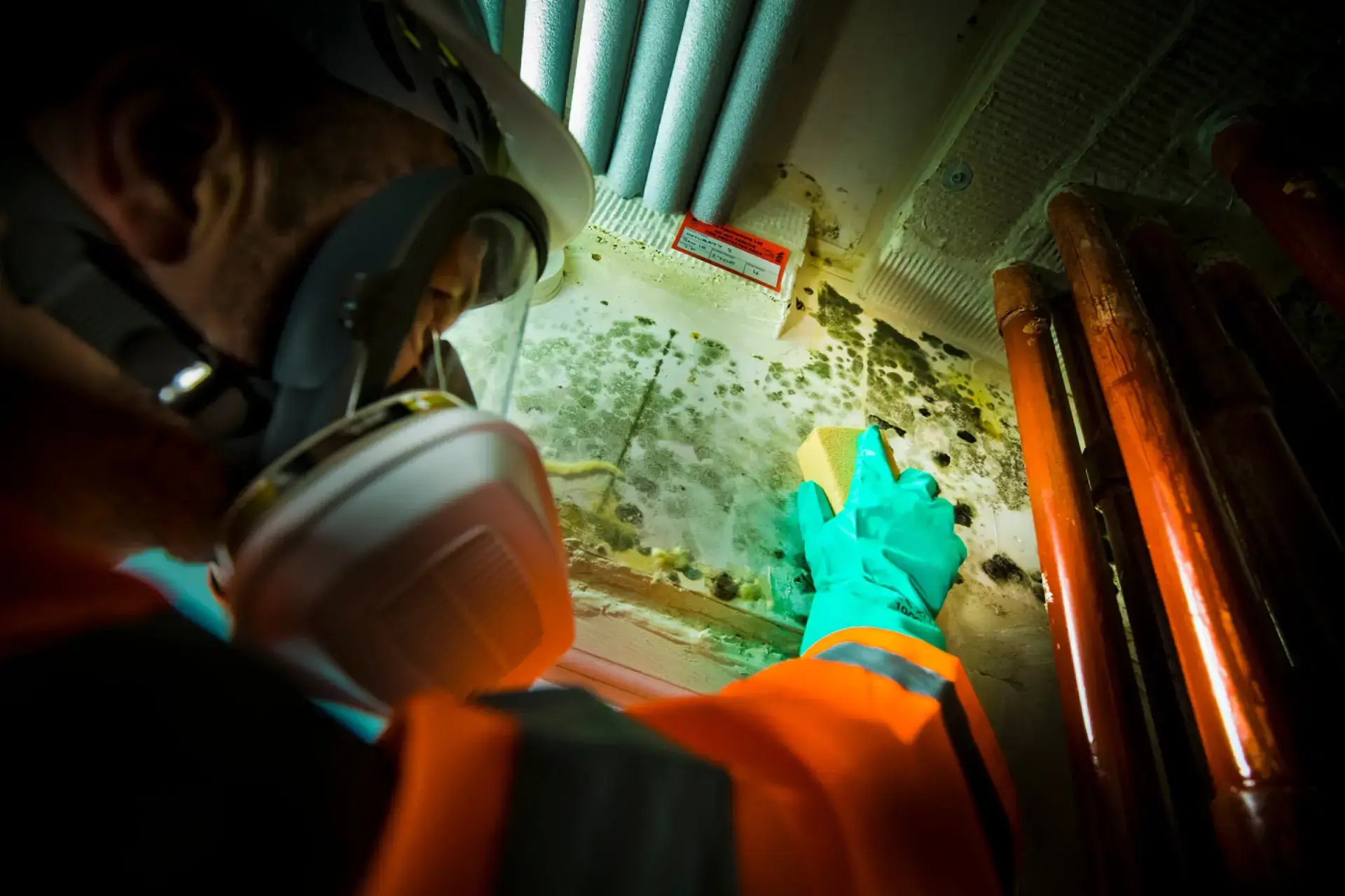
Over time, untreated mould can affect more than just appearance. It can lead to:
In more advanced cases, materials may need to be removed and replaced. What begins as a minor maintenance issue can become a larger restoration problem.
Mould growth is influenced by environmental conditions not just cleanliness.
In the UK, common contributing factors include:
The English Housing Survey has consistently highlighted damp as a recurring issue in a proportion of UK housing stock.
This means mould isn’t unusual but long-term mould growth should never be ignored.
In recent years, awareness around damp and mould in residential properties has increased significantly.
This has been reinforced by the introduction of Awaab’s Law, which was brought in following the tragic death of Awaab Ishak.
The legislation places clear legal responsibilities on social housing providers, and private landlords to:
While currently Awaab’s Law applies specifically to social housing landlords, in October 2026, private landlords will be included too. Its wider impact has been to highlight an important point:
Damp and mould are not just cosmetic issues, they are recognised health risks that require proper attention.
This has led to:
For homeowners, the takeaway is:
If mould is present and persistent, it shouldn’t be ignored or repeatedly managed at surface level. It’s a sign that something within the property needs to be properly addressed.
There’s usually a point where mould stops being something you can deal with easily. Signs include:
At this stage, the issue is no longer surface-level. It’s an environmental problem within the property. Our Domestic Mould Remediation case study is perfect example of what happens when mould goes untreated , as well as what professional remediation looks.
Long-term mould isn’t resolved by cleaning alone. It requires a different approach which often involves a damp surveydamp survey at the start:
The goal is not just removal, it’s preventing recurrence.
Mould is rarely the core problem. It’s a visible signal that something within the property isn’t right.
The key takeaways:
The earlier the issue is properly understood, the easier it is to control. Ideal Response supports homeowners across the UK with specialist mould remediation, identifying the cause, removing contamination and helping prevent it returning.

Chris Hedges is Head of Marketing at Ideal Response and the author of every article published on this site. With over 25 years of senior marketing experience across property, legal, and professional services sectors, Chris brings a clear, evidence-led approach to writing about fire damage, flood restoration, and specialist property remediation. His philosophy is simple: cut through the noise, respect the reader's time, and give people the information they actually need.
Explore more articles about damage restoration, specialist cleaning and what we do



If you’re dealing with fire damage, flooding, or an environmental incident, our team is ready to respond. No matter if you have a question or have an emergency that you need help with, call:
If you’d prefer to drop us a message, use our main contact form and upload any pictures of the incident. Would you like us to call you? Fill out the short ‘Request a call back’ form.


