Available 24/7 | 0800 088 4170

Available 24/7 | 0800 088 4170
A basic damp survey in the UK typically costs between £150 and £600, with prices varying based on property size, location, and the survey’s depth. You absolutely need a damp survey if your property exhibits signs like unexplained damp patches, mould growth, or a persistent musty odour. It’s also crucial to have one conducted before buying, selling, or letting a property to avoid costly future repairs, potential legal issues (especially for landlords under the Homes (Fitness for Human Habitation) Act 2018), and to protect health from mould-related problems. This initial investment helps identify the true cause of damp and can significantly save money in the long run by preventing extensive damage and property devaluation.
Skip to:
Damp in UK properties
What is a professional damp survey?
Do I need a damp survey?
What Awaab’s Law means for you
Tenant and landlord responsibilities under Awaab's Law
How much does a damp survey cost?
Is a damp survey worth the cost?
Conclusion
Unexplained damp patches on walls, mould growth and a musty odour are strong signs that your property has a damp issue. Damp problems are far from rare and affect both domestic and commercial properties across the UK. Government estimates suggest that between 962,000 and 6.5 million homes in England are affected by damp and mould, with the wide range reflecting differences in how damp is measured and reported.
Given how widespread the issue is, knowing the cost of a professional damp survey, and understanding why it pays for itself many times over, is essential. In this guide, we'll break down damp survey costs and explain why a professional damp survey is in your best interest for your property, your wallet and your time. A professional damp survey should be seen as more than just a cost, it's an investment and one that will save you money in the long-term.
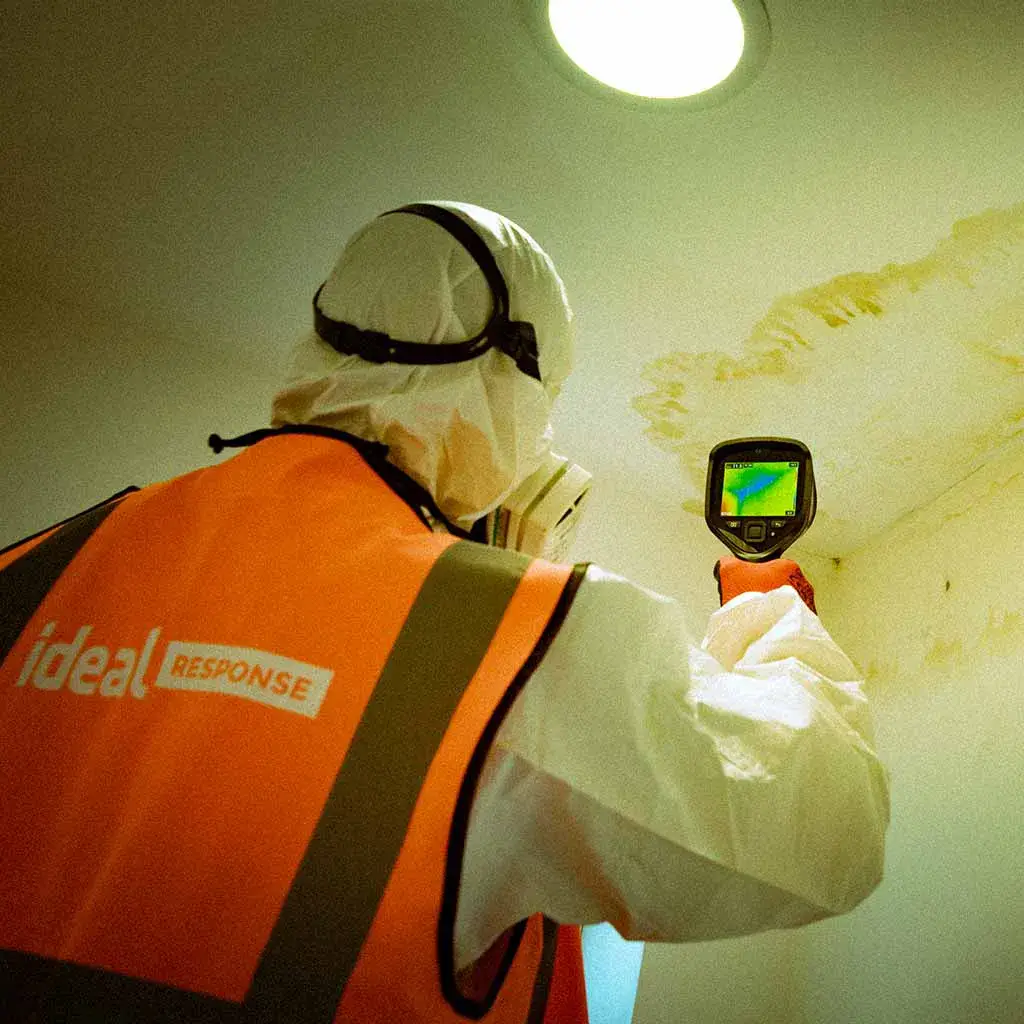
A professional damp survey is an inspection of a property delivered by a qualified professional that identifies the presence, extent and cause of damp. Using knowledge and specialist tools, a surveyor will be able to accurately measure the elevated moisture levels in your property and determine what the factors are that are causing the issues.
Professional damp surveys include:
The cost of a professional damp survey is minimal when you consider the insights it provides and the amount of money it can save you. Ideal Response has been providing UK property owners with professional damp surveys for over 20+ years. In this time we have helped both domestic and commercial property owners uncover the root cause of their damp issues as well as hidden damages they may have been unaware of. Our case studies showcase the in-depth remedial works we carry out after the initial survey.
The easiest way to tell if you need a damp survey is to identify the visual signs of dampness in your property. Having one or more of these signs is an indication that there may be an underlying damp issue. But the only way to be sure of that and to figure out the cause and solution is to get a damp survey.
The visual signs of damp include:
For more reading visit our article about the 7 most common causes of damp in UK homes.
It is not required but it is a good idea and can provide you with evidence of moisture levels in case of any future issues. If you’re preparing to sell or let a property, it’s good practice to arrange a professional damp survey beforehand. For landlords and sellers alike, damp issues can lead to costly delays, failed sales, or compliance concerns. A damp survey will identify any underlying problems early, giving you time to carry out necessary remedial work before the property is marketed.
For landlords, it also ensures you’re providing a safe and habitable environment which is something that’s not just expected but legally required under the Homes (Fitness for Human Habitation) Act 2018.
Ultimately, a damp survey provides peace of mind for all parties involved and helps protect the long-term value of your property.
Awaab’s Law ensures that the responsibility of dealing with damp and mould issues lies solely on the landlord. As of October 2025 Awaab’s Law has been in effect for Social Housing landlords and tenants. The legislation has been put in place to ensure that landlords take timely action when responding to damp and mould issues in the properties they let. As a tenant in social housing you only need to report damp, mould or other hazards to your landlord or housing association and they have to act within strict legal deadlines. Visit our Awaab’s Law tenant page to learn more about your rights and what Awaab’s Law means for you.
As of October 2025 social housing landlords, housing associations and local authorities must comply with the strict legislation of Awaab’s Law. Once a damp, mould or other hazard has been reported, you are forced to act within the predefined time frame.
The Social Housing (Regulation) Act has fundamentally shifted the timeline for damp and mould remediation. For Registered Providers, “reasonable time” is no longer an abstract concept, it is a strict 10-day window to investigate and a rapid cycle to remediate.
By integrating professional damp and mould specialist services into your repairs cycle, you move from reactive crisis management to a sustainable, compliant maintenance model that puts resident safety first.
A professional damp survey in the UK typically costs between £150 and £400, though prices can rise to £600+ for larger or more complex properties. According to Checkatrade, a damp survey for a 2-bed flat typically costs around £200, rising to around £400 for a 3-bed terraced house and around £600 for a larger 4-bed detached property. Properties in London and the South East tend to sit toward the higher end of this range due to increased labour and travel costs.
The exact price depends on a few factors:
A note on emergency or same-day surveys: if you need an emergency damp survey, you may have to pay an additional fee for a same-day service, which could add around £50 on top of the standard cost.
A good basic survey starts from around £150 and a standard residential survey typically runs to £400, giving you the evidence and recommendations you need to make an informed decision. For more in-depth and detailed damp surveys, expect to pay up to £600 or more. A more advanced damp survey will include a more thorough investigation that utilises thermal imaging and structural assessments.
Most professional providers will give you a detailed breakdown of the damp survey cost. In that breakdown you will be able to determine what’s included and what level of survey you feel is right for you.
Yes. A damp survey provides you with important information that you need to make decisions that affect your property, health and safety. A damp issue in your property is more than just a bit of your wall being wet, it can be a severe problem that leads to many issues down the road.
The cost of a damp survey is very small when compared to the cost of fixing the problems damp can cause. An investment of £150–£600 could help you prevent thousands of pounds in damages, as well as keeping your family and loved ones safe from respiratory issues caused by damp and mould. Finding the right expert can be difficult unless you know what to look for, visit our local damp specialist guide to learn more.
Yes, damp can cause secondary damage if left untreated for an extended amount of time or if it's not adequately treated the first time around. Secondary damage is a side effect caused by an ongoing issue. The primary issue of damp can lead to:
Whether you’re a landlord, letting agent, or property seller, a damp survey is a smart investment that safeguards your property, ensures legal compliance, and provides reassurance to potential tenants or buyers. Addressing damp early prevents costly repairs and helps you stay ahead of potential issues.
Need expert advice? Contact us today or visit our website to learn more about our professional damp survey services and how we can help protect your property.
Need to speak to a specialist urgently? Call 0800 088 4170

Chris Hedges is Head of Marketing at Ideal Response and the author of every article published on this site. With over 25 years of senior marketing experience across property, legal, and professional services sectors, Chris brings a clear, evidence-led approach to writing about fire damage, flood restoration, and specialist property remediation. His philosophy is simple: cut through the noise, respect the reader's time, and give people the information they actually need.
| Aspect | Tenant | Landlords (social housing) |
|---|---|---|
| Who's responsible for fixing damp? | Not responsible for remediation, only for reporting the issue | Solely responsible for investigating and fixing reported damp and mould |
| What action is required? | Report damp, mould or other hazards to the landlord or housing association | Investigate the report and carry out repairs within statutory deadlines |
| Legal deadline to investigate | N/A | 10 working days from the report |
| Emergency hazard deadline | N/A | 24 hours for high-risk cases |
| Legal basis | Awaab's Law and the Social Housing (Regulation) Act 2023 | Awaab's Law and the Social Housing (Regulation) Act 2023 |
| In effect since | October 2025 | October 2025 |
| If deadlines are missed | Can escalate to the Housing Ombudsman | Risk of Ombudsman intervention and legal disrepair claims |
| Further reading | Tenants rights | Social landlords |
Explore more articles about damage restoration, specialist cleaning and what we do
If you’re dealing with fire damage, flooding, or an environmental incident, our team is ready to respond. No matter if you have a question or have an emergency that you need help with, call:
If you’d prefer to drop us a message, use our main contact form and upload any pictures of the incident. Would you like us to call you? Fill out the short ‘Request a call back’ form.