Available 24/7 | 0800 088 4170

The emergency response was initially classified as Level 1, covering no more than 25m². Once the building had been assessed properly, the scope expanded to Level 3, between 50 and 75m², because the effects of the fire extended well beyond the bedroom.
The main bedroom in the fire flat required a full fire-damage clean. A second bedroom, kitchen and living room needed deep cleaning, while carpets required a combination of restorative cleaning and removal. Fire-damaged items also had to be taken out and disposed of.
The neighbouring flat was initially scoped for entrance-hall cleaning, but further assessment increased that to a full deep clean, including HEPA vacuuming of soft furnishings. The communal hallway between the two flats was also affected.
One of the more unusual aspects of the incident was the different way the secondary hazards spread through the building. Smoke and soot contaminated neighbouring internal areas, while shattered window glass was found on balconies at two other flats.
That meant the restoration plan could not simply follow the visible soot marks. Each part of the building needed to be assessed according to the contamination or debris that had actually reached it.
The yellow residue left by the burning mattress created another distinct cleaning challenge, particularly on carpets and other surfaces where staining was clearly visible.
Fire restoration is not a single cleaning method applied everywhere. This project required different decisions for different materials and areas.
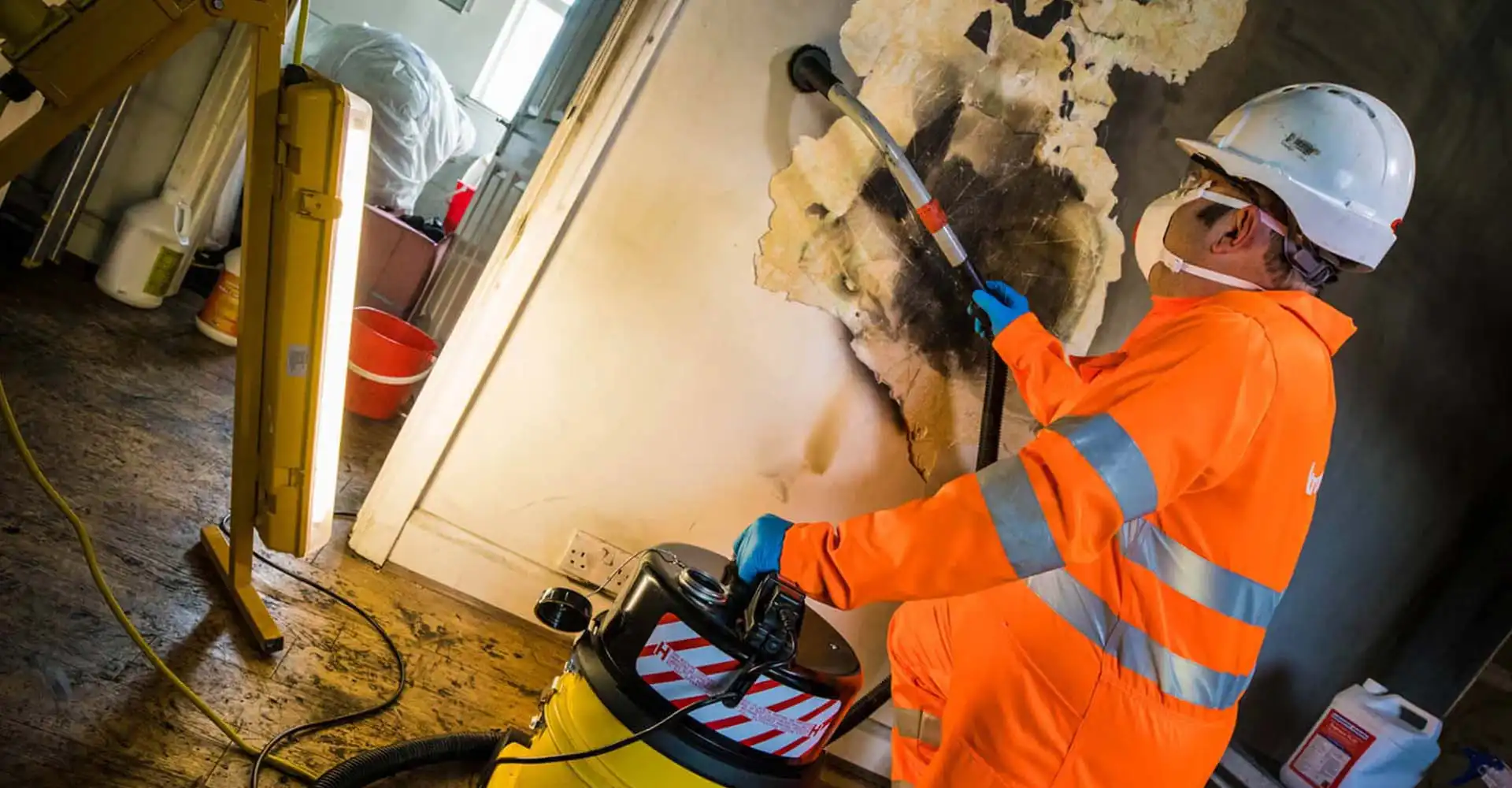
Some carpets could be restoratively cleaned. Others were removed. Soft furnishings in the neighbouring flat were HEPA-vacuumed rather than automatically discarded. Hard surfaces needed controlled soot removal, while damaged contents were separated for disposal. The team also prepared for contents handling with multiple boxes so belongings could be managed as the clean progressed.
That selective approach helped avoid treating the whole building as if every surface had suffered the same level or type of damage.
Access restrictions and the extent of the contamination meant the work was completed over four separate visits. Six technicians were involved across the connected response.
By the end of the four-visit programme, smoke, soot and staining had been removed from the agreed areas and lingering smoke odours neutralised. The carpet recovery was particularly visible: an entrance/hall area that had been yellowed and stained after the fire was left clean and substantially more uniform after treatment.
The significance of the job was not simply cleaning the bedroom where the mattress burned. The response followed the actual consequences of the fire through the building - soot and smoke in neighbouring spaces, contaminated carpets and furnishings, damaged contents, communal areas and shattered glass on balconies elsewhere in the block.