Available 24/7 | 0800 088 4170

The heaviest fire damage was concentrated around a single toilet cubicle, where burnt debris and visibly damaged material marked the immediate seat of the incident. The wider cleaning problem was far less localised.
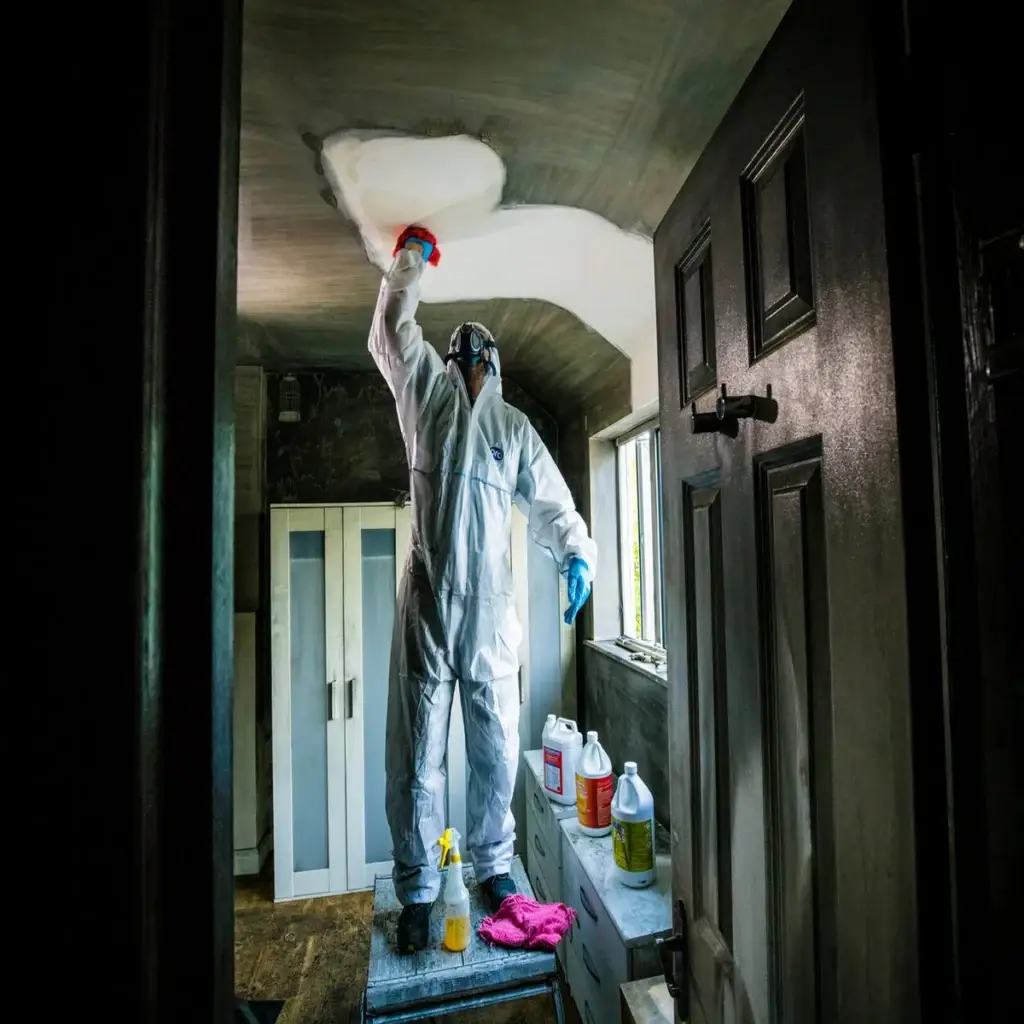
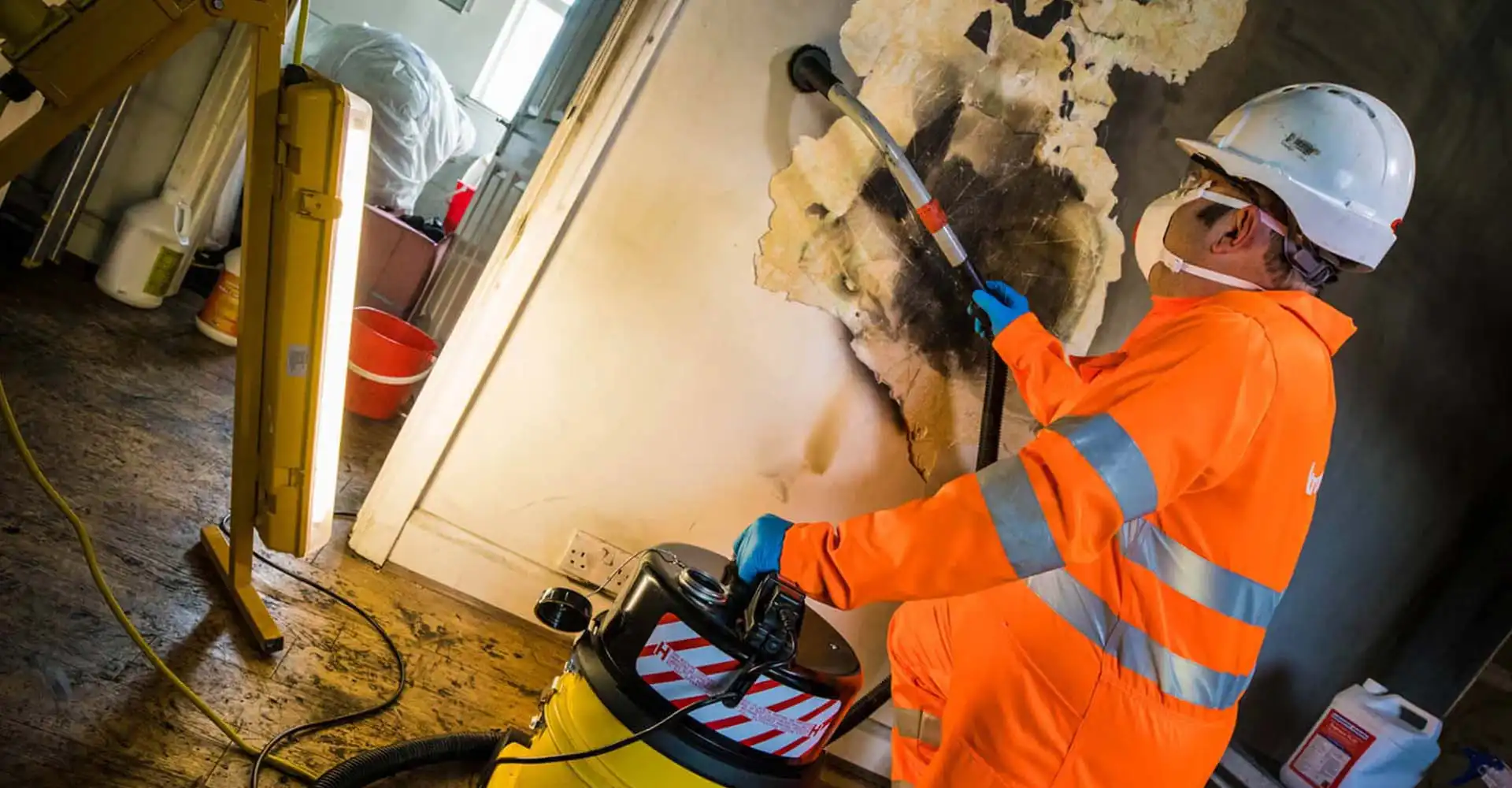
Soot had migrated through the compact facility and deposited on surfaces well beyond the burnt area. Dark residues were visible across ceilings and upper walls, with further contamination affecting cubicle partitions, sanitaryware, wall-mounted fittings, service edges and floor junctions.
That difference between the fire-damaged area and the soot-affected area determined the scope. Clearing the burnt debris alone would not have addressed the contamination throughout the toilet block, so the approximately 30 m² facility was treated as one connected soot-cleaning area.
Crucially, the retained structure and fittings did not require wholesale removal. The response could therefore concentrate on decontaminating the affected surfaces rather than introducing a more disruptive strip-out that the condition of the facility did not call for.
The cleaning sequence was deliberately designed around the behaviour of soot. Loose carbon deposits were tackled before any liquid cleaning solution was introduced, helping to avoid turning dry residue into smears that could be worked further into the surface.
HEPA-filtered vacuuming formed the first stage, capturing loose particulate from the affected surfaces. The team then used natural-latex soot sponges as a dry-cleaning step to lift remaining carbon deposits from retained finishes.
Only after that dry-removal work had been completed did the technicians progress to wet cleaning. A multi-stage wash, cleanse and rinse was carried out using the specified alkaline cleaning solution at pH 10-12 across the affected hard surfaces.
The alkaline chemistry was therefore not used as a substitute for physical soot removal. It followed the vacuuming and soot-sponge stages, allowing the team to work progressively from loose contamination to more persistent residues rather than approaching the entire facility as a general wash-down.
A fogging treatment was then completed after the physical surface-cleaning stages, forming the final specified element of the two-day programme.
A toilet block may be relatively small in floor area, but it contains a high concentration of surfaces and junctions. Cubicle partitions, sanitaryware, dispensers, wall-mounted fittings, corners, ceiling edges and service interfaces all create places where fine soot can settle.
That pattern was evident throughout the facility: heavy localised fire debris around the affected cubicle, but much broader soot marking across walls, ceilings, partitions and fittings. The cleaning boundary therefore had to follow the contamination rather than simply the point where the fire had burned.
Power and water were available on site, allowing the team to move efficiently from dry soot removal into the controlled wet-cleaning stages. Retaining the structure and fixed elements also meant the technicians could concentrate their time on detailed decontamination rather than demolition and replacement.
The specialist soot clean was completed over the planned two-day period. Across the approximately 30 m² facility, the team addressed both the obvious deposits close to the seat of the fire and the finer contamination that had travelled onto surrounding retained surfaces.
The result was a response matched to the actual condition of the building: detailed enough to deal with soot across the wider toilet block, but without escalating the job into unnecessary structural removal.
For Watford Borough Council, that meant the fire-damage cleaning remained focused on the surfaces and fittings that required treatment, using a defined sequence of dry soot removal, alkaline cleaning and final fogging rather than a one-stage general clean.