Available 24/7 | 0800 088 4170

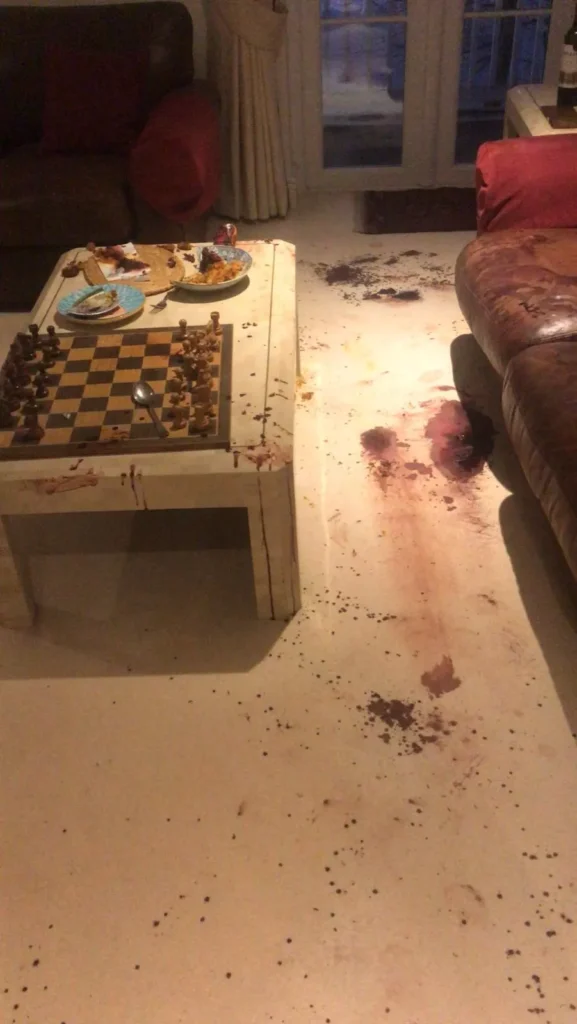
The living room contained some of the most obvious contamination, with blood droplets and smearing across the floor around the coffee table and chess set and towards the seating. Further contamination was present in the bathroom and hallway.
That distribution changed the nature of the clean. Once the resident had moved through the property after being injured, the team could not treat the incident as one isolated stain or spill. Floors, furniture, walls and possessions along the movement route all had to be considered as part of the affected footprint.
Several days had also passed before specialist attendance. That made the distinction between hard, cleanable surfaces and absorbent materials particularly important. The job was therefore as much about deciding what could be restored as it was about removing visible contamination.
The carpet had been heavily contaminated and the blood had remained within it for several days. Rather than attempting to clean an absorbent floor covering that was considered beyond restoration, the team removed it with the resident's permission.
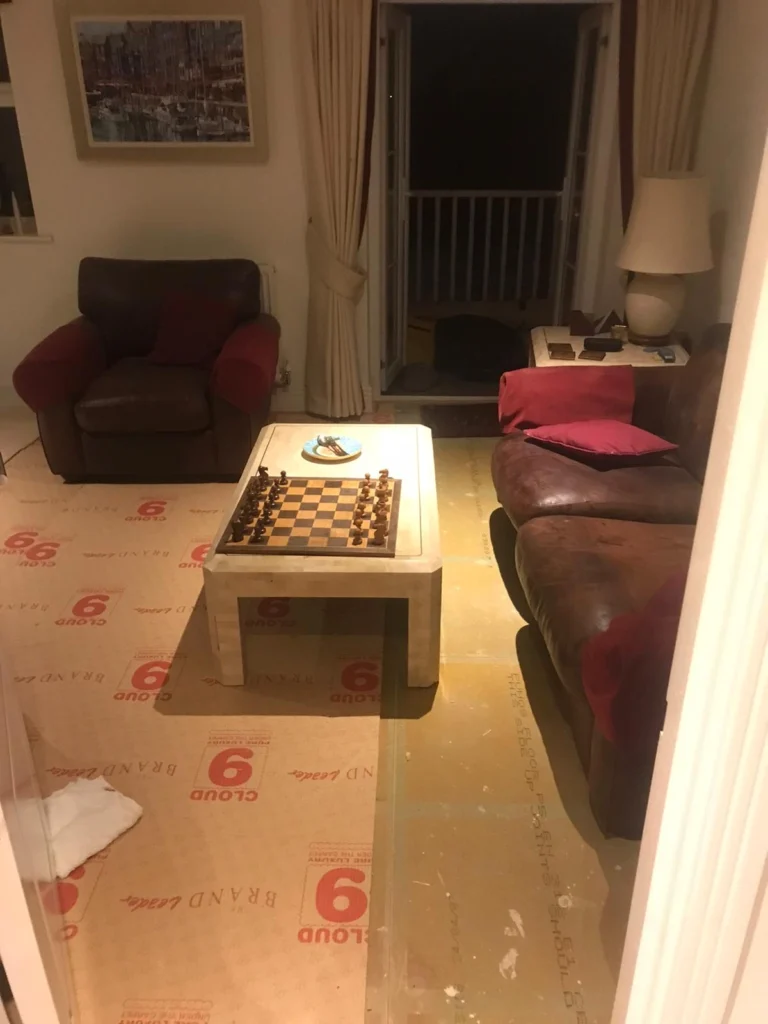
Removing the carpet also exposed the floor beneath, giving technicians access to the underlying surface for cleaning instead of leaving a contaminated porous layer in place.
Other affected items could be retained. Furniture, hard surfaces and personal possessions were cleaned in detail where restoration was considered appropriate. One of the clearest examples was the resident's chess set: the chessboard and individual pieces were hand-cleaned one by one rather than simply discarded.
That balance between removal and restoration is important in a domestic trauma clean. The objective is not to throw away everything within the affected area, but to make considered decisions based on the material, the extent of contamination and whether it can be cleaned effectively.
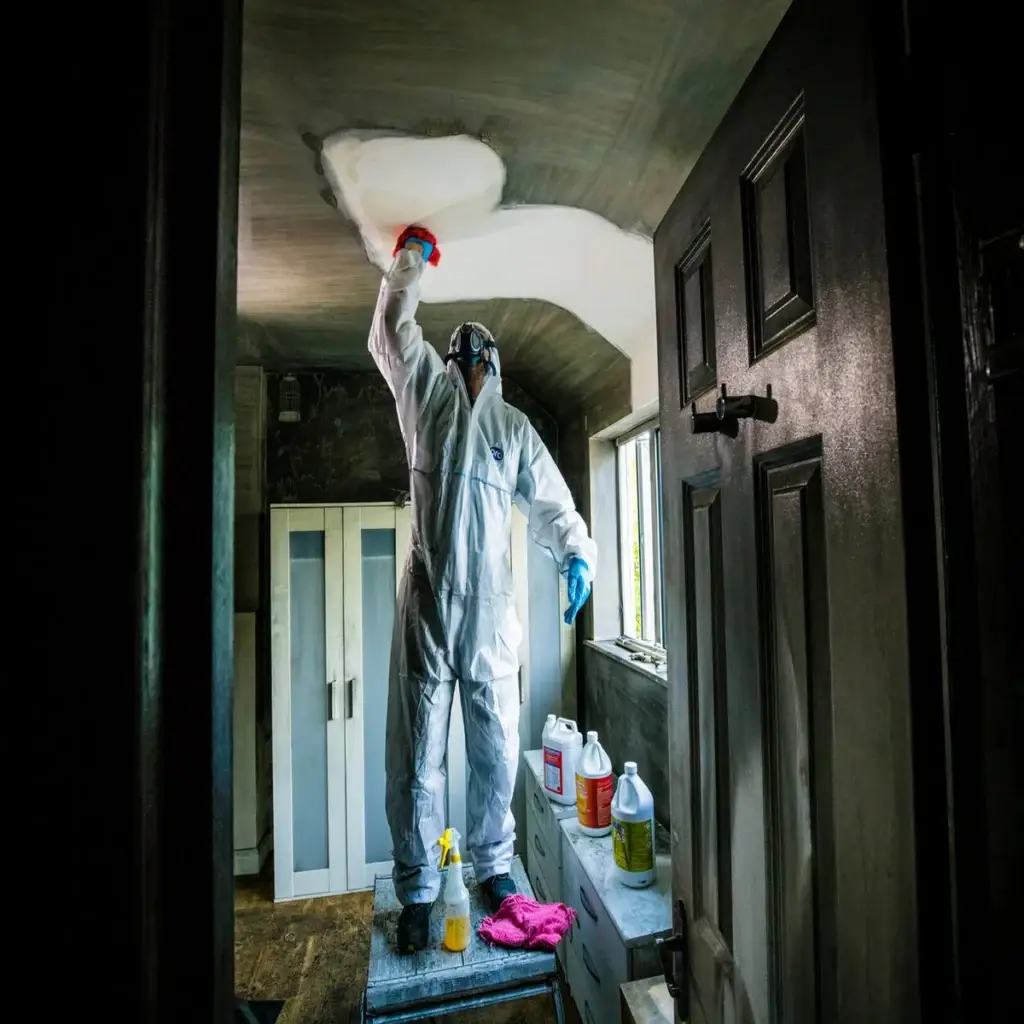
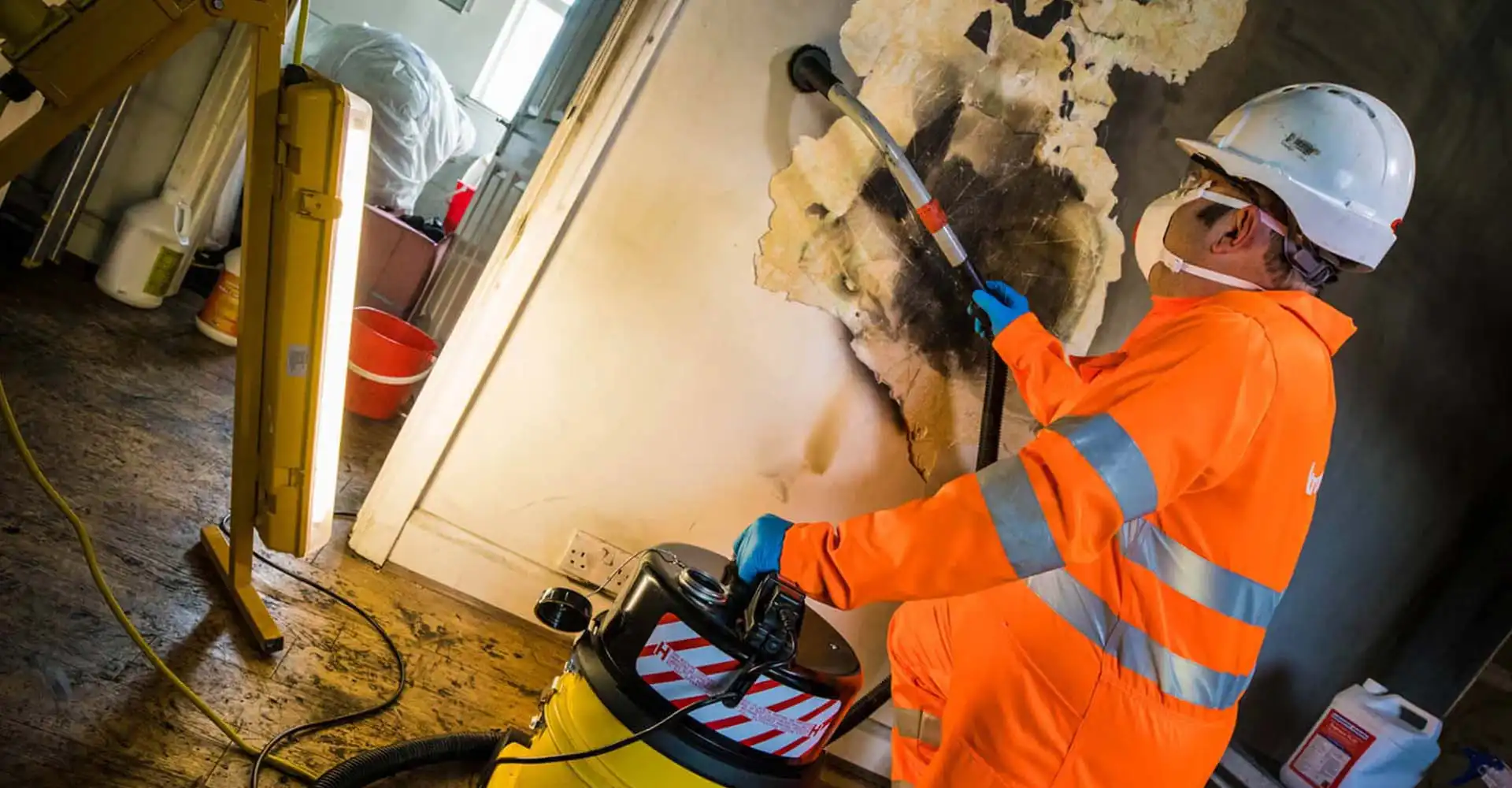
Technicians worked in biohazard suits, gloves and respirators and progressed systematically through the affected areas. This was not treated as a conventional stain-removal exercise: the visible blood was part of a wider contamination problem that required physical cleaning, decontamination and controlled handling of affected materials.
Hard surfaces, walls, furniture and restorable possessions were cleaned in detail. Decon 7 was used within the decontamination process, while the contaminated carpet was removed rather than retained.
Once the detailed physical cleaning and decontamination stages had been completed, the team carried out disinfectant fogging as a supplementary treatment. The sequence kept manual removal and surface cleaning at the centre of the response rather than relying on fogging to replace the work needed on directly contaminated surfaces.
Visual improvement alone was not the final check. After cleaning and decontamination, ATP testing was used as an additional hygiene-verification stage.
ATP testing measures adenosine triphosphate - a marker associated with biological material - on a sampled surface. The result is reported by the test system as a numerical reading, allowing technicians to assess cleaning performance at the points tested against the system's defined limits.
On this project, post-clean ATP testing provided an additional check after the detailed cleaning and decontamination stages. It gave the technicians a hygiene-verification step at the sampled surfaces rather than relying on visual appearance alone.
By the end of the specialist response, the heavy visible blood contamination had been removed from the treated areas, the non-restorable carpet had been taken out, and retained furniture and possessions had been cleaned and decontaminated.
The living room in particular changed significantly. The affected floor area around the furniture and chess set had been cleaned, the contaminated carpet removed and the items judged suitable for retention left in place after detailed treatment.
With the affected surfaces and possessions treated, contaminated flooring removed, disinfectant fogging completed and post-clean ATP testing carried out, the resident was able to return home.
For someone who had already experienced a serious injury, hospital treatment and an unsuccessful attempt to manage the aftermath alone, the value of the response was also practical and personal: the specialist team took over a difficult clean-up, removed material that could not reasonably be retained and took the time to preserve possessions that could.