Available 24/7 | 0800 088 4170

Available 24/7 | 0800 088 4170
Commercial organisations depend on reliable infrastructure, every hour of every day. When fire or flood damage interrupts operations, the ripple effect reaches far beyond the building itself. Safety concerns arise instantly. Revenue begins slipping away. And operational downtime becomes increasingly expensive. The London Chamber of Commerce estimates that unplanned interruption can cost UK businesses over £10,000 per hour, with even greater consequences for logistics, retail and hospitality.
In emergencies, the partner you choose will influence cost, recovery speed and continuity. This isn’t a decision to leave for the moment the alarms sound. The most resilient organisations identify and appoint a restoration partner long before they ever need one.
Skip to:
Rapid mobilisation prevents escalation
The right partner keeps your business running
Documentation should support insurers, not slow them down
Commercial-grade capability maximises success
Experience in environments like yours matters
What’s at stake if the wrong partner responds?
A simple checklist for evaluating partners
Conclusion
The first response impacts everything that follows. Water penetrates structural materials within minutes; smoke particulates travel through HVAC systems in seconds; mould can begin forming within 48 hours. The faster the intervention, the more risk and cost can be contained.
A restoration partner should therefore commit to:
A fast arrival isn’t just good service, it protects business performance.
Commercial buildings are often still in use during recovery: residents need accommodation, guests need rooms, and supply networks cannot rely on delays. Simply closing the doors isn’t always an option.
Your partner must be capable of:
The priority is not only restoring the property, but protecting the organisation while doing so.
Recovery success extends beyond the technical clean-up. Insurance approval can be a major bottleneck if reporting isn’t aligned to expected standards. Robust documentation proves remediation effectiveness and accelerates reinstatement.
Your provider’s reporting should include:
Efficient validation means faster approvals and reduced downtime.
Early intervention with powerful drying and decontamination equipment can significantly reduce secondary damage. Research from UK insurers shows that when the correct systems are used immediately, total project costs can reduce by up to 30%.
Expect your partner to arrive with:
Technical capacity directly influences operational risk reduction.

Every building type has different priorities: data-led offices, trading-dependent retail units, high-occupancy accommodations, safety-critical warehouses. Proven success in similar contexts builds confidence.
A devastating fire broke out at Viridor’s Polymer Recycling Plant in Kent, causing extensive damage to its 45-square-metre facility. As a major UK provider of commercial waste management services, the disruption had a significant impact on operations.
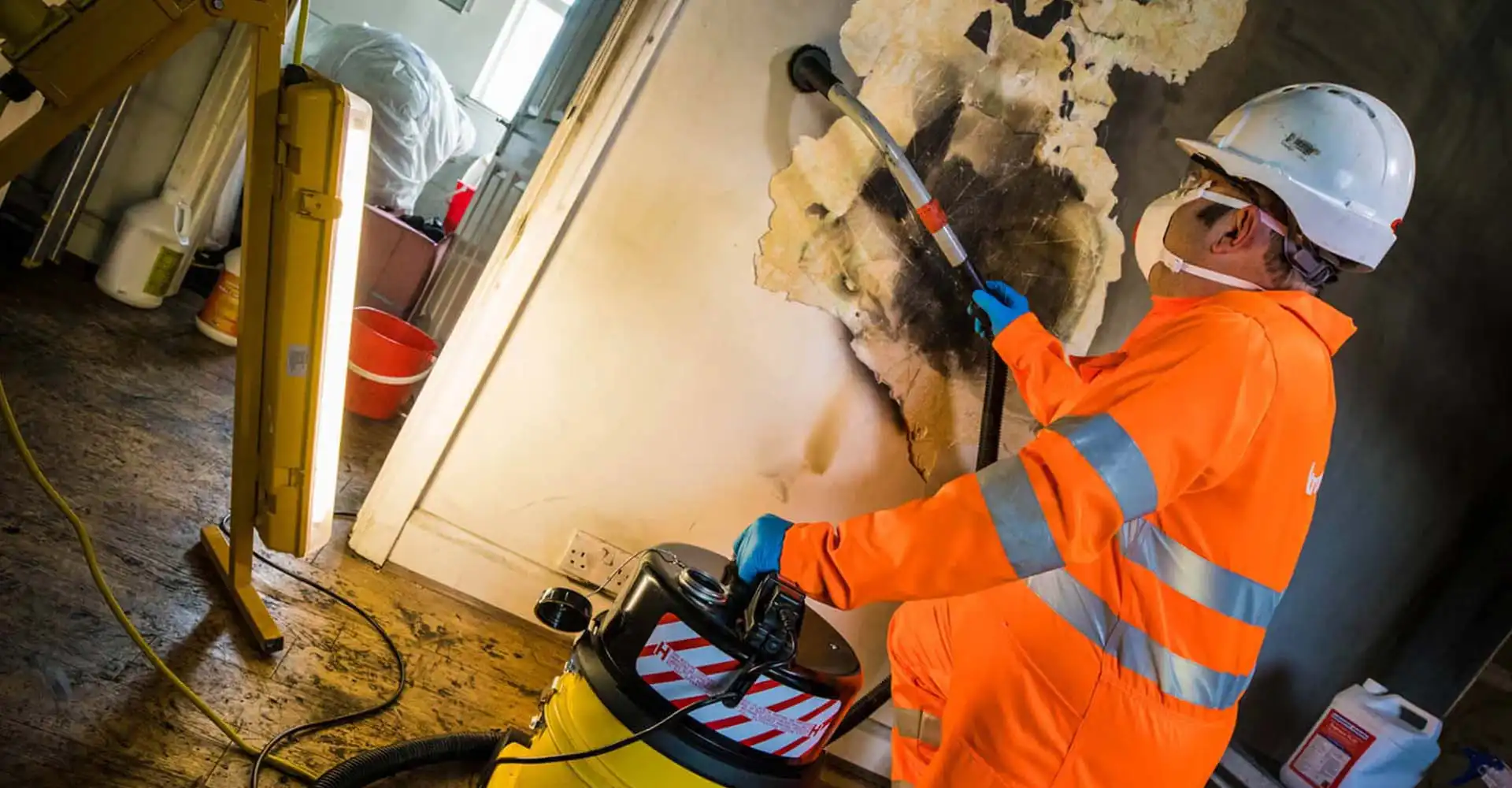
Once approved, our team mobilised fast and initiated a planned six-week cleaning programme. It included:
The fire cleaning programme was completed in just over five weeks, exceeding expectations and enabling Viridor to accelerate repairs and reopen the facility sooner than anticipated.
This illustrates what a capable partner delivers, getting you back on track fast and minimising downtime.
To learn more, read our commercial fire damage case study.
Commercial and financial impacts escalate when decisions are delayed:
The right partner prevents a short incident from becoming a long-term business disruption.
When reviewing potential providers, confirm they offer:
If any of these elements are missing, the risk sits with you.
Emergencies rarely offer warning. But they do offer a choice in how an organisation responds. When a restoration partner is already appointed and already familiar with your sites and expectations, the reaction shifts from panic to procedure. Internal teams know exactly who to call. Mobilisation begins immediately. Damage is contained before it grows. And what could become a major operational disruption becomes a short-term challenge that’s quickly resolved.
Preparedness is not an administrative exercise, it is business protection. It safeguards customers, keeps stakeholders confident and prevents avoidable cost escalation. It ensures that when a fire or flood threatens what your organisation depends on, continuity and safety remain firmly in control.
Ideal Response supports commercial properties across the UK with accredited fire damage cleaning and flood recovery focused on three operational priorities: protect people, protect continuity, and protect the bottom line.
Need urgent support? Call 08083 031 257

Chris Hedges is Head of Marketing at Ideal Response and the author of every article published on this site. With over 25 years of senior marketing experience across property, legal, and professional services sectors, Chris brings a clear, evidence-led approach to writing about fire damage, flood restoration, and specialist property remediation. His philosophy is simple: cut through the noise, respect the reader's time, and give people the information they actually need.
Explore more articles about damage restoration, specialist cleaning and what we do


If you’re dealing with fire damage, flooding, or an environmental incident, our team is ready to respond. No matter if you have a question or have an emergency that you need help with, call:
If you’d prefer to drop us a message, use our main contact form and upload any pictures of the incident. Would you like us to call you? Fill out the short ‘Request a call back’ form.