Available 24/7 | 0800 088 4170

Available 24/7 | 0800 088 4170
Finding fungal growth in your home can be a stressful experience. Whether it’s a small patch in the bathroom grout or spreading across a bedroom wall, the question of how to remove mould effectively is one of the most common concerns for UK property owners. Do you opt for DIY cleaning or spend a bit more for professional mould remediation? This blog will help you decide the best course of action for you. While it is possible to clean minor surface growth yourself, it is crucial to understand the distinction between temporary cleaning and permanent remediation.
This guide explores the safest methods for tackling small amounts of mould and explains why professional intervention is often the only way to ensure your home remains healthy and compliant with UK standards like Awaab’s Law.
Skip to:
What is mould?
How to remove mould
Why DIY isn’t the solution
Why professional remediation is the answer
How much does mould removal cost?
Final thoughts
FAQs
Mould is a type of fungus that thrives in damp, poorly ventilated environments. It reproduces by releasing microscopic spores into the air, which can cause significant respiratory issues and allergic reactions. Before you begin the removal process, it is helpful to understand what mould is and why it grows in UK homes to prevent future outbreaks.
If you are dealing with a small area (less than 1 square metre) on a non-porous surface, you may choose to attempt a DIY clean. However, you must follow strict safety protocols to avoid spreading spores.
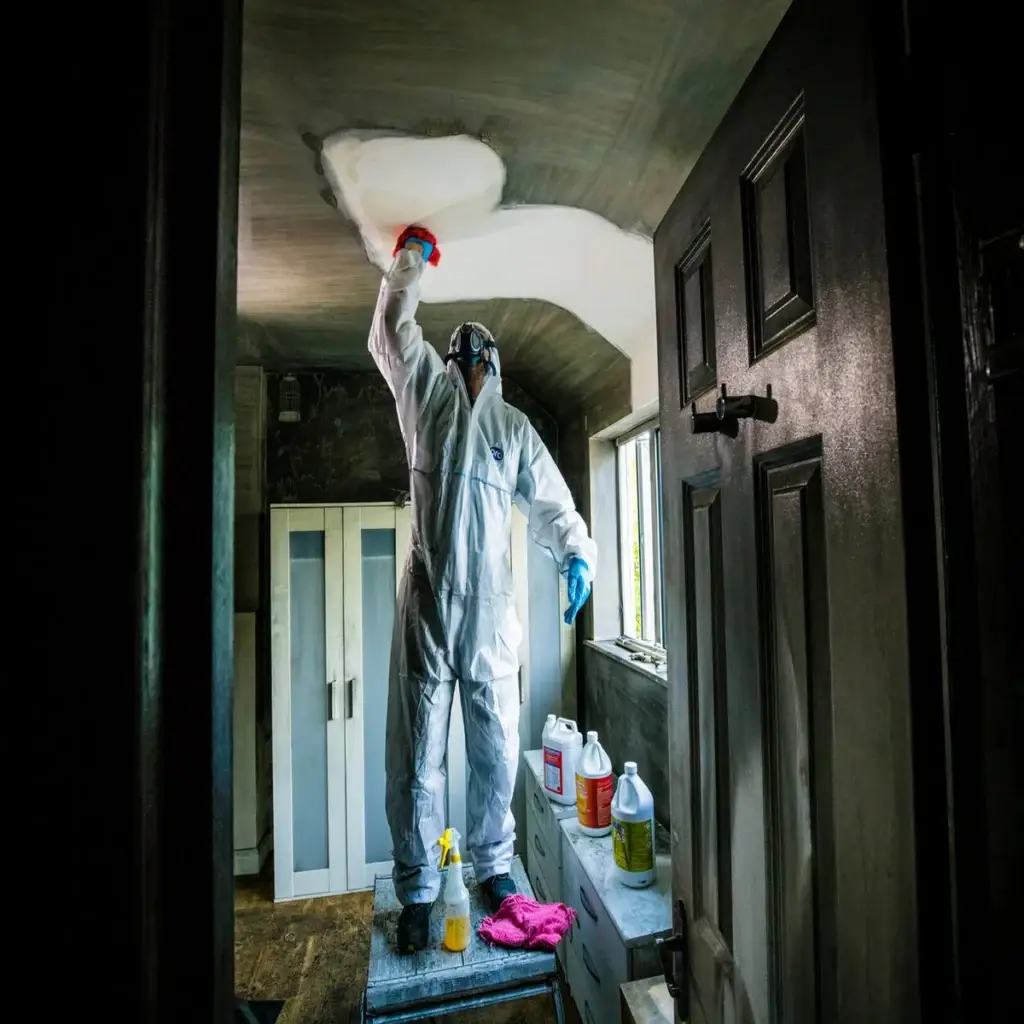
Never attempt to remove mould without protection. Disturbing the growth sends spores airborne. You should wear:
Avoid using bleach alone; while it removes the colour, it often fails to kill the roots on porous surfaces. Instead, consider:
Wipe the mould away gently using a damp cloth rather than scrubbing vigorously, which can disperse spores. Once cleaned, the area must be dried completely using a dehumidifier or heater. For more detailed safety steps, refer to our guide on black mould DIY removal .
The biggest mistake homeowners make when learning how to remove mould is treating it as a surface stain. Mould is a biological contaminant that often penetrates deep into building materials.
Under Awaab’s Law, landlords in the UK have a legal obligation to provide a safe, mould-free environment. Simply painting over mould or hiring a handyman for a “quick scrub” does not meet the legal requirement for decontamination. If airborne spores remain and affect a tenant’s health, the landlord remains liable. Professional remediation is the only way to secure an audit trail of safety. Learn more about Awaab’s Law here.
For a result that is truly permanent and safe, hiring a professional mould removal service provider is the only reliable option. Professionals do not just “clean”; they follow the IICRC S520 global standard for fungal remediation.
Specialists use thermal imaging and moisture meters to find exactly where the water is coming from, addressing the causes of mould on walls before they even begin cleaning.
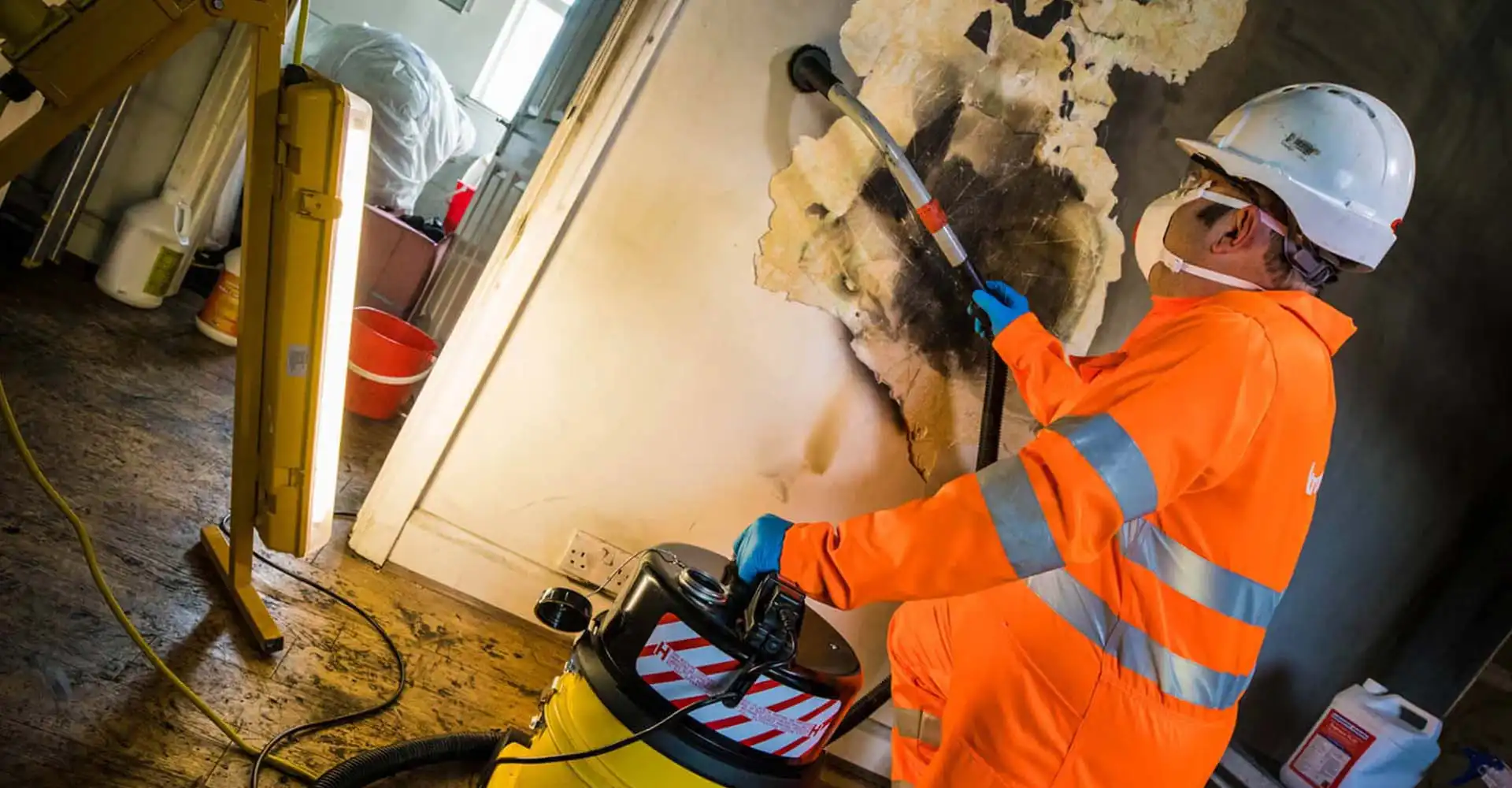
During a professional service, industrial-grade HEPA filters “wash” the air in your home, capturing the invisible spores that DIY cleaning leaves behind. This is a critical step in ensuring the environment is biologically safe.
To learn more about what professional mould remediation looks like, visit our Mould Remediation & Structural Drying case study to see the process from start to completion.
While DIY cleaning is cheap, it often leads to recurring costs and property damage. Investing in a specialist ensures the job is done once. The cost of professional mould cleaning in the UK depends on the extent of the damage and the type of property, but it provides a “Condition 1” (safe) environment that DIY methods simply cannot match.
Learning how to remove mould is an important skill for minor maintenance, but it should never replace a professional assessment for significant or recurring issues. By choosing expert mould remediation , you are protecting both your property’s value and the health of its occupants.
Ideal Response provides 24/7 expert support across London , Kent , and the wider South East, including Maidstone . We ensure your property is not just clean, but fully decontaminated and safe for habitation.
Is your mould problem returning or spreading? Don’t settle for a temporary fix. Contact Ideal Response today for a professional assessment and a permanent, certified mould removal solution.

Chris Hedges is Head of Marketing at Ideal Response and the author of every article published on this site. With over 25 years of senior marketing experience across property, legal, and professional services sectors, Chris brings a clear, evidence-led approach to writing about fire damage, flood restoration, and specialist property remediation. His philosophy is simple: cut through the noise, respect the reader's time, and give people the information they actually need.
Explore more articles about damage restoration, specialist cleaning and what we do
If you’re dealing with fire damage, flooding, or an environmental incident, our team is ready to respond. No matter if you have a question or have an emergency that you need help with, call:
If you’d prefer to drop us a message, use our main contact form and upload any pictures of the incident. Would you like us to call you? Fill out the short ‘Request a call back’ form.