Identifying the specific type of moisture ingress in a property is the first step toward effective remediation and requires a professional damp survey. In the UK, dampness is rarely a singular issue; it is often a combination of environmental factors, building age, and structural integrity.
If you are asking, “what are common types of damp issues in homes?”, you are likely dealing with one of the four primary categories listed below. Understanding the differences is vital for choosing the correct restoration path. For structural drying and remedial works to be successful understanding the type of damp is a must.
Skip to:
1. Condensation (The Most Common Type)
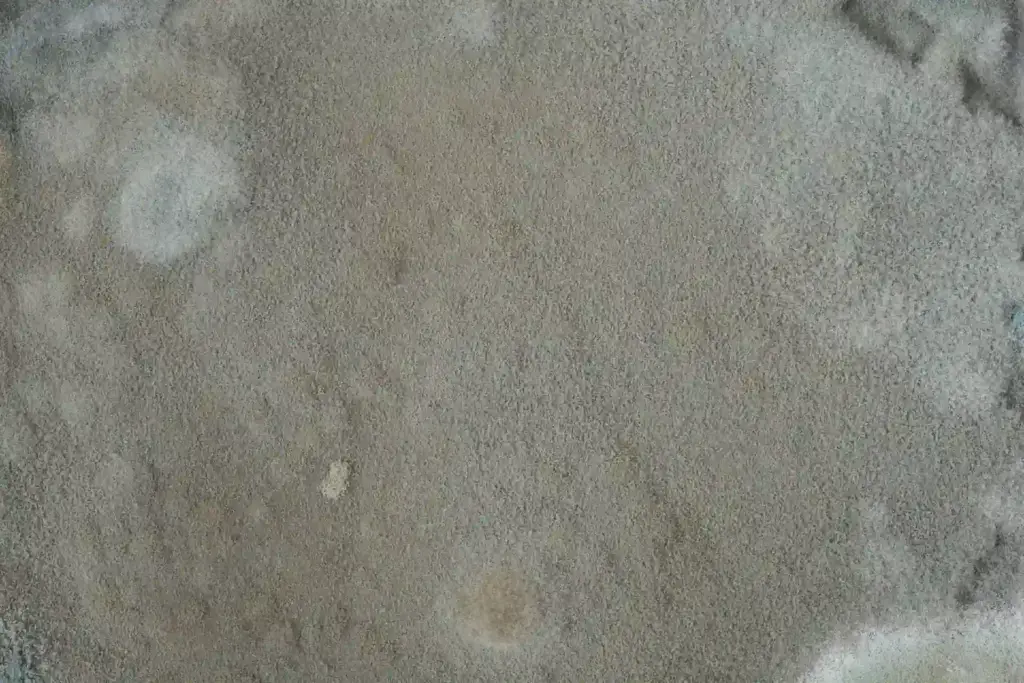
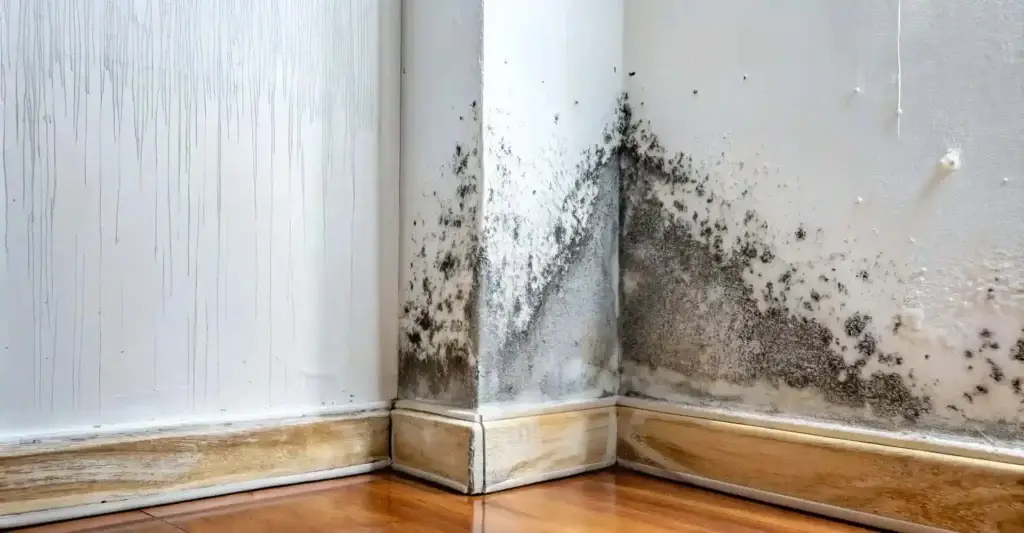
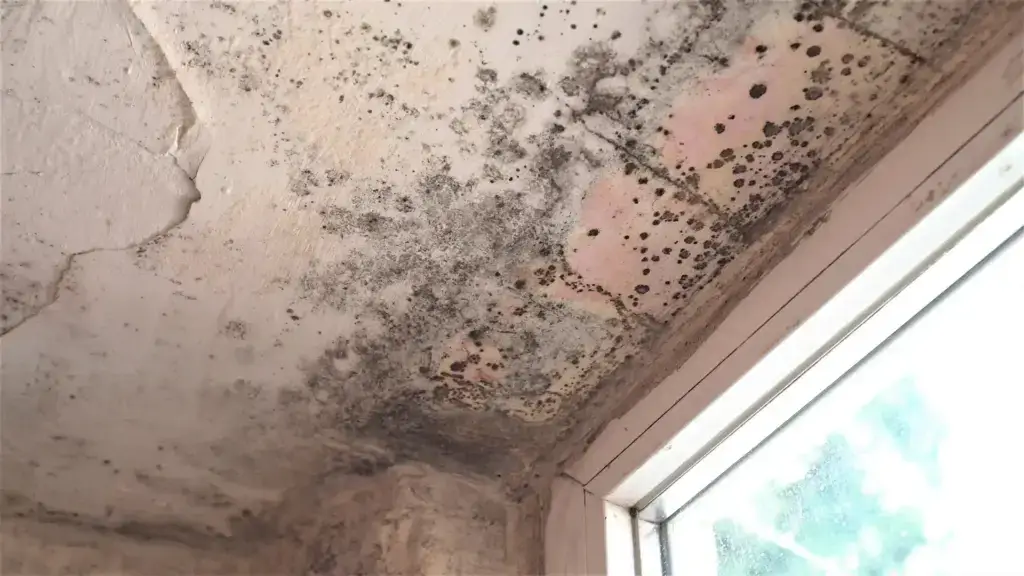
Condensation occurs when moist air comes into contact with cold surfaces (like windows or external walls), reverting into liquid water. Thermal imaging surveys can be an effective way to identify cold bridging and diagnosing condensation damp.
-
Key indicators: Water droplets on glass, “streaming” windows, and black spot mould (Aspergillus niger) on window frames or behind furniture.
-
Common causes: Poor ventilation, drying clothes indoors, and inadequate insulation.
-
Long-term risks: If left unaddressed, persistent condensation leads to widespread mould growth and respiratory health hazards.
2. Rising Damp
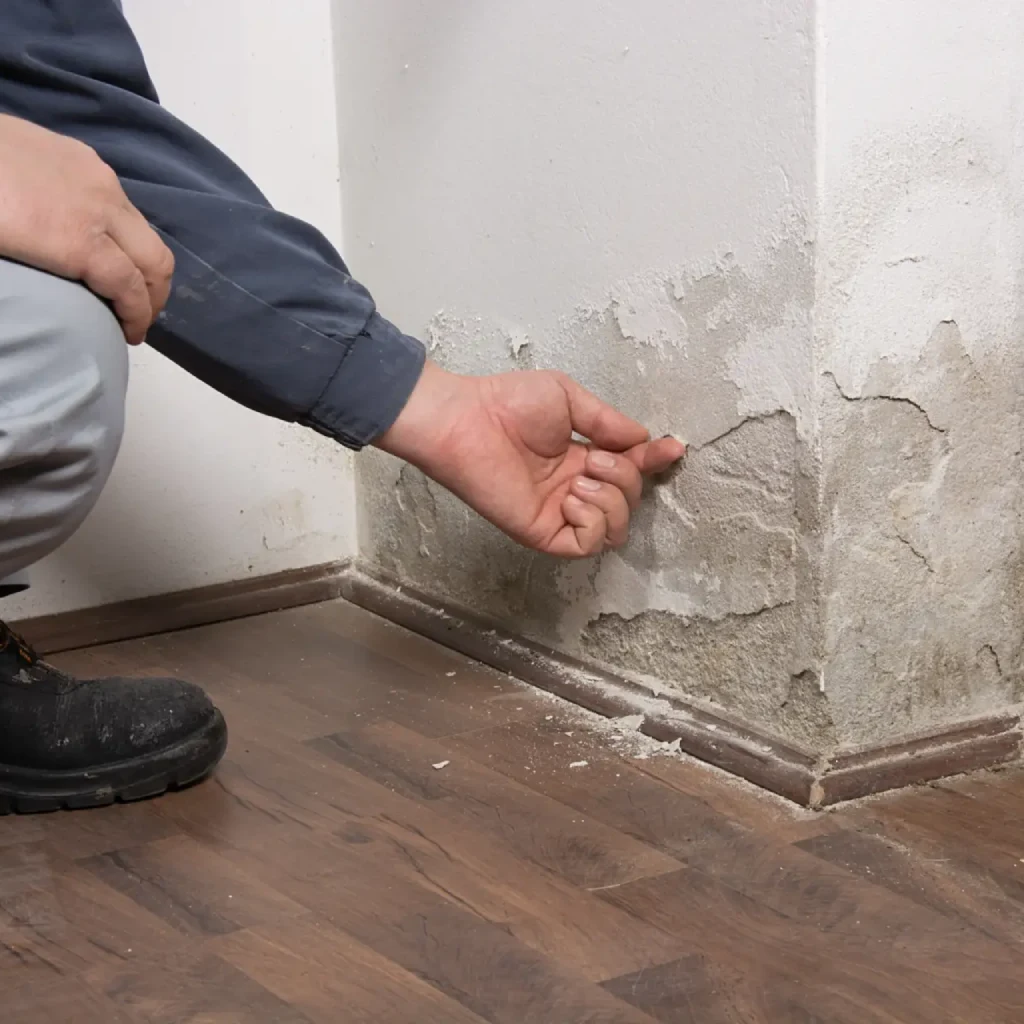
Rising damp is the vertical flow of water from the ground up through permeable building materials like brick and mortar via capillary action. Rising damp often leaves behind efflorescence, visible salty deposits that are a result of minerals being wicked from the ground into your masonry.
-
Key indicators: A distinct “tide mark” on the wall (usually up to 1 metre high), peeling wallpaper at the skirting level, and crumbling plaster.
-
Common causes: A failed or bridged Damp Proof Course (DPC), or high ground levels outside the property.
-
Expert note: Rising damp is often misdiagnosed. It requires professional moisture mapping to distinguish it from heavy condensation or penetrating damp.
3. Penetrating Damp (Water ingress)
Unlike rising damp, penetrating damp moves horizontally through walls or downwards from roofs. It is usually the result of a structural defect.
-
Key indicators: Localised damp patches that worsen after heavy rain, “blown” external masonry, and water staining on ceilings.
-
Common causes: Damaged roof tiles, blocked guttering, cracked render, or porous brickwork (spalling).
-
Remediation: This requires external structural repairs followed by internal specialist drying to dry the masonry.
4. Traumatic Damp (Burst pipes & leak)
While often categorised under “Water Damage,” traumatic damp refers to sudden, high-volume moisture ingress that saturates the building fabric.
-
Key indicators: Sagging ceilings, sudden damp smells, and visible pooling.
-
Common causes: Burst internal pipes, leaking appliances (dishwashers/washing machines), or failing sealant in bathrooms.
Comparison table: How to identify your damp issue
Feature | Condensation | Rising Damp | Penetrating Damp | Traumatic Damp |
|---|---|---|---|---|
Location | Corners, windows & cold spots | Ground floor only | Anywhere (often external walls) | Near plumbing and appliances |
Primary sign | Water beading on surfaces, mould growth | Tide marks & salt deposits (Efflorescence) | Isolated damp patches | Rapid saturation |
Weather link | Worse in winter & cold temperatures | Constant | Worse after rain or snow melts | Unrelated to weather |
Summary: Diagnosing & remediating your property
Looking for the signs and identifying the damp issue you’re facing in your home is just a small part of the solution. Damp can be a complicated issue to face and in some cases the cause wont always match the symptoms. The best and most reliable solution is to seek the help of a professional and experienced damp surveyor. A damp surveyor will use their experience and tools to gather the data needed to accurately diagnose the root cause of your damp.
Contact us today and book your professional damp survey. You will receive a comprehensive report detailing the extent of the damp, moisture readings and images as well clear actionable steps to solve the problem for good.
A success story
To learn more about professional water damage restoration and damp remediation, check out some of our case studies to learn more. If you manage a commercial space, our Construction Drying for Major Development case study will breakdown exactly what our process is. For homeowners, tenants and landlords, check out our Water Damage Clean-up & Dying case study to see h+
w our experts returned a London residential property back to a safe and habitable condition.
Call our emergency response team 0800 088 4170
Types of damp issues FAQs
Is dampness in a home dangerous?
Yes. Damp environments encourage the growth of mould and dust mites, which are known triggers for asthma, eczema, and other allergic reactions. Structurally, chronic damp can lead to wet and dry rot in timber.
Can I paint over damp patches?
No. Standard paint will peel or flake if applied to a damp surface. You must identify the source (whether it is penetrating, rising, or condensation-based) and ensure the wall is professionally dried before redecorating.
How do I stop damp in my house?
The solution depends on the type. Condensation requires better ventilation (MVHR systems or PIV units). Rising damp requires DPC repair. Penetrating damp requires structural maintenance. For all types, industrial dehumidification is the fastest way to remove deep-seated moisture.
Do you provide damp reports?
Yes, we provide extensive damp reports after the damp survey is completed. The damp report will provide an overview of the problem, readings and measurements taken with professional tools and comprehensive recommendations. Our surveys can be taken to any service provider and used to carry out the remedial work should you not choose to stay with us for the whole process.
Can damp cause mould growth?
Absolutely, damp is the main cause of mould growth. Mould requires damp conditions to grow. It’s important to understand that mould is a symptom of damp and serves as a strong indicator that you have an underlying damp issue. Mould is a health hazard that should be taken seriously. It can cause respiratory and other health issues as well as property damage. The most effective way to deal with mould is to solve the root cause, that being the damp issue.

Tahlia Ibrahim - Delivery Manager
Tahlia has over four and a half years of in-depth experience across various facets of the disaster recovery industry. Having progressed through roles in marketing and sales to her current position, Tahlia possesses a comprehensive understanding of the entire business operation, from initial client contact to meticulous service delivery. A certified BioSweep Specialist, she excels in advanced odour elimination techniques, ensuring thorough restoration.