You treat damp walls internally by identifying the root cause of the damp with a professional damp survey. Once you know the root cause you can treat the damp and carry out a specialised drying programme to return your internal moisture levels back to a safe condition. Ideal Response have been helping UK property owners overcome internal damp for over 20 years.
Discovering moisture in your home is more than just a cosmetic annoyance; it is a warning sign of structural distress. If you are searching for how to treat damp walls internally, you are likely dealing with peeling wallpaper, musty odors, or visible staining.
While many homeowners look for a quick fix, treating the symptom without addressing the source is a recipe for recurring costs and health risks. In this guide, we break down the causes of dampness and the professional solutions required to fix damp walls for good.
Skip to:
What is the root cause of damp?
What is the root cause of damp?
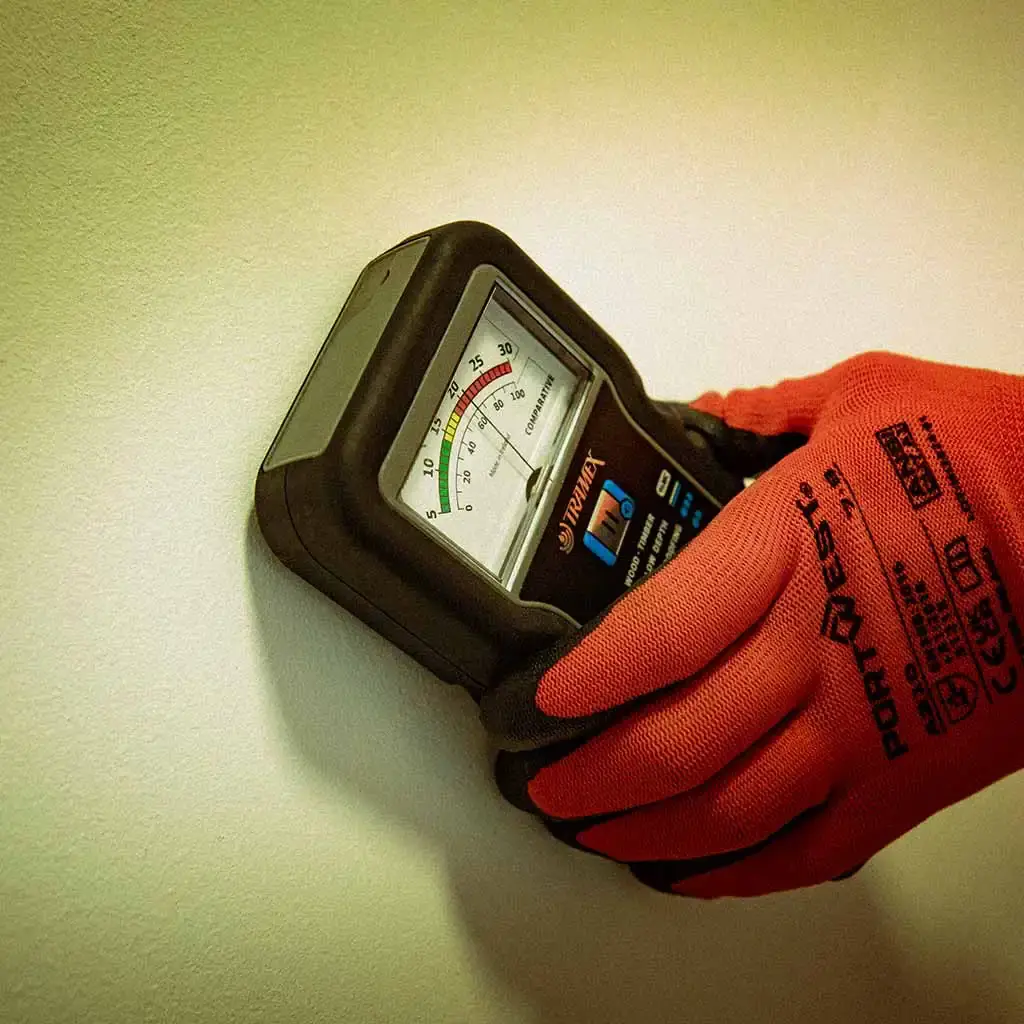
Before you can determine how to treat damp walls internally DIY, you must identify which type of damp you are facing. Treating rising damp as if it were condensation will result in total failure. When dealing with damp in your UK property it’s vital that you are able to accurately determine what type of damp it is. Having a professional damp survey done on your property will provide you with that information, as well as recommendations on how to best treat the damp for long-lasting results.
What is condensation on walls?
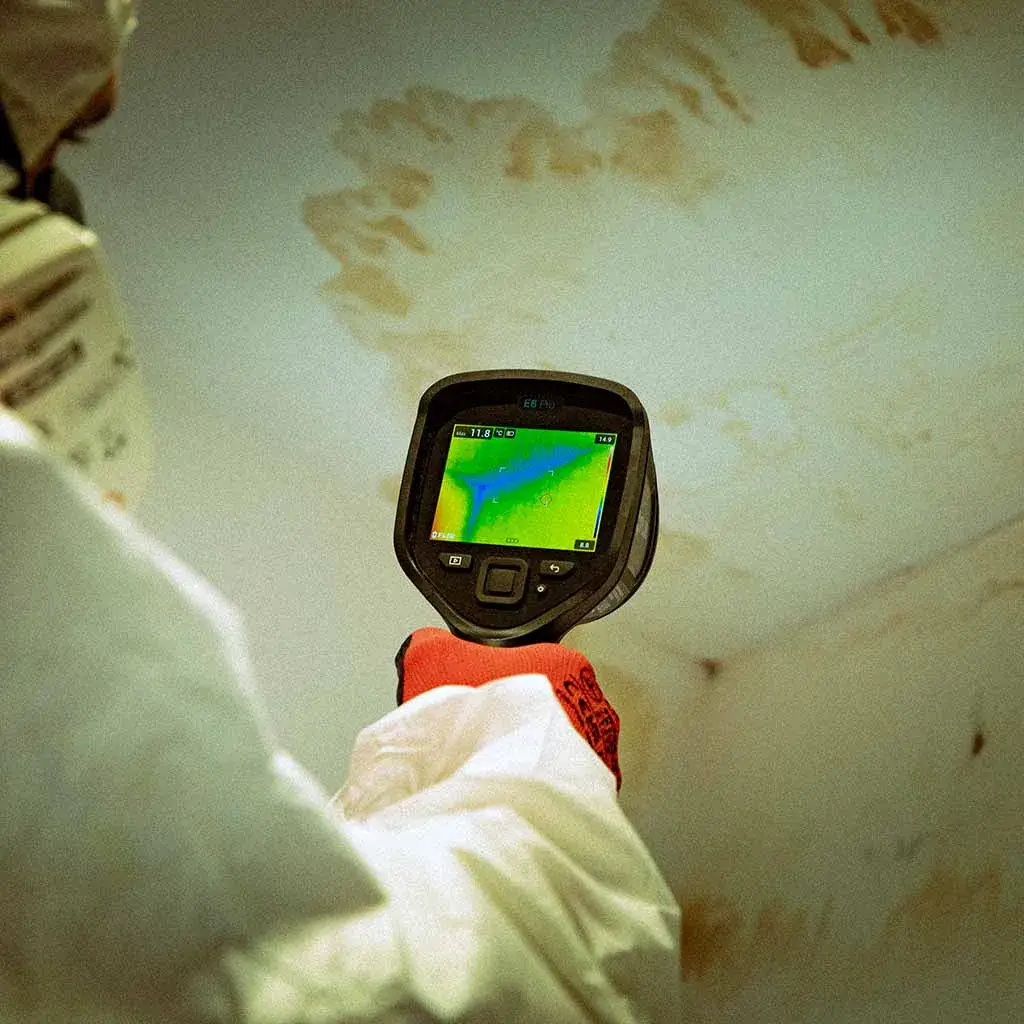
The most common cause of damp in UK properties is condensation damp which is the result of warm saturated air meeting cooler surfaces. This meeting of warm air and cold surfaces is called thermal bridging an results in the water in the warm air to condense and form on the cooler surface. It’s most common on windows and on the inside of external walls. Over time the porous surfaces will begin to saturate, resulting in damp internal walls and subsequent mould growth. Condensation damp can appear as visibly damp patches that form randomly on walls or around window sills.
Signs of condensation damp to look out for:
- Beads of water on wall, windows and window sills
- Persistent musty odours
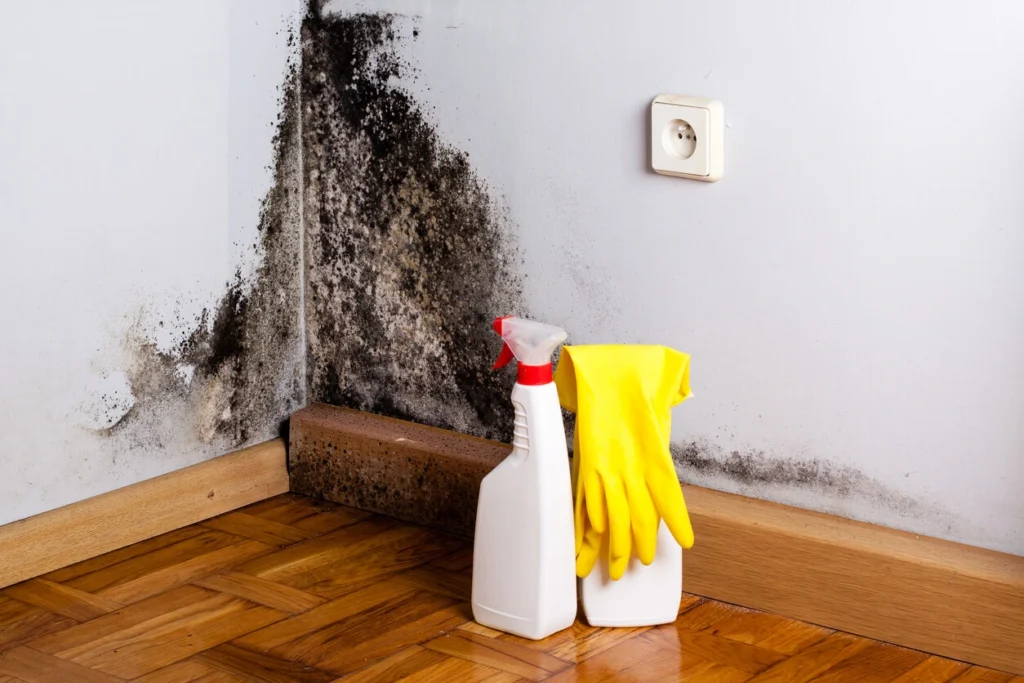
- Mould growth
- Bubbling or flaking paint
What is penetrating damp?
Water ingress, or penetrating damp, is caused by an external defect of a property. External defects such as: masonry cracks, missing roof tiles and cracked render can all contribute to penetrating damp. This form of damp can appear almost anywhere on walls due to water migrating from external defects through masonry to your internal walls. However, one distinguishing feature of penetrating damp is that it gets worse during periods of bad weather.
What is rising damp?
A bridged or failed Damp Proof Course (DPC) is the reason behind rising damp in a property. Water from the ground is able to travel through your walls through capillary action. Rising damp is one of the easier types of damp to identify due to its signature “tide lines” and efflorescence that appears along the bottom of external walls. If your walls appear to be damp but only up to 1 metre from your ground floor, rising damp is the most likely culprit.
Signs of condensation damp to look out for:
- Salt deposits (Efflorescence)
- Tide marks
- Peeling wallpaper and bubbling paint
- Swollen or decaying skirting boards
What is catastrophic damp (internal plumbing leak)?
Catastrophic damp is the only type of damp that isn’t directly caused by environmental factors. Plumbing leaks and burst pipes are what is also referred to as catastrophic damp due to the large volumes of water introduced to a property in such a short duration of time. Similarly to penetrating damp, there isn’t a pattern to where the visible damp will appear due to the unknown location of water pipes and the way in which water migrates. In instances of catastrophic damp and internal water leaks you should look to hire to a professional leak detection specialist who has the knowledge and equipment to accurately detect the leak.
The hidden threat: Toxic black mould & structural decay
When a wall remains damp, it creates a high-humidity microclimate that triggers the growth of Stachybotrys chartarum, or Toxic Black Mould. This is a biological hazard that requires immediate attention. When black mould appears in your property the best course of action is to hire a professional mould remediation service provider to safely remove all surface and airborne spores whilsts also killing the mould at the root.
Health & structural alert
Health Risks: Black mould releases mycotoxins that can cause mould toxicity symptoms, including respiratory distress, chronic fatigue, and skin irritation. Children and the elderly are particularly at risk.
Structural Risks: Mould is a living organism that “eats” your home. It digests the cellulose in wallpaper and drywall, leading to “blown” plaster. If moisture reaches timber studwork or floor joists, it can trigger dry rot, compromising the load-bearing integrity of your property.
How to treat damp walls internally: DIY vs. Professional
Many homeowners ask how to fix damp walls using off-the-shelf products. While there are steps you can take, you must understand the limitations.
Why “Damp-Proof” paints often fail
Applying a “damp-proof” paint internally is a common DIY mistake. If the moisture is coming from rising or penetrating damp, these paints simply trap the water inside the masonry. The hydrostatic pressure will eventually cause the paint to blister, taking the plaster with it.
The professional approach: Advanced structural drying
To fix damp walls permanently, the moisture must be extracted from the core of the material. Ideal Response utilises injection drying and specialised pressure dryers to dry walls from the inside out, something a standard dehumidifier cannot achieve. Complex construction drying programmes are created to cater to the exact needs of a situation and property, ensuring that your property is safely dried and left in a safe habitable condition.
How Ideal Response successfully treats damp
At Ideal Response we have been providing water and flood damage services to UK property owners for over 20 years. To learn more about how we successfully treat damp walls and water damaged properties you can read our case studies. For commercial property owners or managers, visit our Watford Colosseum Building Drying case study. For homeowners, tenants and property managers, visit our Water Damage Clean-up & Drying case study for a London flat.
Expert damp surveying & remediation near you
Ideal Response provides rapid response damp treatment and structural drying across the South East. Contact our local specialists for a professional survey:
Conclusion: Treating the root cause
Knowing how to treat damp walls internally is about understanding that the wall is merely the canvas where a larger moisture problem is showing itself. Professional help is the only way to guarantee a dry, safe home and mould free home. By identifying and treating the root cause of the damp issue you will be solving the problem and not treating the symptoms.
Stop the cycle of recurring damp. Contact Ideal Response today for a professional damp survey and expert property drying services.
Call our emergency response team 0800 088 4170
How to treat damp walls internally FAQs
Can I treat damp walls internally myself?
While you can take DIY steps to reduce surface condensation, such as improving ventilation or using a dehumidifier, permanent treatment requires identifying the root cause. If the dampness is caused by rising damp or water ingress, DIY solutions like damp-proof paint will likely fail, as they trap moisture within the masonry rather than removing it.
Why should I get a professional damp survey?
A professional survey is the only way to accurately distinguish between condensation, rising damp, and penetrating damp. Because each type requires a different remediation strategy, a survey prevents you from wasting money on incorrect treatments. It provides a roadmap for structural drying and ensures the “root cause” is fixed, not just the visible symptoms.
Does damp-proof paint work on internal walls?
Damp-proof paint is often a temporary cosmetic fix. If the underlying moisture source (such as a burst pipe or failed damp proof course) isn’t resolved, hydrostatic pressure will build up behind the paint. This eventually causes the paint to blister and peel, often pulling the internal plaster away from the wall.
What is the difference between a dehumidifier and professional structural drying?
A standard dehumidifier only removes moisture from the air. In contrast, professional structural drying (such as injection drying) uses pressure-controlled systems to extract moisture from deep within the core of the building materials. This is essential for preventing long-term structural decay and ensuring mould cannot regrow.
Is black mould caused by damp walls dangerous?
Yes. Damp walls create a microclimate for Toxic Black Mould, which releases mycotoxins into the air. Exposure can lead to respiratory distress, chronic fatigue, and skin irritation. Beyond health risks, mould also consumes organic materials like wallpaper and timber, which can lead to dry rot and compromised structural integrity.
How do I know if I have a leak or just damp?
“Catastrophic damp” caused by internal plumbing leaks often appears suddenly and lacks the predictable patterns of rising damp (tide lines) or condensation (thermal bridging). If you suspect a burst pipe, you should contact a leak detection specialist who uses non-invasive technology to find the exact source of the water.
How long does it take to dry out damp walls?
The duration depends on the extent of the saturation and the materials involved. However, using specialised construction drying programmes, professionals can return a property to a safe, habitable condition much faster than natural evaporation. A tailored plan ensures the drying process is thorough, preventing the “rebound effect” where moisture resurfaces later.

Tahlia Ibrahim - Delivery Manager
Tahlia has over four and a half years of in-depth experience across various facets of the disaster recovery industry. Having progressed through roles in marketing and sales to her current position, Tahlia possesses a comprehensive understanding of the entire business operation, from initial client contact to meticulous service delivery. A certified BioSweep Specialist, she excels in advanced odour elimination techniques, ensuring thorough restoration.